 By Maya Reed, Editor
Reviewed & updated September 2026 · Researched, AI-assisted & human-reviewed
Educational information only — not medical advice. Learn more
This article is for general educational purposes and is not medical advice. Talk to your doctor before starting a new exercise program.
Two squats while the kettle boils. A set of push-ups before your shower. That counts — and it’s how most people who actually stick with home training begin, not with a 90-minute session they dread by Wednesday. No equipment, no membership, no more than ten minutes to start.
This beginner-friendly guide walks you through exactly how to start working out at home, what (little) gear you need, and a simple 4-week plan to build the habit.
Quick navigationCurated by Maya · 5 min read- Why work out at home?
- Step 1: Set a simple, clear goal
- Step 2: Get the (minimal) gear you need
- Step 3: Learn the foundational movements
- Step 4: Follow a simple 4-week beginner plan
- Step 5: Build the habit (the part that actually matters)
- Step 6: Support your workouts with the basics
- Common beginner mistakes to avoid
- The bottom line
- Related articles
- Further reading & trusted sources
Why work out at home?
- It's free (or nearly) — no monthly membership.
- No commute, no waiting for machines.
- Zero intimidation — no crowds, just you.
- Flexible — squeeze in 15 minutes whenever it works.
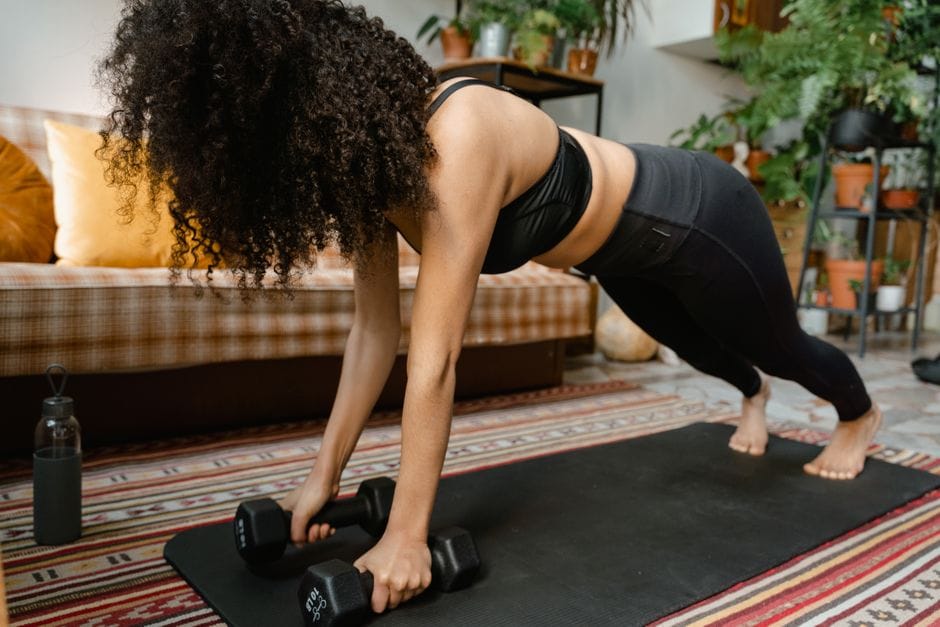
Step 1: Set a simple, clear goal
Vague goals fade fast. Instead of "get fit," try something concrete:
- "Work out 3 times a week for 4 weeks."
- "Be able to do 10 push-ups."
- "Walk 8,000 steps a day."
Small, specific, and trackable wins every time.
Step 2: Get the (minimal) gear you need
You can start with nothing but your bodyweight. But a few cheap items make home workouts far more effective:
- A yoga/exercise mat — comfort for floor work.
- Resistance bands — the best value in fitness; full-body strength for the price of lunch. (We ranked the 7 best resistance bands here.)
- A set of adjustable dumbbells — optional, for when you want to add weight. (See the best adjustable dumbbells.)
💡 Start with a mat + a resistance band set. That combo covers 90% of beginner workouts and costs very little.
Step 3: Learn the foundational movements
Master these bodyweight basics — they train your whole body:
- Squats — legs and glutes.
- Push-ups (on knees if needed) — chest, shoulders, arms.
- Glute bridges — glutes and core.
- Planks — full core.
- Lunges — legs and balance.
- Rows with a resistance band — back.
Focus on good form over speed or reps. Quality first. (For a full no-equipment routine, see our bodyweight workout guide.)
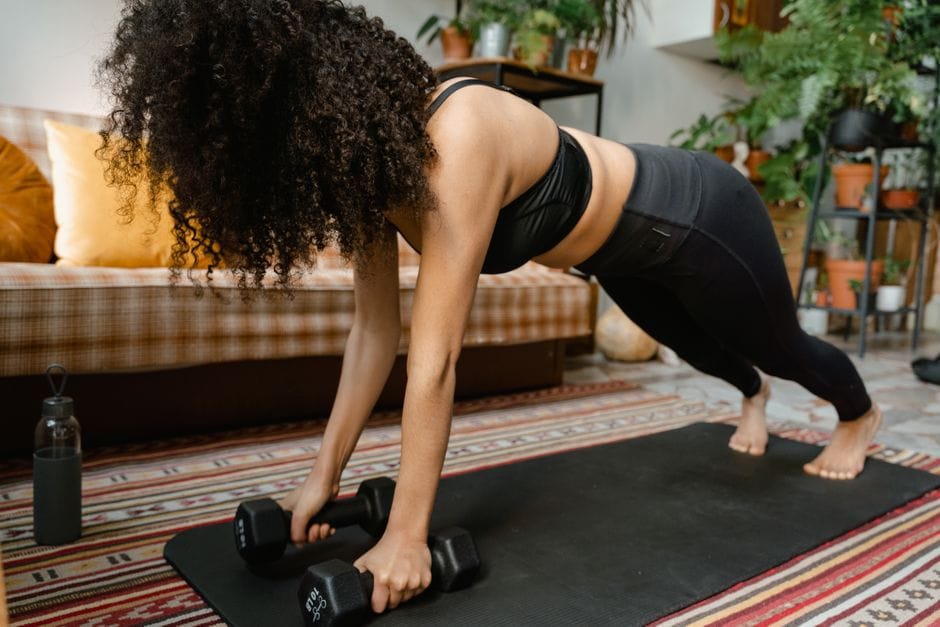
Step 4: Follow a simple 4-week beginner plan
Do this 3 days a week (e.g. Mon / Wed / Fri), with rest days between.
Each session (about 25–30 minutes):
- Warm-up (5 min): marching in place, arm circles, gentle squats.
- Main circuit — repeat 3 rounds:
- 10 squats
- 8 push-ups (knees okay)
- 10 glute bridges
- 20-second plank
- 8 band rows per side
- Rest 60 seconds between rounds.
- Cool-down (5 min): light stretching.
Progression: Each week, add 2 reps per exercise or one extra round. That's progressive overload — the key to getting stronger. (More in our muscle-building guide.)
Step 5: Build the habit (the part that actually matters)
Consistency beats intensity every single time. To make it stick:
- Schedule it like an appointment.
- Stack the habit — work out right after an existing routine (e.g. after your morning coffee).
- Track it — tick a box on a calendar each session. Don't break the chain.
- Start tiny — even a 10-minute session counts on low days.
For a deeper dive on this, see our guide on how to stay motivated and build lasting habits.
Step 6: Support your workouts with the basics
- Protein: helps muscles recover and grow. Whole foods first; a simple protein powder can help fill gaps. (Here's how much protein you need.)
- Sleep: 7–9 hours. This is when your body actually rebuilds. (See why sleep is fitness's secret weapon.)
- Hydration: water before, during, and after.
Common beginner mistakes to avoid
- ❌ Doing too much too soon (leads to burnout and injury).
- ❌ Skipping warm-ups.
- ❌ Comparing yourself to people online.
- ❌ Expecting results in a week — give it 4–8 weeks.
Frequently asked questions
How long until I see results?
Most beginners feel stronger and more energetic within 2–3 weeks, with visible changes around 6–8 weeks of consistency.
Do I need equipment to start?
No. You can start with bodyweight only. A mat and resistance bands just make it more effective and varied.
How many days a week should a beginner work out?
Three days a week is the sweet spot — enough to progress, with plenty of recovery.
What's the best time of day to work out?
Whenever you'll do it consistently. Many people like mornings (fewer excuses), but the best time is the one that fits your life.
The bottom line
You don't need a fancy gym to get fit — just a small space, a simple plan, and consistency. Start with the 4-week plan above, grab a resistance band set to level up your workouts, and focus on showing up. Future you will be grateful. 💪
Read next

Related articles
- The Cheapest Way to Build a Home Gym (2026 Update)
- Smart Home Gym Storage Ideas for Small Apartments
- The 5 Pieces You Actually Need for a Home Gym
- “Resistance Bands vs Dumbbells: Which Should You Buy First?”
- Best Home Gym Equipment Under $100
- How to Warm Up Before a Workout
Further reading & trusted sources
What to actually expect
The hardest part of home workouts is starting without the gym’s structure — set a fixed time and a tiny, repeatable routine. People fail not from the workout itself but from never quite beginning it.
Maya’s editorial obsession is the gap between fitness hype and what the evidence actually shows — she’d rather hand you one boring habit that works than ten exciting ones that don’t. She builds FitNourish’s guides from mainstream, well-established sources (the CDC, the NHS, Mayo Clinic, and peer-reviewed research) and has a human review every one for accuracy before it publishes. She and the team are dedicated fitness enthusiasts and researchers, not doctors, so everything here is general information rather than medical advice. AI tools help with the research and drafting; the fact-checking and judgement are human.