 By Maya Reed, Editor
Reviewed & updated September 2026 · Researched, AI-assisted & human-reviewed
Educational information only — not medical advice. Learn more
This article is for general educational purposes and is not medical advice. Talk to your doctor before starting a new exercise program.
No gym. No equipment. No excuses. Your own body weight is one of the most effective — and most underrated — training tools there is. With nothing but the floor and a little space, you can build real strength, muscle, and fitness right at home.
This guide gives you a complete beginner bodyweight workout you can do anywhere, the right way to scale each exercise to your level, and how to keep progressing without ever buying a single weight.
On this pageCurated by Maya · 6 min readWhy bodyweight training works
People sometimes assume you "need weights" to get fit. You don't. Bodyweight training:
- Builds genuine strength and muscle — your muscles respond to challenge and tension, whether it comes from a barbell or your own body.
- Costs nothing — no equipment, no membership.
- Works anywhere — your living room, a hotel, a park.
- Improves coordination and core strength — because you're moving and stabilising your whole body.
- Is joint-friendly and scalable — easy to make harder or easier for any level.
The key, just like with weights, is progressive overload — gradually making things harder over time. We'll cover how.
The beginner bodyweight workout
Do this 3 times a week with rest days in between. Start with a 5-minute warm-up (marching, arm circles, a few easy squats), then complete the circuit.
Format: 3 rounds of the following, resting about 60 seconds between rounds.
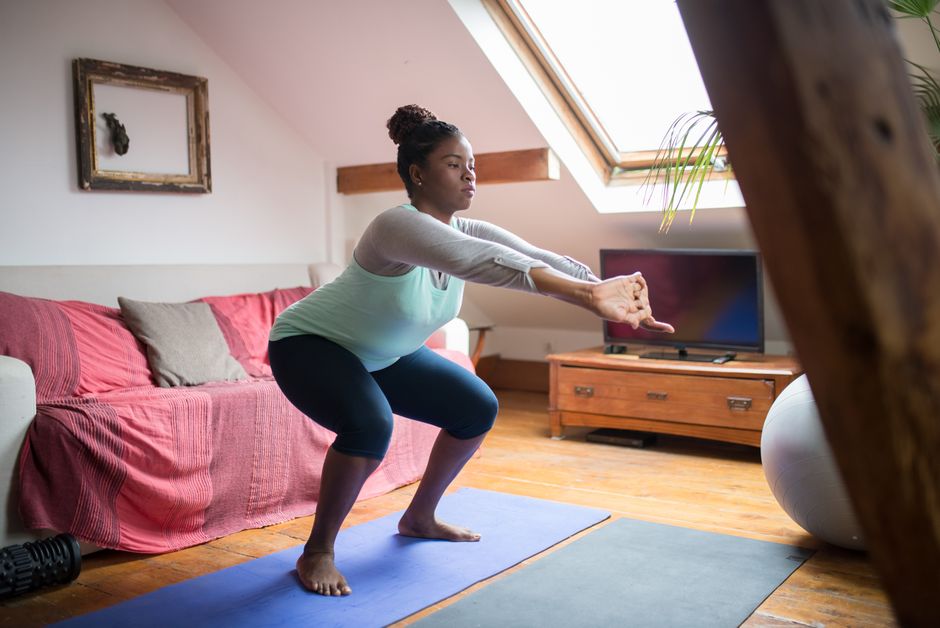
1. Bodyweight Squats — 10–15 reps
Stand with feet shoulder-width apart. Push your hips back and bend your knees to lower down, keeping your chest up, then stand back up. Builds legs and glutes.
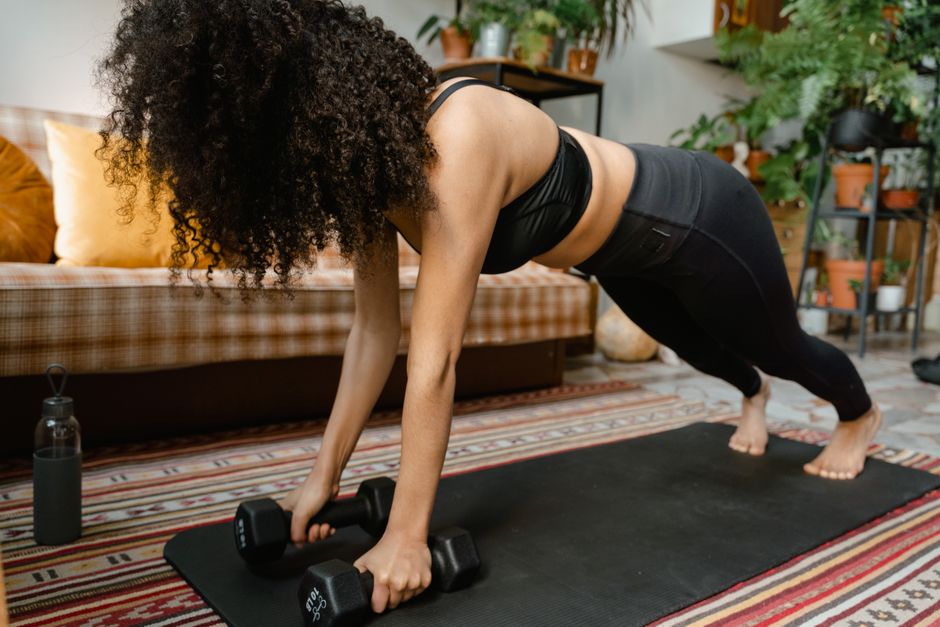
2. Push-Ups — as many as you can with good form
Hands a bit wider than shoulders, body in a straight line. Lower your chest toward the floor, then push up.
- Too hard? Do them on your knees, or with hands raised on a sturdy surface (wall or counter).
- Too easy? Slow them down or elevate your feet.
3. Glute Bridges — 12–15 reps
Lie on your back, knees bent, feet flat. Drive your hips up by squeezing your glutes, then lower. Strengthens glutes and lower back.
4. Reverse Lunges — 8–10 per leg
Step one foot back and lower into a lunge, then return. Great for leg strength and balance. Hold a wall for support if needed.
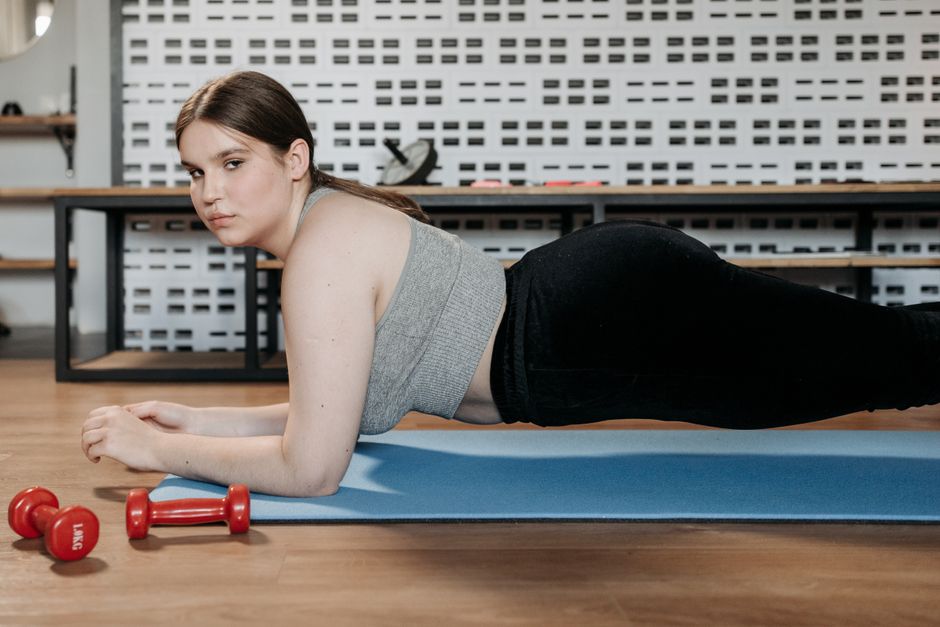
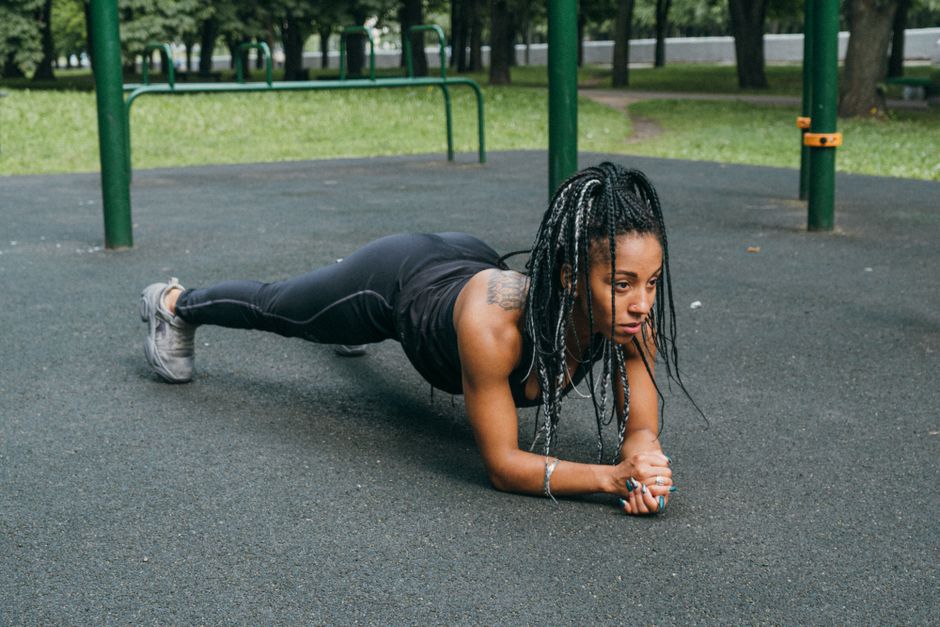
5. Plank — hold 20–40 seconds
Forearms (or hands) on the floor, body in a straight line. Brace your core and hold. Builds deep core strength.
6. Superman — 10–12 reps
Lie face down and lift your arms, chest, and legs off the floor, squeezing your back, then lower. Strengthens the back to balance all the pushing.
That's a complete full-body session in about 25–30 minutes — no equipment needed.
How to scale each exercise to your level
The beauty of bodyweight training is that every move can be made easier or harder:
Make it easier:
- Push-ups → on knees, or hands elevated on a wall/counter
- Squats → sit down to a chair and stand back up
- Plank → hold for less time, or on your knees
- Lunges → hold a wall for balance, smaller range
Make it harder (as you progress):
- Push-ups → feet elevated, slower tempo, or "diamond" hand position
- Squats → slow the lowering, pause at the bottom, or try single-leg variations
- Plank → longer holds, or add shoulder taps
- Lunges → walking lunges, or add a jump
Start where you are. There's a version of every exercise for every level.
How to keep progressing without weights
You don't need to add weight to keep getting stronger — you just need to keep increasing the challenge. This is progressive overload, bodyweight-style:
- Add reps. Do one or two more reps than last time.
- Add rounds. Build from 3 circuits to 4 over time.
- Slow the tempo. Lowering over 3 seconds makes any exercise much harder.
- Progress to harder variations. Knee push-ups → full push-ups → feet-elevated push-ups, and so on.
- Reduce rest between rounds to build endurance.
Track what you do each session and aim to beat it slightly next time. That simple habit is what drives results. (More on this in our muscle-building guide.)
A simple weekly plan
| Day | Activity |
|---|---|
| Monday | Bodyweight workout |
| Tuesday | Walk or rest |
| Wednesday | Bodyweight workout |
| Thursday | Walk or rest |
| Friday | Bodyweight workout |
| Weekend | Active recovery (walk, stretch, yoga) |
Three sessions, plenty of recovery, real progress.
Frequently asked questions
Can you build muscle with just bodyweight exercises?
Yes, especially as a beginner. As long as you challenge your muscles and progressively make exercises harder (more reps, harder variations, slower tempo), they'll grow. Advanced lifters may eventually want added resistance, but you can get a long way with bodyweight alone.
How long until I see results from bodyweight training?
Most beginners feel stronger within 2–3 weeks and see visible changes around 6–8 weeks of consistent training, paired with sensible eating.
Do I need a pull-up bar?
Not to start. The workout above trains your whole body without one. A cheap doorway pull-up bar is a great later upgrade to add back and arm work.
Is bodyweight training enough, or do I need weights eventually?
For general fitness and strength, bodyweight training can be enough indefinitely if you keep progressing the difficulty. If you want to build maximum size and strength long-term, adding resistance (like adjustable dumbbells) helps — but there's no rush.
The bottom line
You don't need a gym or a single piece of equipment to get fit and strong. A simple bodyweight circuit, done three times a week and progressed gradually, builds real strength, muscle, and fitness anywhere. Scale each move to your level, focus on good form, and keep nudging the difficulty up over time.
Start with the workout above, stay consistent, and let your own body weight do the work. 💪
Read next

Related articles
- How to Do Push-Ups: Proper Form and Progressions for Beginners
- 7 Best Kettlebells for Home Workouts (2026)
- The Best Cardio for Fat Loss (And How Much You Actually Need)
- Yoga for Beginners: A Simple Guide to Getting Started
- The Best Full-Body Dumbbell Workout (For Home or Gym)
- How to Get Abs: An Honest Guide to a Six-Pack
Further reading & trusted sources
What to actually expect
Bodyweight training stalls when you can’t add weight, so progress by adding reps, slowing the tempo, or switching to harder variations. Doing the same easy push-ups forever is why people plateau and think it ‘stopped working.’
Maya’s editorial obsession is the gap between fitness hype and what the evidence actually shows — she’d rather hand you one boring habit that works than ten exciting ones that don’t. She builds FitNourish’s guides from mainstream, well-established sources (the CDC, the NHS, Mayo Clinic, and peer-reviewed research) and has a human review every one for accuracy before it publishes. She and the team are dedicated fitness enthusiasts and researchers, not doctors, so everything here is general information rather than medical advice. AI tools help with the research and drafting; the fact-checking and judgement are human.