 By Maya Reed, Editor
Reviewed & updated September 2026 · Researched, AI-assisted & human-reviewed
Educational information only — not medical advice. Learn more
As an Amazon Associate, we earn from qualifying purchases. This article is for general information and is not medical advice.
A full rack of dumbbells costs a fortune and eats your whole room. Adjustable dumbbells solve both problems — one compact pair replaces 15+ sets of weights by letting you dial the load up or down in seconds. If you're building a home gym in an apartment, spare bedroom, or garage corner, they're one of the smartest buys you can make.
We compared the most popular adjustable dumbbells on weight range, adjustment speed, durability, and footprint. Here are our top picks and a buying guide to help you choose.
 Jump to a sectionCurated by Maya · 6 min read
Why adjustable dumbbells are a smart buy
The fitness industry loves selling single-purpose machines that gather dust. Adjustable dumbbells are the opposite — one versatile pair that trains your entire body and grows with you as you get stronger. They save money, save enormous space, and a single purchase covers your strength progress for years.
Our top picks
| Category | Our pick | Best for |
|---|---|---|
| 🏆 Best overall | Dial-Adjust 5–52.5 lb Pair | Almost everyone building a serious home gym |
| 💸 Best budget | Spin-Lock Adjustable Set | Tight budgets and patient lifters |
| 🏠 Most compact | Twist-Select 25 lb Pair | Apartments, beginners, and lighter routines |
🏆 Best overall: Dial-Adjust 5–52.5 lb Pair
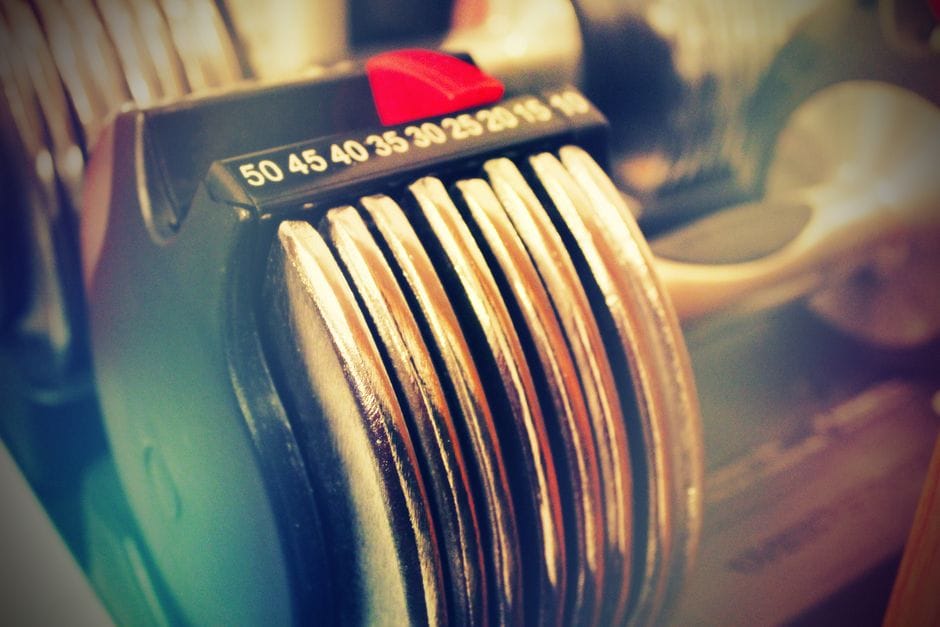
A quick twist of the dial selects your weight, and the unused plates stay in the cradle. The 5–52.5 lb range covers beginners through advanced lifters for most movements.
- Best for: Almost everyone building a serious home gym.
- Pros: Huge range, fast dial adjustment, replaces ~15 sets of weights.
- Cons: Premium price; bulkier than a fixed dumbbell per hand.
💸 Best budget: Spin-Lock Adjustable Set
The classic threaded-handle design: you slide plates on and screw a collar to lock them. Slower to change, but a fraction of the price of dial models.
- Best for: Tight budgets and patient lifters.
- Pros: Cheapest way in, very durable, easy to add more plates later.
- Cons: Slow to adjust between sets.
🏠 Most compact: Twist-Select 25 lb Pair
A shorter, lighter design ideal for toning, higher-rep work, and very small spaces.
- Best for: Apartments, beginners, and lighter routines.
- Pros: Tiny footprint, quick twist selection, beginner-friendly.
- Cons: 25 lb cap may be light for stronger lifters.
A few more options worth knowing
Depending on your needs, these styles are also worth being aware of (no links — just for reference):
- Heavy-duty 5–90 lb pairs for lifters who already move serious weight.
- Dumbbell + stand bundles that store the weights at lifting height and off the floor.
- Kettlebell-convertible sets that adjust into both dumbbells and kettlebells.
- Rubber-hex adjustable pairs that protect floors and reduce noise.
- Block-style pairs with a slide-pin that store flat against a wall.
Buying guide: choosing adjustable dumbbells
Weight range: Beginners do well with 5–25 lb; most people are best served by a 5–52.5 lb pair that leaves room to grow. Strong lifters should look at 90 lb sets.
Adjustment type: Dial/twist models change weight in 2–3 seconds — worth the extra cost if you do supersets. Spin-lock models are cheaper but slower.
Footprint & storage: If floor space is precious, get a set with a stand so the weights store vertically.
Durability: Look for solid metal-on-metal locking mechanisms and read reviews about dropped-weight reliability — the cheapest models can rattle loose over time.
A simple full-body dumbbell routine
You can train your whole body with just one pair. Try our complete full-body dumbbell workout three times a week — squats, presses, rows, lunges, and more, all with adjustable dumbbells.
Frequently asked questions
Are adjustable dumbbells worth it?
For home gyms, yes. They save money and enormous space versus buying many fixed pairs, and one purchase covers your strength progress for years.
Can you build muscle with adjustable dumbbells?
Absolutely. As long as you can progressively add weight, your muscles can't tell the difference between adjustable and fixed dumbbells.
What weight should a beginner start with?
Most beginners start around 5–15 lb for upper-body moves and can go heavier on legs. Adjustable sets let you fine-tune the weight for each exercise as you learn.
Dial vs. spin-lock — which is better?
Dial/twist models are far faster to change (great for supersets) but cost more. Spin-lock models are cheaper and very durable but slower to adjust. Choose based on your budget and how much you value speed.
The bottom line
For most people, a 5–52.5 lb dial-adjust pair is the sweet spot — fast, spacious range, and it replaces a whole rack. On a budget, the spin-lock set gets you started cheaply; in the tiniest spaces, the compact 25 lb twist pair is ideal.
Pair these with our home gym on a budget guide to build a complete setup for less.
Read next


Related articles
- How to Improve Your Flexibility: A Beginner’s Guide
- Zone 2 Cardio: The Science of Training Slow to Get Fitter
- How to Build a Workout Routine from Scratch
- How to Do Push-Ups: Proper Form and Progressions for Beginners
- 6 Best Creatine Supplements for Beginners (2026)
- 6 Best Massage Guns for Sore Muscles (2026)
Further reading & trusted sources
The detail that makes the difference
For small spaces the dial/selector type saves the most room, but each dumbbell is bulkier than photos suggest — measure your shelf first. The cheap spin-lock sets cost less but eat the time you’d rather spend training.
Maya’s editorial obsession is the gap between fitness hype and what the evidence actually shows — she’d rather hand you one boring habit that works than ten exciting ones that don’t. She builds FitNourish’s guides from mainstream, well-established sources (the CDC, the NHS, Mayo Clinic, and peer-reviewed research) and has a human review every one for accuracy before it publishes. She and the team are dedicated fitness enthusiasts and researchers, not doctors, so everything here is general information rather than medical advice. AI tools help with the research and drafting; the fact-checking and judgement are human.