 By Maya Reed, Editor
Reviewed & updated September 2026 · Researched, AI-assisted & human-reviewed
Educational information only — not medical advice. Learn more
This article is for general educational purposes and is not medical advice. Talk to your doctor before starting a new training or nutrition program, especially if you have any health conditions.
Building muscle comes down to three unglamorous things: lift progressively heavier, eat enough protein, and sleep. That’s it. The bulking-versus-cutting debates, the “muscle confusion” gimmicks, the endless program-hopping — almost none of it matters in your first year, and chasing it is exactly why most beginners stall.
Here's the good news: the real science of building muscle is simple, well-understood, and surprisingly forgiving. You don't need a fancy gym, expensive supplements, or a perfect diet. You need three things done consistently — challenge your muscles, feed them, and let them recover. That's it.
This guide walks you through exactly how muscle growth works, the only three principles that truly matter, a complete beginner workout plan, how to eat to support it, and the mistakes that quietly hold most beginners back. By the end, you'll have everything you need to start — and, more importantly, to keep going.
Quick navigationCurated by Maya · 12 min read- How muscle actually grows (in plain English)
- The 3 principles that actually matter
- A complete beginner muscle-building program
- Eating to build muscle, without overcomplicating it
- Do you need supplements?
- Common beginner mistakes (and how to avoid them)
- A realistic timeline of what to expect
- The bottom line
- Related articles
- Further reading & trusted sources
How muscle actually grows (in plain English)
When you lift a weight that's challenging, you create tiny amounts of stress and microscopic damage in your muscle fibers. This isn't a bad thing — it's the signal. Your body responds by repairing those fibers and, crucially, adapting them to be a little stronger and a little bigger so they can handle that stress next time. This repair-and-adapt process is called muscle protein synthesis, and it mostly happens while you rest, not while you train.
Three ingredients drive that adaptation:
- A reason to grow — a training stimulus that's genuinely challenging.
- Building blocks — enough protein and total energy (calories) to repair and add tissue.
- Time to rebuild — sleep and recovery, when the actual growth happens.
Miss any one of these and progress stalls. Nail all three consistently and your body has no choice but to adapt. Muscle growth is slow and steady — a realistic pace for a beginner is roughly 1–2 pounds of muscle per month in the first year, and that's genuinely excellent. Anyone promising dramatic transformation in two weeks is selling something.

The 3 principles that actually matter
Forget the noise. Everything that works comes back to these three pillars.
1. Progressive overload
This is the single most important concept in all of strength training, and most beginners never hear it explained clearly. Progressive overload simply means gradually asking your muscles to do more over time. If you lift the same weight, for the same reps, forever, your body has no reason to change — it's already adapted. To keep growing, you have to keep nudging the challenge upward.
You can progress in several ways:
- Add weight — the most obvious. Once a weight feels manageable, go up a little.
- Add reps — if you did 8 reps last week, aim for 9 or 10 this week with the same weight.
- Add sets — do an extra set of an exercise over time.
- Improve form and control — slowing down the lowering phase makes the same weight harder and safer.
The key is to track what you do. Write down the exercise, the weight, and the reps every session. Next time, try to beat it by a small margin. This single habit — writing it down and aiming to do a little more — is the closest thing to a secret that exists in building muscle.
2. Enough protein and energy
Your muscles are built from protein, so you need a steady supply to repair and grow. The research-backed sweet spot for someone training is roughly 0.7 to 1 gram of protein per pound of body weight per day (about 1.6–2.2 g per kg). For a 160-pound person, that's around 110–160 grams a day.
That sounds like a lot until you spread it across meals. A palm-sized portion of chicken, fish, lean meat, eggs, Greek yogurt, tofu, lentils, or a scoop of protein powder at each meal gets most people there comfortably.
You also need enough total calories. To add muscle most efficiently, most beginners do best eating at maintenance or in a slight surplus — a small amount more than they burn (think 150–300 extra calories a day, not a free-for-all). If you're significantly overweight, you can often build muscle and lose fat at the same time eating at maintenance, especially as a beginner.
If hitting your protein target from food alone is a struggle, a simple protein powder is the easiest fix — we break down the options in our guide to the best protein powders for beginners.
3. Recovery and sleep
Here's what surprises people: you don't grow in the gym — you grow while you recover from it. Training is the stimulus; sleep and rest are when your body actually does the building. Skimp on recovery and you're constantly tearing down without rebuilding.
The two biggest levers:
- Sleep 7–9 hours. Deep sleep is when your body releases most of its growth and repair hormones. Poor sleep measurably reduces muscle gain and increases muscle loss — it's not optional.
- Rest each muscle ~48 hours. Don't train the same muscle hard two days in a row. This is why full-body workouts every other day work so well for beginners.

A complete beginner muscle-building program
You don't need a complicated split. For your first 6–12 months, a full-body workout three times a week is the most effective and time-efficient approach. It hits each muscle group multiple times a week (great for growth) and leaves a full rest day between sessions.
Do this on, for example, Monday, Wednesday, and Friday.
Warm-up (5–10 minutes): light cardio (marching, jumping jacks, a brisk walk) followed by a few easy sets of your first exercise.
The workout — 3 sets of 8–12 reps each, resting 60–90 seconds between sets:
- Goblet squat or bodyweight squat — legs and glutes
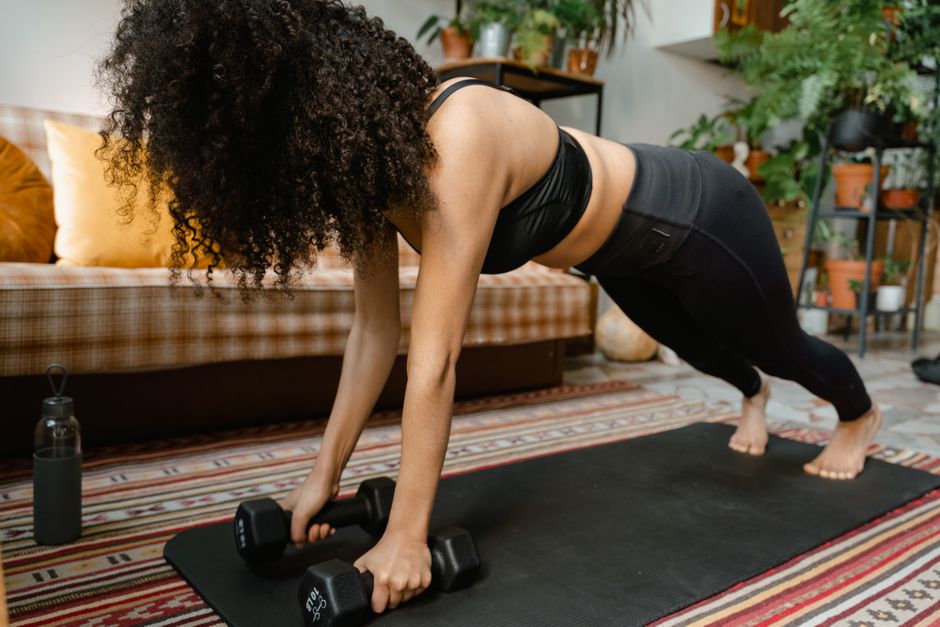
- Push-up or dumbbell bench press — chest, shoulders, triceps
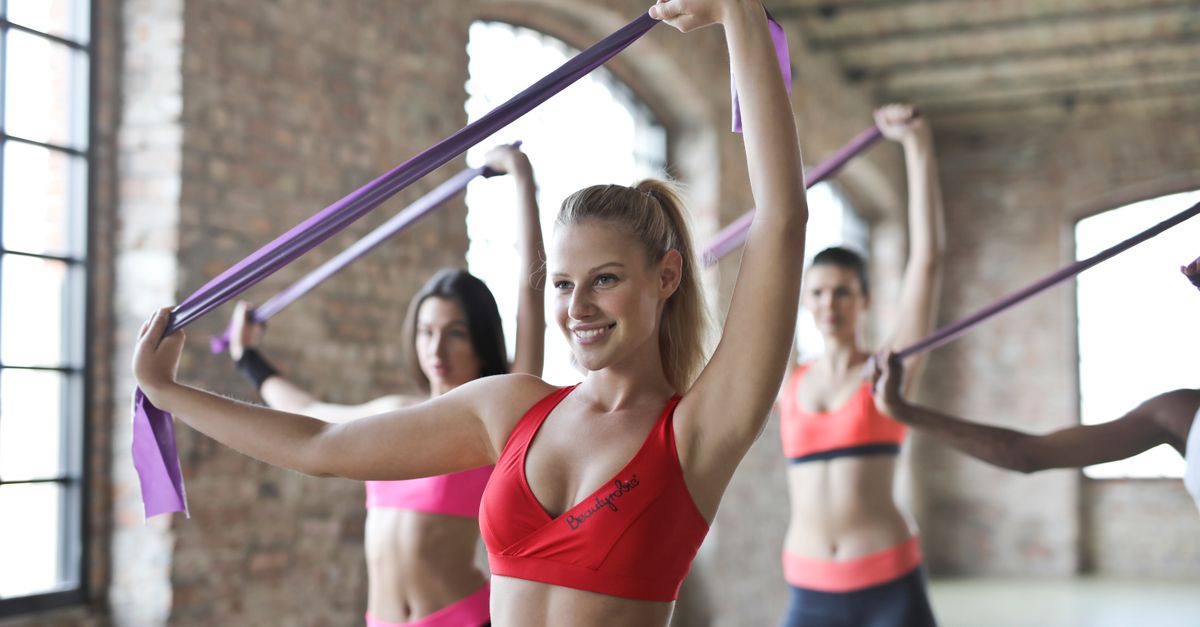
- Dumbbell row or resistance-band row — back and biceps
- Romanian deadlift or glute bridge — hamstrings and glutes
- Overhead dumbbell press — shoulders
- Plank — 3 holds of 20–40 seconds for the core
That's it — six movements that train your entire body. Beginners often expect something more elaborate, but this covers every major muscle group, and simplicity is exactly why it's so easy to stay consistent with.
How to progress it: each week, try to add a rep or two to each exercise. Once you can comfortably do 12 reps for all your sets, increase the weight slightly next session and drop back to 8 reps. Repeat that cycle. That's progressive overload in action.
You can run this entire program at home with just a set of adjustable dumbbells and a little floor space — no gym membership required.
Eating to build muscle, without overcomplicating it
You don't need to weigh every gram of food or follow a rigid meal plan. Focus on a few high-impact habits:
- Anchor every meal with a protein source. This is the highest-priority habit. Eggs, chicken, fish, lean beef, Greek yogurt, cottage cheese, tofu, tempeh, beans, lentils — pick what you enjoy and include some at each meal.
- Eat enough carbohydrates. Carbs fuel your training and help recovery. Rice, oats, potatoes, fruit, and whole grains are your friends — carbs are not the enemy of muscle.
- Don't fear fats. Healthy fats from nuts, olive oil, avocado, and fish support hormones that matter for muscle growth.
- Eat plenty of vegetables. They won't build muscle directly, but they keep you healthy enough to train hard consistently.
- Stay hydrated. Muscles are about 75% water; even mild dehydration hurts performance.
A simple plate formula works for most people: a palm of protein, a fist of carbs, a thumb of fats, and a couple of handfuls of vegetables at each meal. Adjust portions up if you're not gaining, down if you're gaining fat too quickly.
Do you need supplements?
Mostly, no — supplements are the small details, not the foundation. But two have strong evidence behind them and are genuinely useful:
- Protein powder — not magic, just a convenient way to hit your protein target when whole food isn't practical. Useful, optional.
- Creatine monohydrate — one of the most researched and consistently effective supplements available. It helps you do a little more work in the gym, which adds up over time. It's inexpensive and well-tolerated by most people. (As always, check with your doctor first.)
Everything else — fat burners, testosterone boosters, BCAAs, exotic pre-workouts — ranges from "unnecessary" to "a waste of money" for most beginners. Get the three pillars right first; supplements are a rounding error by comparison.
Common beginner mistakes (and how to avoid them)
- Program hopping. Switching routines every two weeks chasing a "better" one means you never progress on anything. Pick a sensible plan and run it for at least 8–12 weeks.
- Not tracking workouts. If you're not writing down your weights and reps, you can't apply progressive overload. This is the most common reason beginners stall.
- Ego lifting. Using too much weight with sloppy form trains your ego, not your muscles, and invites injury. Control the weight through a full range of motion.
- Under-eating protein. Hard training with too little protein is like building a house without enough bricks.
- Neglecting sleep. You can do everything else right and still stall if you're sleeping five hours a night.
- Expecting too much, too soon. Visible change takes 6–12 weeks; meaningful change takes months. Patience is part of the program.
A realistic timeline of what to expect
- Weeks 1–4: Most early gains are your nervous system learning the movements. You'll get noticeably stronger and the exercises will start to feel natural — even before your muscles visibly change.
- Weeks 4–12: Real muscle starts to show. Clothes fit differently, you look a little firmer, and your lifts climb steadily.
- Months 3–12: This is the "newbie gains" window — the fastest muscle growth you'll ever experience. Make the most of it by staying consistent.
- Year 1 and beyond: Progress slows but compounds. The habits you build now are what carry results for decades.
Frequently asked questions
How long does it take to build noticeable muscle?
Most beginners see visible changes within 6–12 weeks of consistent training and adequate protein. Significant change takes several months — but strength improves much sooner, often within the first few weeks.
Can I build muscle at home without a gym?
Absolutely. With bodyweight exercises, resistance bands, and a set of adjustable dumbbells, you can build serious muscle at home. Your muscles respond to tension and progressive overload, not to the logo on the equipment.
Do I need to lift heavy weights?
You need to lift weights that are challenging for you — meaning the last couple of reps of each set are genuinely hard. That can be light weights for high reps or heavier weights for fewer reps; both build muscle when taken close to failure.
Will I get "too bulky"?
No — building noticeable muscle takes years of dedicated effort, and it doesn't happen by accident. For the vast majority of people, training adds a lean, toned, athletic look, not sudden bulk.
Should I do cardio too?
Yes, in moderation. Some cardio is great for your heart, recovery, and overall health. Just don't do so much that it interferes with your strength training or eats into the calories you need to grow.
The bottom line
Building muscle isn't complicated — it's just hard to fake your way around the basics. Challenge your muscles a little more over time, eat enough protein and food to support growth, and sleep enough to let your body rebuild. Do those three things consistently for a few months and the results take care of themselves.
Start with the simple full-body plan above, grab a set of adjustable dumbbells if you're training at home, keep your protein up, and — above all — be patient and consistent. Future you will be very glad you started today.
Read next
Related articles
- The Best Cardio for Fat Loss (And How Much You Actually Need)
- The Best Full-Body Dumbbell Workout (For Home or Gym)
- How to Get Abs: An Honest Guide to a Six-Pack
- Running for Beginners: How to Start and Stick With It
- 15 Tiny Daily Habits That Quietly Transform Your Health
- 8 Best Adjustable Dumbbells for Small Spaces in 2026
Further reading & trusted sources
What to actually expect
The first months are the fastest you’ll ever gain, so don’t waste them program-hopping — pick a plan and run it at least eight weeks. Tracking your lifts and adding a little over time is the actual secret.
Maya’s editorial obsession is the gap between fitness hype and what the evidence actually shows — she’d rather hand you one boring habit that works than ten exciting ones that don’t. She builds FitNourish’s guides from mainstream, well-established sources (the CDC, the NHS, Mayo Clinic, and peer-reviewed research) and has a human review every one for accuracy before it publishes. She and the team are dedicated fitness enthusiasts and researchers, not doctors, so everything here is general information rather than medical advice. AI tools help with the research and drafting; the fact-checking and judgement are human.