 By Maya Reed, Editor
Reviewed & updated September 2026 · Researched, AI-assisted & human-reviewed
Educational information only — not medical advice. Learn more
Building a home gym on a budget means making a choice almost everyone faces: resistance bands or dumbbells first? Both are excellent tools — but they're not interchangeable, and the right answer depends on your goals, space, and how you train.
This article shares general fitness information for educational purposes only. It is not medical advice. Consult a qualified healthcare professional before starting a new exercise program, especially if you have existing injuries or health conditions.
 What this guide coversCurated by Maya · 7 min read
What Resistance Bands Actually Are (and Aren't)
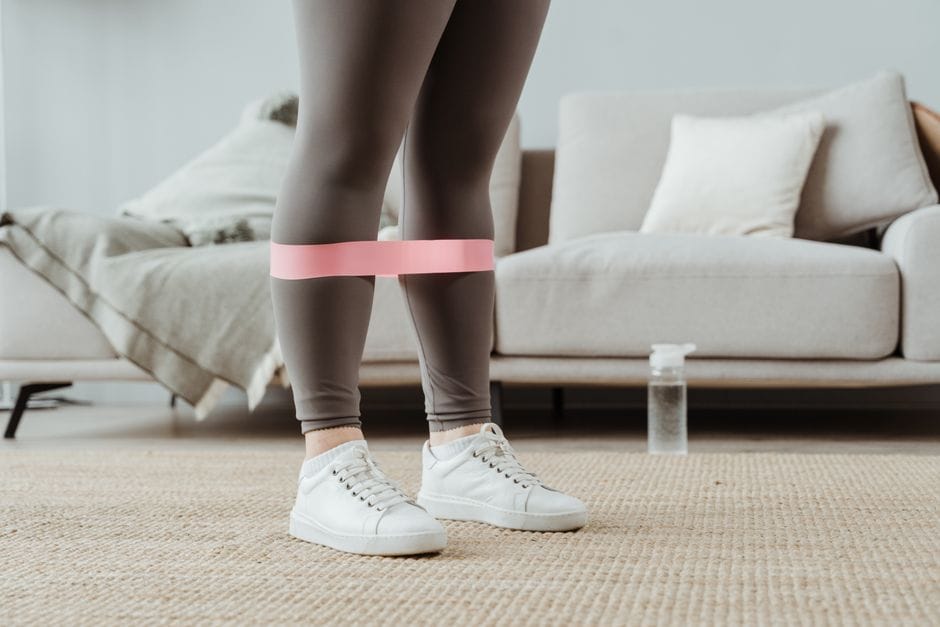
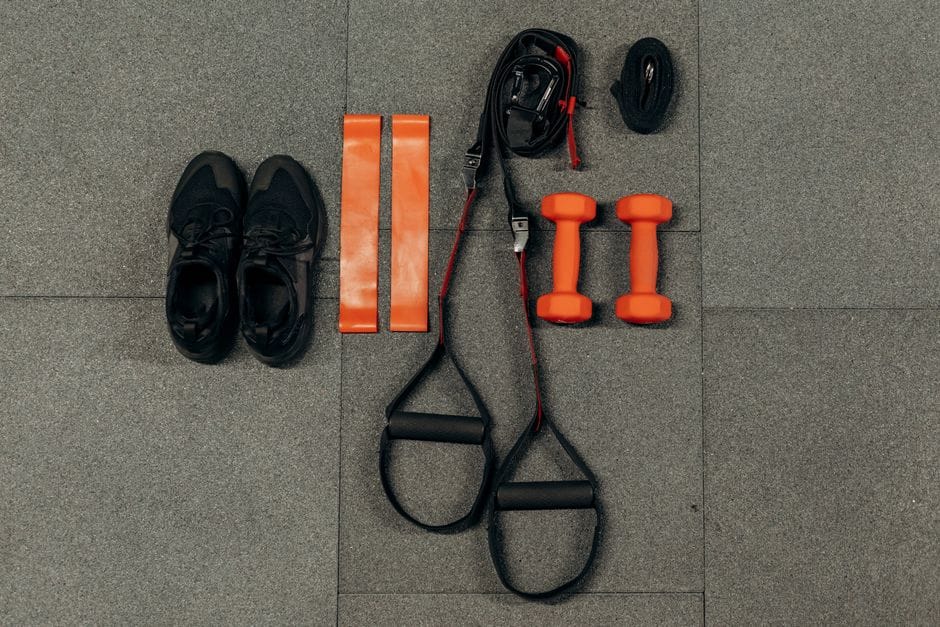
Resistance bands come in two main styles: loop bands (flat circles used for lower body work) and tube bands with handles (used for pulling/pushing movements that mimic cable machines). A set of both runs $15–$40 and covers a huge range of movements.
What makes bands special is accommodating resistance — the band gets harder as you stretch it further. That means the top of a bicep curl or the lockout of a squat is the hardest part, which trains your muscles differently than free weights. Bands also have zero momentum, so there's no "cheating" with a swing.
What they're not great at: heavy, stable pressing movements (bench press, overhead press) are awkward with bands. And because resistance is variable, tracking progressive overload is harder — you can't just add 2.5 lbs the way you can with dumbbells.
What Dumbbells Do Better
Dumbbells provide fixed, measurable resistance. That makes progressive overload simple — you know exactly how much you lifted last week. They excel at pressing movements (chest, shoulders), unilateral work (single-leg, single-arm), and exercises where you need stable, heavy resistance like Romanian deadlifts and goblet squats.
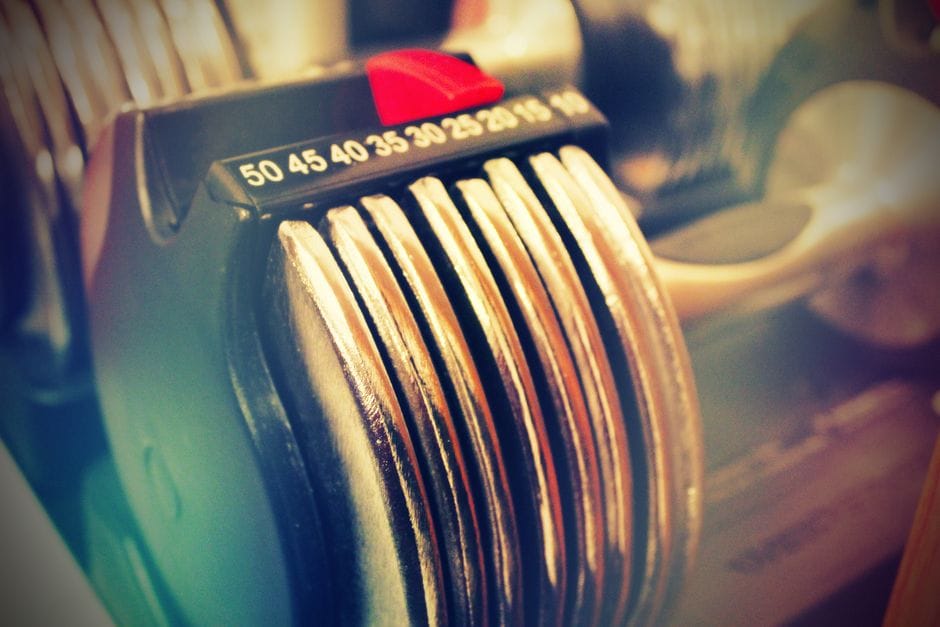
A single pair of adjustable dumbbells (like the popular Bowflex 552s or the budget-friendly Powerblock Sport) can replace an entire rack. The downside: quality adjustable sets cost $150–$350+. Fixed dumbbell pairs are cheaper per set but you'll quickly need multiple weights.
Dumbbells are also harder to travel with and take up more space than a band set that fits in a drawer.
Head-to-Head: The Key Differences
Cost: Bands win easily. A full set of resistance bands costs less than a single dumbbell pair.
Portability: Bands win. They fit in a small bag and travel anywhere. Dumbbells don't.
Progressive overload: Dumbbells win. Fixed weight is easier to track and increment precisely.
Joint friendliness: Bands win, especially for anyone with shoulder or elbow issues. Bands follow a more natural arc of motion with less joint stress.
Muscle-building potential: Roughly equal when used correctly. Research shows bands produce comparable hypertrophy to free weights when effort is matched. The limiting factor is usually not the tool — it's the effort.
Exercise variety: Bands win for mimicking cable machine movements (face pulls, pull-aparts, lat pull-downs with an anchor point). Dumbbells win for heavy compound pressing.
Stability training: Bands win — the instability forces stabilizer muscles to fire, which is useful for rehab and functional strength.
Who Should Buy Resistance Bands First?
You're better off starting with bands if:
- You're a beginner who needs to learn movement patterns before loading heavy
- You're on a tight budget (under $50)
- You're limited on space — an apartment with no room for weights
- You have joint sensitivities or are recovering from an injury
- You want to complement an existing gym membership with home work
- You travel frequently
A quality band set — a loop set plus one tube band with handles — costs under $40 and covers hundreds of exercises. For most beginners, bands can carry you further than you'd expect.
Who Should Buy Dumbbells First?
Dumbbells make more sense if:
- You're intermediate or experienced and need heavier loads to keep progressing
- You want to do heavy compound movements like goblet squats, Romanian deadlifts, or pressing
- You can invest $150–$350 in adjustable dumbbells upfront
- You value clear progress tracking and like knowing the exact numbers
- You're building a permanent home gym space
If budget allows, a pair of adjustable dumbbells (even the budget CAP barbell sets at $30–$60) is one of the highest-return investments you can make in a home gym.
The Best Answer: Buy Both (Strategically)
Here's what actually works for most people building a home gym over time:
- Start with a resistance band set ($15–$40) — immediately get access to 50+ exercises, learn movement patterns, and build base fitness
- Add a single pair of medium dumbbells ($25–$40 for a 25 or 30 lb fixed pair) for pressing and hinging movements
- Eventually upgrade to adjustable dumbbells when budget allows
This path gets you training on day one without overspending. The band set never becomes useless — even lifters with full home gyms keep bands for warm-ups, mobility work, and band-resisted exercises.
What to Actually Buy
Best budget band set: Fit Simplify Resistance Loop Bands ($10–$15) + a basic tube band with handles ($15–$20).
Best budget fixed dumbbells: CAP Barbell hex dumbbells — buy a 20, 25, and 30 lb pair over time as needed.
Best adjustable dumbbells mid-range: Yes4All or Ativafit adjustable sets ($100–$150) offer solid quality without the Bowflex price tag.
Best adjustable dumbbells premium: Bowflex 552s or Powerblock Sport — fast adjustment, compact, durable. Worth the investment if you'll use them daily.
The Takeaway
Resistance bands are the smarter first buy for most people: cheaper, portable, joint-friendly, and genuinely effective for building strength and muscle. Dumbbells are a better long-term investment for heavy, measurable loading — especially once you've built a base. You don't have to choose forever; build toward both. Start with bands, add a dumbbell pair, upgrade when you're ready.
Frequently Asked Questions
Can resistance bands build real muscle?
Yes — multiple studies show resistance bands produce comparable muscle growth to free weights when sets are taken close to failure. The key is progressive overload: increase band resistance or reps over time just as you would with weights.
How heavy should my first dumbbell pair be?
For most beginners, a 20–25 lb pair is a good starting point for upper body work. If you're already somewhat strong, 30–35 lbs gives more room to grow. Ideally, buy two different weights so you can adjust based on the exercise.
Are resistance bands good for a bad shoulder?
Many physical therapists use bands specifically for shoulder rehab because they provide resistance through a more natural range of motion with less joint compression. That said, always work with a professional if you have a diagnosed shoulder injury.
What if I can only buy one thing?
If budget is truly the constraint, buy a resistance band set first. A $20 set of loop bands plus a tube band covers more exercises than most people expect and will serve you well for months while you save for dumbbells.
Read next

Related articles
- Best Home Gym Equipment Under $100
- Sauna and Cold Therapy: What the Research Says
- Why Strength Training May Help You Live Longer (The Research)
- VO2 Max: Why This Fitness Number May Predict How Long You Live
- Gut Microbiome and Health: What the Research Says
- How Many Calories Should You Eat to Lose Weight?
Further reading & trusted sources
What to actually expect
Bands produce comparable muscle-building results to dumbbells when sets are taken close to failure — the limiting factor is effort, not the tool. The practical reason most beginners should start with bands is not superior results but lower cost and lower barrier: a $20 set removes the excuse of ‘I don’t have equipment’ for months while you build the habit.
Maya’s editorial obsession is the gap between fitness hype and what the evidence actually shows — she’d rather hand you one boring habit that works than ten exciting ones that don’t. She builds FitNourish’s guides from mainstream, well-established sources (the CDC, the NHS, Mayo Clinic, and peer-reviewed research) and has a human review every one for accuracy before it publishes. She and the team are dedicated fitness enthusiasts and researchers, not doctors, so everything here is general information rather than medical advice. AI tools help with the research and drafting; the fact-checking and judgement are human.