 By Maya Reed, Editor
Reviewed & updated September 2026 · Researched, AI-assisted & human-reviewed
Educational information only — not medical advice. Learn more
This article is for general educational purposes and is not medical advice. If you have any heart condition, joint problems, are very overweight, or have been inactive for a long time, check with your doctor before starting a running program.
The first mistake almost every new runner makes is the same: sprint out the door on day one, wake up wrecked, quit by week two. Running needs nothing but shoes and a door — but how you start decides whether you last. Here’s the slow, almost-too-easy approach that actually sticks.
But here's the thing nobody tells beginners: most people quit running because they start too hard. They sprint off on day one, end up gasping and sore, decide they "hate running," and give up. The secret isn't fitness or willpower — it's starting slow and building gradually. This guide shows you exactly how.
In this guideCurated by Maya · 7 min read- Why running is worth it
- Step 1: Get the right shoes (the one piece of gear that matters)
- Step 2: Start with run/walk intervals
- Step 3: Follow a simple 8-week beginner plan
- Step 4: Master the basics of form
- Step 5: Pace yourself — the “talk test”
- Avoiding common injuries
- Staying motivated
- The bottom line
- Related articles
- Further reading & trusted sources
Why running is worth it
Before the how, a quick reminder of the why:
- It torches calories — running is one of the most efficient calorie-burners, making it a great support for fat loss.
- It strengthens your heart and lungs — improving cardiovascular health and endurance.
- It boosts your mood — the "runner's high" is real, and running is a proven stress-reliever.
- It's convenient and free — no equipment beyond shoes, and you can do it anywhere.
- It builds mental toughness — pushing through a run carries over into the rest of life.
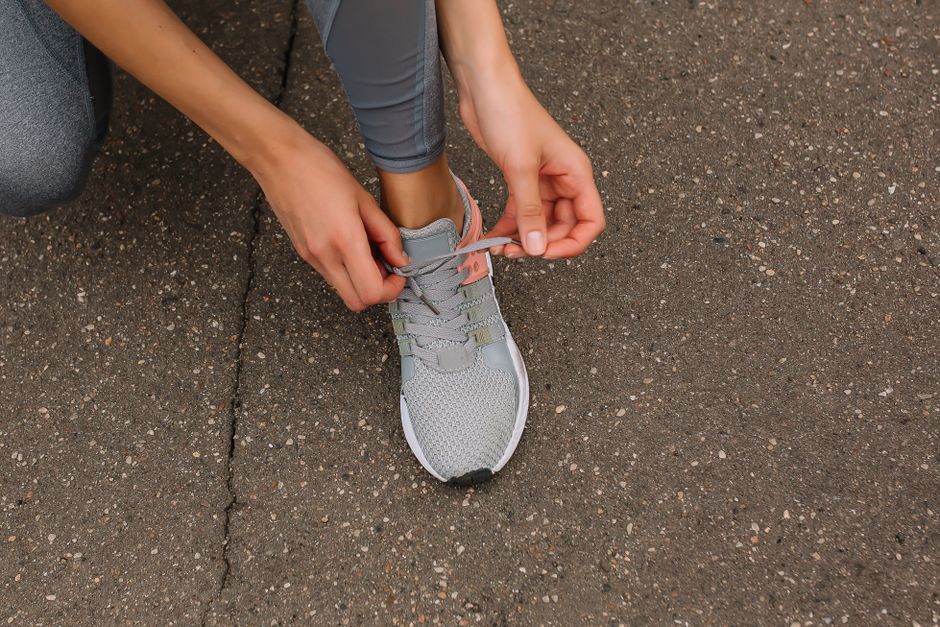
Step 1: Get the right shoes (the one piece of gear that matters)
You don't need fancy gear to start running — but you do need decent shoes. Running in worn-out or unsupportive shoes is the fastest way to develop knee, shin, or foot pain.
- Get a pair of proper running shoes (not casual sneakers).
- If you can, visit a running store where they watch you walk or run and recommend a fit for your foot.
- Replace them roughly every 300–500 miles, as the cushioning wears out.
Everything else — fancy watches, special clothes — is optional. Comfortable clothes you can move and sweat in are all you need to begin.
Step 2: Start with run/walk intervals
This is the single most important tip in this guide: don't try to run continuously at first. Alternate between running and walking. This lets your heart, lungs, muscles, joints, and tendons adapt gradually without overwhelming them.
A simple beginner approach:
- Walk for 2 minutes to warm up.
- Run gently for 1 minute, then walk for 2 minutes.
- Repeat that run/walk cycle 6–8 times.
- Walk for a few minutes to cool down.
As it gets easier over the weeks, gradually increase the running portion and shorten the walking. Before long, you'll be running continuously — and you'll have built up to it safely.
Step 3: Follow a simple 8-week beginner plan
Here's a gentle progression. Run 3 days a week, with rest or easy walking days in between. Each run starts with a 5-minute walk warm-up and ends with a 5-minute walk cool-down.
| Week | Run / Walk pattern (repeat for ~25–30 min) |
|---|---|
| 1–2 | Run 1 min / walk 2 min |
| 3–4 | Run 2 min / walk 2 min |
| 5–6 | Run 3 min / walk 1 min |
| 7 | Run 5 min / walk 1 min |
| 8 | Run 8–10 min / walk 1 min (or run continuously) |
Don't rush the progression. If a week feels too hard, repeat it before moving on. There's no prize for skipping ahead — the goal is steady, injury-free progress.

Step 4: Master the basics of form
You don't need perfect technique, but a few simple cues prevent a lot of beginner aches:
- Run tall. Stand upright with a slight forward lean from the ankles, not the waist.
- Relax your shoulders and hands. Don't clench — keep your upper body loose.
- Take shorter steps. Beginners tend to over-stride; quicker, shorter steps are easier on your knees.
- Land softly under your body, not way out in front of you.
- Breathe naturally. Don't force a rhythm — just breathe deeply and steadily.
Step 5: Pace yourself — the "talk test"
The number one beginner mistake is running too fast. You should be able to hold a conversation while running. If you're gasping and can't speak in sentences, slow down — even to a slow jog. Running slowly is not "cheating"; it's how you build endurance and stay injury-free. Speed comes later, naturally.
Avoiding common injuries
Running is high-impact, so beginners are prone to a few overuse injuries — shin splints, knee pain, and sore Achilles tendons. Prevent them by:
- Building up slowly — never increase your distance or time by more than ~10% per week.
- Resting between runs — your joints and tendons need recovery days, especially early on.
- Warming up and cooling down with a brisk walk.
- Strengthening your legs — a little strength training builds the muscles that support your joints.
- Listening to your body — mild muscle soreness is normal; sharp or joint pain is a signal to rest.
Staying motivated
The early weeks are the hardest. Here's how to keep going until running becomes a habit you enjoy:
- Schedule your runs like appointments.
- Find a route you like — pleasant scenery makes a huge difference.
- Use music or podcasts to keep your mind occupied.
- Track your progress — seeing your run time grow week to week is hugely motivating.
- Sign up for a 5K a couple of months out to give yourself a goal.
- Be patient. The first few weeks feel hard for everyone. Push through and it genuinely gets easier — and even enjoyable.
Frequently asked questions
How often should a beginner run?
Three days a week, with rest days in between, is ideal. This gives your body time to adapt and recover, which prevents injury and burnout.
Is it okay to walk during a run?
Absolutely — run/walk intervals are the recommended way to start. Walking breaks let you build endurance safely. There's nothing wrong with them at any level.
How long until running gets easier?
Most beginners notice it getting noticeably easier within 3–4 weeks of consistent run/walk training. By 8 weeks, many can run continuously for 20–30 minutes.
Should I run every day?
Not as a beginner. Daily running without rest days is a recipe for overuse injuries. Build a base with 3 days a week first; you can add more later if you want.
Does running help with weight loss?
Yes — running burns a lot of calories and supports a calorie deficit. Pair it with sensible eating (see our fat loss guide) for the best results.
The bottom line
Anyone can become a runner — the trick is to start slow, use run/walk intervals, and build up gradually. Get a decent pair of shoes, follow the 8-week plan, keep your pace conversational, and be patient with yourself. Do that, and in a couple of months you'll be running comfortably and wondering why you ever thought you "couldn't run."
Lace up, start with week one, and just focus on showing up. 🏃
Read next


Related articles
- 7 Best Resistance Bands for Home Workouts (2026)
- Home Gym Setup Ideas for Beginners
- Pilates for Beginners: The Complete Guide to Starting at Home
- The Best Glute Workout at Home (No Equipment Needed)
- HIIT Workouts for Beginners: A Complete Guide
- How to Warm Up Before a Workout
Further reading & trusted sources
Where beginners usually go wrong
New runners get hurt doing too much too soon — a run/walk approach and slow mileage increases prevent most early injuries. Going out hard on day one is the classic mistake that ends a running habit in week two.
Maya’s editorial obsession is the gap between fitness hype and what the evidence actually shows — she’d rather hand you one boring habit that works than ten exciting ones that don’t. She builds FitNourish’s guides from mainstream, well-established sources (the CDC, the NHS, Mayo Clinic, and peer-reviewed research) and has a human review every one for accuracy before it publishes. She and the team are dedicated fitness enthusiasts and researchers, not doctors, so everything here is general information rather than medical advice. AI tools help with the research and drafting; the fact-checking and judgement are human.