 By Maya Reed, Editor
Reviewed & updated September 2026 · Researched, AI-assisted & human-reviewed
Educational information only — not medical advice. Learn more
This article is for general educational purposes and is not medical advice. Talk to your doctor before starting a new exercise program, especially if you have back problems.
Abs might be the most sought-after — and most misunderstood — muscles in fitness. Endless crunches, "ab-blaster" gadgets, and miracle belts all promise a six-pack. Almost none of them deliver, because they ignore the one truth that actually matters.
Here it is, up front: everyone already has abs. The rectus abdominis (the six-pack muscle) is there on every single person. Whether you can see it comes down to one thing — the layer of fat sitting on top of it. This guide explains exactly how to build a strong core and how to reveal it, honestly, without the gimmicks.
What this guide coversCurated by Maya · 7 min read- The truth: abs are made in the kitchen
- Part 1: Lowering body fat to reveal your abs
- Part 2: Building a strong, defined core
- The best core exercises (no equipment needed)
- Why crunches alone don’t work
- How long does it take to get abs?
- Common mistakes
- The bottom line
- Related articles
- Further reading & trusted sources
The truth: abs are made in the kitchen
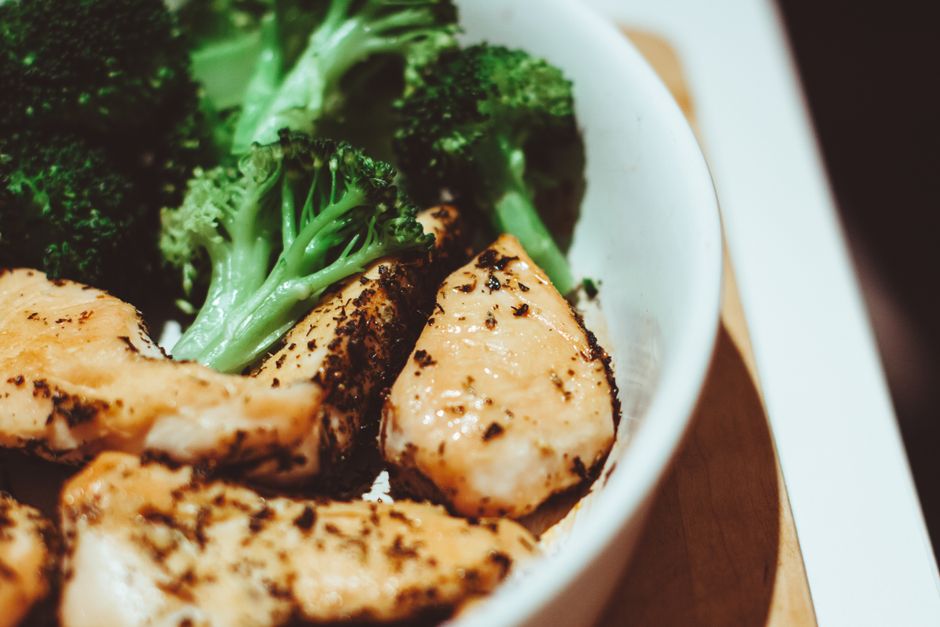
You've probably heard the saying "abs are made in the kitchen," and it's true. You can have incredibly strong abs hidden under a layer of belly fat. To see them, you need to lower your overall body fat — and that happens through your diet, not endless crunches.
Here's the key concept most people miss: you cannot spot-reduce fat. Doing a thousand crunches will strengthen your abs, but it will not burn the fat covering them. Fat loss happens across your whole body, driven by a calorie deficit — eating slightly less than you burn. As your overall body fat drops, your abs gradually become visible.
So getting visible abs is really two jobs:
- Lower your body fat through nutrition (the visibility part).
- Build strong, defined core muscles through training (the shape part).
Most people only do #2 and wonder why nothing shows. Let's do both properly.
Part 1: Lowering body fat to reveal your abs
This is where visibility comes from. The fundamentals:
- Eat in a modest calorie deficit. Slightly less than you burn — this is what reveals the muscle underneath. See our full fat loss guide.
- Prioritise protein. It keeps you full and protects your muscle while you lose fat. Aim for the targets in our protein guide.
- Eat mostly whole foods. They're more filling per calorie, making the deficit easier.
- Be patient. Visible abs typically appear at a relatively low body fat — roughly the mid-teens percentage for many men and somewhat higher for women (women carry more essential fat, which is healthy and normal). This takes time and consistency.
No amount of ab training shortcuts this. The fat has to come off first.
Part 2: Building a strong, defined core
While you lower body fat, you train the core so that when it's revealed, it actually looks strong and defined. And just as importantly, a strong core protects your back, improves posture, and makes every other lift and movement better.
Your "core" is more than the six-pack. It includes:
- Rectus abdominis — the six-pack muscle at the front.
- Obliques — the muscles along the sides of your waist.
- Transverse abdominis — the deep stabilising muscle that acts like a built-in belt.
- Lower back and deep stabilisers — the other half of a balanced core.
A good core routine trains all of these — not just endless crunches.
The best core exercises (no equipment needed)
Train your core 2–4 times a week. Here are the most effective movements:
Stability / anti-movement (the foundation):
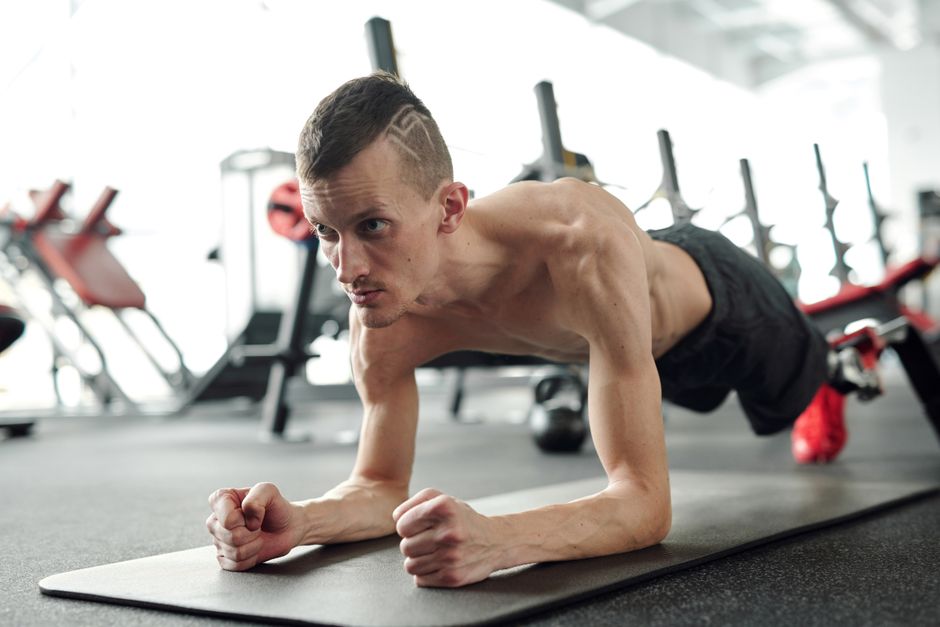
- Plank — hold a straight line from head to heels. Builds deep stability. Start with 20–30 seconds and build up.
- Side plank — targets the obliques and deep stabilisers. Hold each side.
- Dead bug — lying on your back, slowly lower opposite arm and leg. Excellent and back-friendly.
Direct ab work:
- Hanging or lying leg raises — hit the lower abs hard.
- Bicycle crunches — work the rectus abdominis and obliques together.
- Crunches — fine in moderation, but not the be-all and end-all.
Don't forget the back:
- Glute bridges and bird-dogs — strengthen the posterior core for balance and back health.
A simple routine: pick 3–4 of these, do 3 sets each, a few times a week. Quality and control beat speed and high reps.
Why crunches alone don't work
If crunches were the answer, every gym would be full of six-packs. They're not, for two reasons:
- They don't burn the fat covering your abs — only a calorie deficit does that.
- They train only one part of the core in one direction. A strong, functional core needs stability work (planks), anti-rotation, and lower-back strength too.
By all means do crunches — just understand they're one small piece, not the whole solution.
How long does it take to get abs?
Honestly, it depends entirely on your starting body fat. If you're already lean, building visible definition might take a couple of months of consistent training and eating. If you have more fat to lose, revealing your abs could take several months to a year of steady fat loss.
Anyone promising "abs in 2 weeks" is selling something. The good news: every week of consistent eating and training gets you closer, and a strong core benefits your health and performance long before the six-pack shows.
Common mistakes
- Doing endless ab workouts but ignoring diet. The fat has to come off first — that's nutrition.
- Chasing spot reduction. You can't burn belly fat specifically; fat comes off your whole body.
- Only doing crunches. Train the whole core, including stability and the lower back.
- Neglecting overall strength. Building muscle everywhere raises your metabolism and improves your physique. Don't skip full-body training (see our muscle-building guide).
- Impatience. Visible abs are a long game. Trust the process.
Frequently asked questions
Can I get abs by doing crunches every day?
Crunches will strengthen your abs, but they won't make them visible — that requires lowering your body fat through diet. And training the same muscle hard every day isn't ideal; it needs recovery like any other.
How do I lose belly fat specifically?
You can't target belly fat directly — spot reduction is a myth. You lose fat across your whole body through a calorie deficit, and the belly is often one of the last areas to lean out. Stay consistent.
Do I need equipment to train my abs?
No. Planks, leg raises, dead bugs, and bicycle crunches need nothing but the floor. A pull-up bar helps for hanging leg raises, but it's optional.
How often should I train abs?
2–4 times a week is plenty. Your abs recover like any other muscle and don't need daily work.
The bottom line
Getting visible abs comes down to two honest truths: lower your body fat through nutrition to reveal the muscle, and train your whole core to make it strong and defined. Skip the gadgets and the spot-reduction myths. Eat in a sensible deficit, train your core a few times a week, build overall strength, and be patient.
Start with the fat loss fundamentals, add a couple of core sessions a week, and let consistency do the rest.
Read next

Related articles
- How to Improve Your Flexibility: A Beginner’s Guide
- How to Do Push-Ups: Proper Form and Progressions for Beginners
- 7 Best Kettlebells for Home Workouts (2026)
- The Best No-Equipment Bodyweight Workout for Beginners
- The Best Cardio for Fat Loss (And How Much You Actually Need)
- Yoga for Beginners: A Simple Guide to Getting Started
Further reading & trusted sources
What to actually expect
Abs are made by training the core and lowering body fat enough to see it — endless crunches alone won’t reveal them. The honest part most articles skip is that diet, not ab exercises, uncovers them.
Maya’s editorial obsession is the gap between fitness hype and what the evidence actually shows — she’d rather hand you one boring habit that works than ten exciting ones that don’t. She builds FitNourish’s guides from mainstream, well-established sources (the CDC, the NHS, Mayo Clinic, and peer-reviewed research) and has a human review every one for accuracy before it publishes. She and the team are dedicated fitness enthusiasts and researchers, not doctors, so everything here is general information rather than medical advice. AI tools help with the research and drafting; the fact-checking and judgement are human.