 By Maya Reed, Editor
Reviewed & updated September 2026 · Researched, AI-assisted & human-reviewed
Educational information only — not medical advice. Learn more
Your glutes are the largest, most powerful muscles you own — and for anyone who sits all day, usually the laziest. Waking them up does more than shape your backside: it steadies your hips, protects your lower back, and makes stairs, squats, and sprints feel easier. This routine fires them up with zero equipment.
This article is for general fitness and educational purposes only. It is not a substitute for medical advice. Consult a healthcare professional before starting any new exercise program.
 Quick navigationCurated by Maya · 8 min read
- Why Your Glutes Matter (Beyond Aesthetics)
- What You’ll Need
- The Warm-Up (5 Minutes)
- Exercise 1: Glute Bridge (3 sets × 20 reps)
- Exercise 2: Donkey Kicks (3 sets × 15 reps each side)
- Exercise 3: Fire Hydrants (3 sets × 15 reps each side)
- Exercise 4: Sumo Squat (3 sets × 15 reps)
- Exercise 5: Reverse Lunges (3 sets × 12 reps each side)
- Exercise 6: Hip Thrust Hold (3 sets × 30-second hold)
- Cool Down Stretches (5 Minutes)
- How to Progress Over Time
- Sample Weekly Schedule
- The Takeaway
- Related articles
- Further reading & trusted sources
Why Your Glutes Matter (Beyond Aesthetics)
The glutes are the largest muscle group in your body — made up of the gluteus maximus, gluteus medius, and gluteus minimus. Strong glutes aren't just about looks. They're essential for:
- Preventing lower back pain: Weak glutes force your lower back to compensate during movement.
- Knee health: The glute medius stabilizes your hips, reducing stress on the knees.
- Athletic performance: Power in running, jumping, and climbing all originates from the glutes.
- Posture: Tight hip flexors from sitting weaken glutes. Activating them helps you stand taller.
If you sit at a desk all day, chances are your glutes are underactive. This workout directly addresses that.
What You'll Need
Absolutely nothing — just a mat or soft surface and a small patch of floor. Optional: a resistance band around your thighs for extra activation (highly recommended, and cheap to buy).
This routine takes about 25–30 minutes. Complete it 3 times per week with at least one rest day between sessions for best results.
The Warm-Up (5 Minutes)
Never skip this. Cold glutes don't activate well, which means you'll compensate with your quads and lower back.
- Hip circles — 10 each direction
- Glute bridges slow — 10 reps, holding 2 seconds at top
- Clamshells — 15 each side
- Standing hip abductions — 15 each side
After the warm-up, your glutes should feel slightly warm and "woken up."
Exercise 1: Glute Bridge (3 sets × 20 reps)
The glute bridge is the king of bodyweight glute exercises. Lie on your back, knees bent, feet flat on the floor hip-width apart. Drive your hips up until your body forms a straight line from shoulders to knees. Squeeze hard at the top for 1–2 seconds, then lower slowly.
Make it harder: Hold the top for 3 seconds (isometric hold), or try single-leg glute bridges — one leg extended, drive hips up with the other.
Common mistake: Hyperextending your lower back at the top. Only go as high as a straight line — no arching.
Exercise 2: Donkey Kicks (3 sets × 15 reps each side)
On all fours, keep your core tight and your back flat. Kick one leg straight back and up, flexing the glute at the top. The key: move from the hip, not the lower back. Lower back should not rotate.
Pro tip: Pause for 1 second at the top of every rep. That pause is where the muscle-building magic happens.
Progression: Add a resistance band above your knees for more tension, or hold a small weight behind your knee.
Exercise 3: Fire Hydrants (3 sets × 15 reps each side)
Still on all fours. This time, lift one knee out to the side — like a dog at a fire hydrant — keeping a 90-degree bend. This targets the gluteus medius, which is often undertrained and contributes to that "side butt" shape.
Go slow and controlled. If you feel it in your hip flexor more than your outer glute, you may be rotating your torso — keep it square.
Exercise 4: Sumo Squat (3 sets × 15 reps)
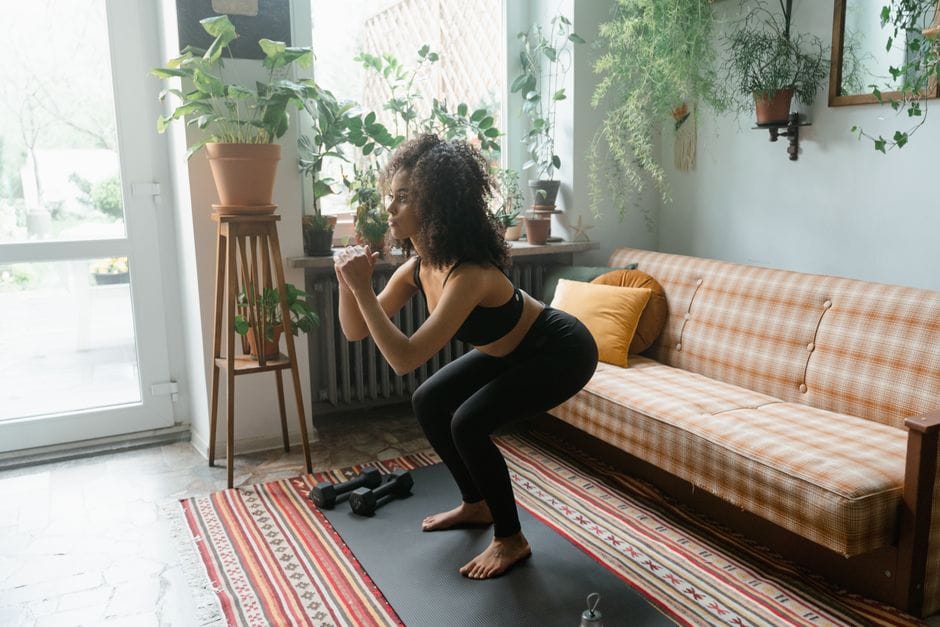
Stand with feet wider than hip-width, toes pointed out at 45 degrees. Lower down into a squat, keeping your chest tall and knees tracking over your toes. Drive through your heels to stand, squeezing glutes at the top.
The wide stance shifts the emphasis to your inner glutes and adductors compared to a regular squat. This is a great compound movement that also strengthens your legs and core.
Tempo suggestion: 3 seconds down, 1-second pause, 1 second up. Slow eccentrics (the lowering phase) are highly effective for hypertrophy.
Exercise 5: Reverse Lunges (3 sets × 12 reps each side)
Stand tall and step one foot straight back, lowering your back knee toward the floor. Push through the front heel to return. The front leg — specifically the glute — should do the work.
Reverse lunges are gentler on the knees than forward lunges, making them ideal for most fitness levels. They also challenge your balance and unilateral (single-leg) strength, which is critical for functional fitness.
Common mistake: Letting the front knee cave inward. Push it slightly outward to keep proper tracking.
Exercise 6: Hip Thrust Hold (3 sets × 30-second hold)
This is the isometric finisher that burns. Sit on the floor with your upper back against a couch or chair. Bend your knees, feet flat. Drive your hips up to a straight line, and HOLD for 30 seconds. Squeeze as hard as you can.
If 30 seconds is too easy, extend to 45 or 60 seconds. If it's too hard, start at 15.
The sustained tension of an isometric hold is phenomenally effective for glute activation and endurance.
Cool Down Stretches (5 Minutes)
Stretch the glutes after every session to prevent tightness and soreness:
- Figure-4 stretch (seated or lying) — 30 seconds each side
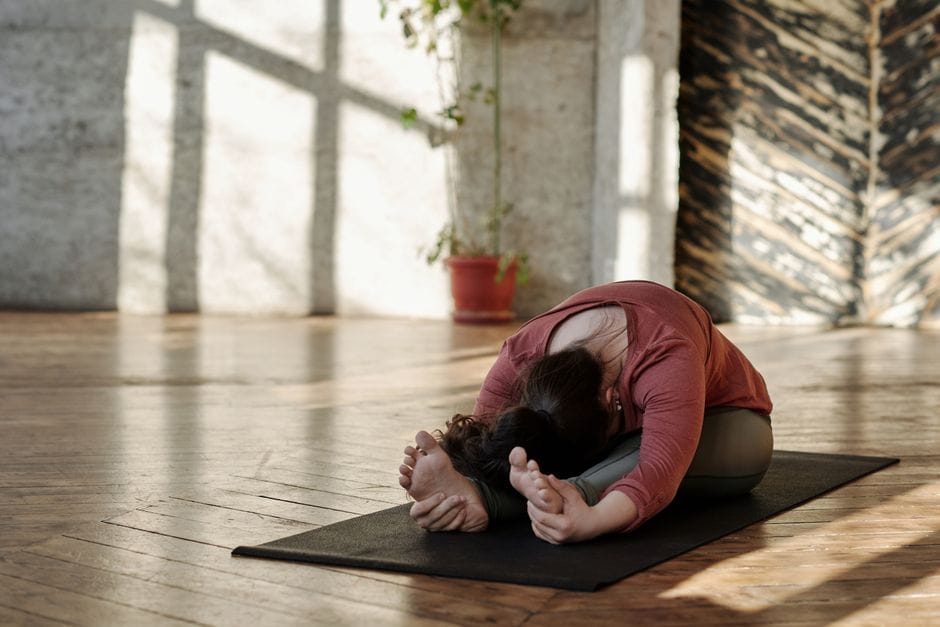
- Pigeon pose or hip flexor stretch — 30 seconds each side
- Seated glute stretch — pull one knee toward opposite shoulder
Don't skip the cool down. Tight glutes can contribute to lower back discomfort and reduced range of motion over time.
How to Progress Over Time
Bodyweight training works — but only if you progressively challenge your muscles. Here's how to keep making gains:
- Increase reps — Go from 15 to 20 to 25.
- Add pauses — Hold contractions longer at peak.
- Slow the eccentric — Lower more slowly on every rep.
- Add resistance bands — A $10–15 loop band dramatically increases difficulty.
- Advance the exercises — Single-leg versions of bridges, squats, and deadlifts.
Aim to progressively make things harder every 2–3 weeks.
Sample Weekly Schedule
| Day | Workout |
|---|---|
| Monday | Glute Workout |
| Tuesday | Rest or light walk |
| Wednesday | Glute Workout |
| Thursday | Rest or yoga |
| Friday | Glute Workout |
| Saturday | Active rest (hiking, swimming) |
| Sunday | Full rest |
The Takeaway
Building stronger glutes at home is 100% achievable with consistency and the right exercises. This routine targets all three glute muscles through a variety of movement patterns — bridges, kickbacks, abductions, and squats — to ensure balanced development. Show up 3 times a week, focus on the muscle squeeze with each rep, and progress the difficulty over time. Results will follow.
Frequently Asked Questions
How long until I see results from glute exercises at home?
Most people notice improved strength within 2–3 weeks and visible changes in muscle tone within 6–8 weeks of consistent training 3x per week. Nutrition (adequate protein) and sleep also play major roles in muscle development.
Should I feel sore after a glute workout?
Mild soreness (DOMS) 24–48 hours after is normal, especially if you're new to training. Severe pain is not — that's a sign of overdoing it. As you get fitter, soreness will decrease even as you get stronger.
Can I do this workout every day?
Muscles grow during rest, not during the workout itself. Training glutes every single day without rest doesn't give them time to repair and grow. 3 sessions per week with rest days in between is the sweet spot.
Do I need weights to build glutes at home?
Not to start. Bodyweight exercises done with proper form, slow tempos, and progressive overload are highly effective. A resistance band is a cheap upgrade that makes bodyweight moves significantly harder when you're ready.
Read next

Related articles
- Running for Beginners: How to Start and Stick With It
- How to Build Muscle: A Complete Beginner’s Guide (2026)
- How to Build a Home Gym on a Budget (Under $200 Setup)
- 8 Best Adjustable Dumbbells for Small Spaces in 2026
- How to Start Working Out at Home: A Beginner’s Guide
- 7 Best Resistance Bands for Home Workouts (2026)
Further reading & trusted sources
The detail that makes the difference
Glutes respond to actually feeling them work, not just doing the motion — a slow squeeze at the top beats fast, sloppy reps. Most people feel it everywhere but the glutes because they rush the contraction.
Maya’s editorial obsession is the gap between fitness hype and what the evidence actually shows — she’d rather hand you one boring habit that works than ten exciting ones that don’t. She builds FitNourish’s guides from mainstream, well-established sources (the CDC, the NHS, Mayo Clinic, and peer-reviewed research) and has a human review every one for accuracy before it publishes. She and the team are dedicated fitness enthusiasts and researchers, not doctors, so everything here is general information rather than medical advice. AI tools help with the research and drafting; the fact-checking and judgement are human.