 By Maya Reed, Editor
Reviewed & updated September 2026 · Researched, AI-assisted & human-reviewed
Educational information only — not medical advice. Learn more
This article is for general educational purposes and is not medical advice. Talk to your doctor before starting a new exercise program.
A single pair of dumbbells and about six square feet of floor is enough to train every major muscle you’ve got — no bench, no rack, no machines. This full-body workout proves it: push, pull, squat, hinge, and carry, all from one set of weights you can stash under the bed.
This guide gives you a complete, balanced full-body dumbbell workout you can do 3 times a week, the form cues that keep you safe, and how to progress over time so you keep getting results.
Skip ahead toCurated by Maya · 7 min readWhy full-body workouts are great for most people
For beginners and busy people, a full-body routine 3 times a week beats complicated "bro splits" that train one muscle per day. Here's why:
- You hit every muscle multiple times a week, which is excellent for building muscle.
- It's time-efficient — three focused sessions instead of six.
- It's flexible — miss a day and you've still trained your whole body that week.
- It's beginner-friendly — you master a handful of key movements instead of dozens.
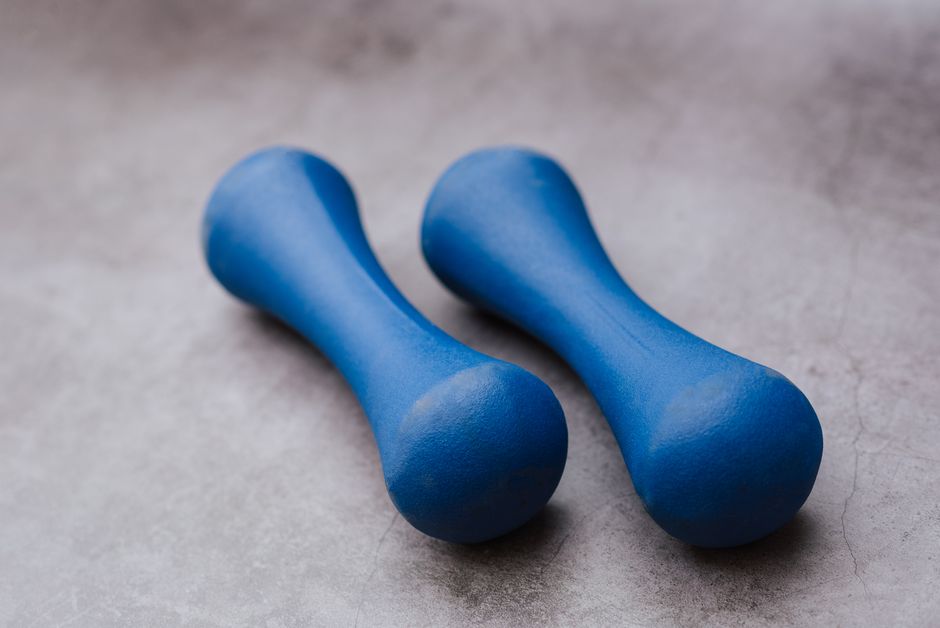
You only need one pair of dumbbells to start, though an adjustable set is ideal so you can increase the weight as you get stronger. (See our guide to the best adjustable dumbbells.)
The full-body dumbbell workout
Do this workout 3 times a week (e.g. Monday, Wednesday, Friday) with a rest day between sessions. Start with a 5-minute warm-up (light cardio + a few easy reps), then perform the exercises below.
Format: 3 sets of 8–12 reps for each exercise, resting 60–90 seconds between sets.
1. Goblet Squat (legs & glutes)
Hold one dumbbell vertically against your chest. Squat down by pushing your hips back and bending your knees, keeping your chest up, then drive back up. The king of lower-body exercises.
2. Dumbbell Bench Press or Floor Press (chest, shoulders, triceps)
Lie on a bench (or the floor) with a dumbbell in each hand. Press them up over your chest, then lower under control. Builds your pushing muscles.
3. Bent-Over Dumbbell Row (back & biceps)
Hinge forward at the hips with a flat back, a dumbbell in each hand. Pull the dumbbells toward your ribs, squeezing your shoulder blades, then lower. Essential for a strong back and good posture.
4. Romanian Deadlift (hamstrings & glutes)
Holding dumbbells in front of your thighs, push your hips back and lower the weights down your legs with a slight knee bend, keeping your back flat. Feel the stretch in your hamstrings, then stand tall.
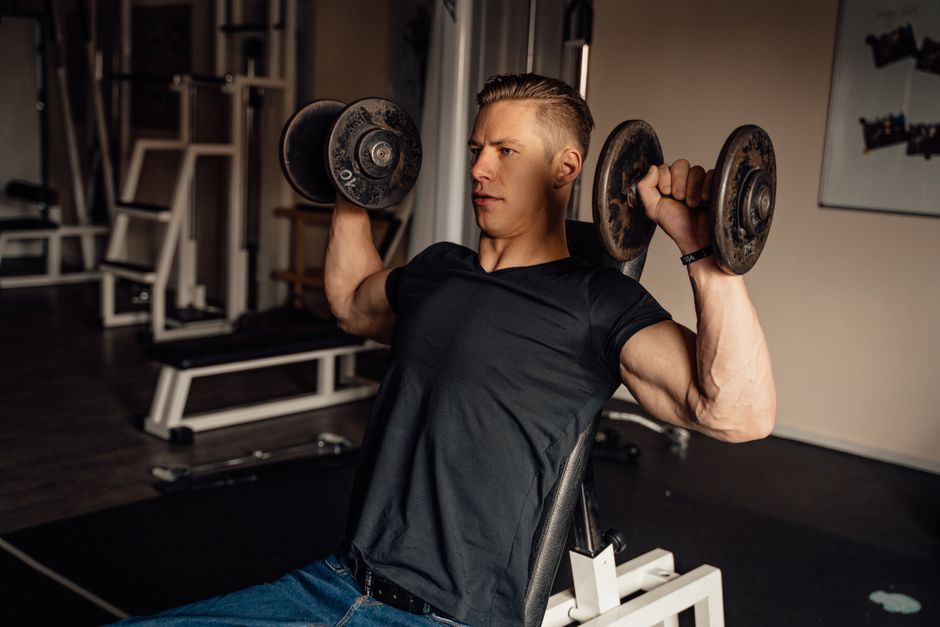
5. Dumbbell Shoulder Press (shoulders)
Standing or seated, press the dumbbells from shoulder height up overhead, then lower. Builds strong, capable shoulders.
6. Dumbbell Lunges (legs & balance)
Step forward into a lunge, lowering your back knee toward the floor, then push back up. Alternate legs. Great for leg strength and balance.
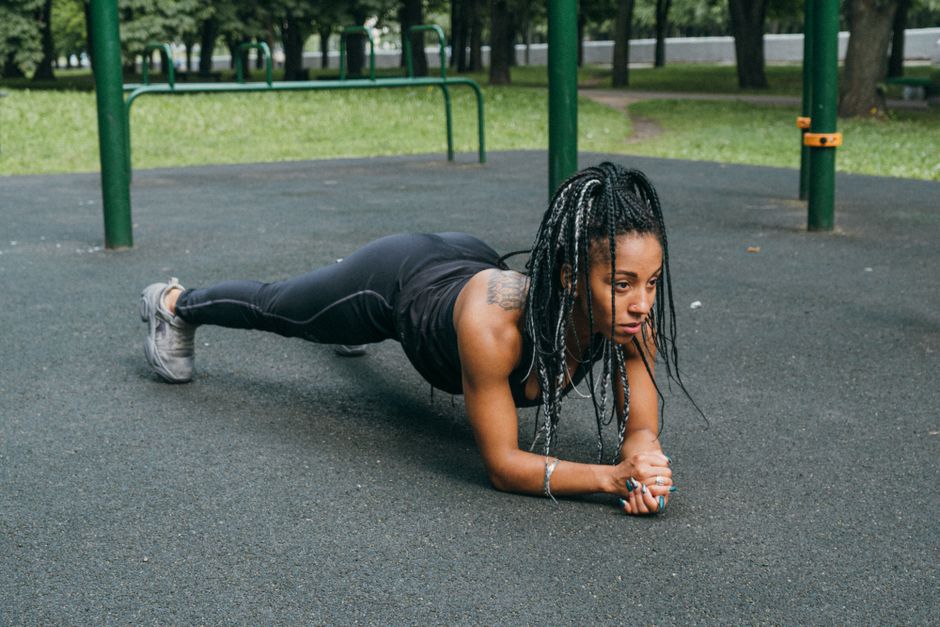
7. Plank (core)
Finish with a plank — hold a straight line from head to heels for 20–40 seconds. Repeat 3 times.
That's it — seven movements that train your entire body in about 35–45 minutes.
Form first, weight second
The most common beginner mistake is using too much weight with sloppy form. This trains your ego, not your muscles, and invites injury. Instead:
- Choose a weight where the last 2 reps of each set are genuinely challenging but you can still keep good form.
- Control the lowering portion of every rep — don't let gravity do the work.
- Move through a full range of motion.
- If your form breaks down, the weight is too heavy — drop it.
How to progress (so you keep getting results)
Your body adapts to a given weight, so you have to keep challenging it — this is progressive overload, the key to ongoing progress. Each week, aim to do a little more:
- Add reps — if you did 8 reps last week, aim for 9 or 10 this week.
- Add weight — once you can comfortably do 12 reps for all sets, increase the weight slightly and drop back to 8 reps.
- Add a set — over time, you can add a fourth set to key lifts.
Track your workouts in a notebook or app. Writing down your weights and reps, and trying to beat them, is the single most effective habit for building strength. (More in our muscle-building guide.)
A sample weekly schedule
| Day | Activity |
|---|---|
| Monday | Full-body dumbbell workout |
| Tuesday | Rest or easy walk |
| Wednesday | Full-body dumbbell workout |
| Thursday | Rest or light cardio |
| Friday | Full-body dumbbell workout |
| Weekend | Rest, walk, or active recovery |
Three strength sessions, plenty of recovery — perfect for steady progress.
Frequently asked questions
Can you build muscle with just dumbbells?
Absolutely. Dumbbells let you train every muscle group through a full range of motion, and as long as you progressively add weight or reps, your muscles will grow. Many people build impressive physiques with dumbbells alone.
How heavy should my dumbbells be?
It depends on the exercise and your strength. You want a weight where the last couple of reps are hard but doable with good form. Adjustable dumbbells are ideal because different exercises need different weights, and you'll get stronger over time.
How often should I do a full-body workout?
Three times a week with rest days between is ideal for most people. This gives each muscle enough stimulus to grow plus enough recovery to repair.
Do I need a bench?
It helps for presses, but it's not essential. You can do floor presses and other variations without one. A simple adjustable bench is a worthwhile upgrade later.
The bottom line
A pair of dumbbells and three full-body sessions a week is all most people need to build real strength and muscle at home. Focus on the seven key movements, keep your form clean, progressively add weight or reps, and stay consistent.
Start light, master the movements, and let progressive overload do the rest. Pair this routine with good protein intake and recovery nutrition, and you've got a complete plan.
Read next

Related articles
- How to Get Abs: An Honest Guide to a Six-Pack
- Running for Beginners: How to Start and Stick With It
- How to Build Muscle: A Complete Beginner’s Guide (2026)
- How to Build a Home Gym on a Budget (Under $200 Setup)
- 8 Best Adjustable Dumbbells for Small Spaces in 2026
- How to Start Working Out at Home: A Beginner’s Guide
Further reading & trusted sources
The detail that makes the difference
A single pair of dumbbells goes far if you progress — add reps or slow the lowering phase before assuming you need heavier ones. Most people stall by repeating the same weight and reps instead of nudging the challenge.
Maya’s editorial obsession is the gap between fitness hype and what the evidence actually shows — she’d rather hand you one boring habit that works than ten exciting ones that don’t. She builds FitNourish’s guides from mainstream, well-established sources (the CDC, the NHS, Mayo Clinic, and peer-reviewed research) and has a human review every one for accuracy before it publishes. She and the team are dedicated fitness enthusiasts and researchers, not doctors, so everything here is general information rather than medical advice. AI tools help with the research and drafting; the fact-checking and judgement are human.