 By Maya Reed, Editor
Reviewed & updated September 2026 · Researched, AI-assisted & human-reviewed
Educational information only — not medical advice. Learn more
This article is for general information and is not medical advice.
The push-up is the most useful bodyweight exercise there is. It builds your chest, shoulders, triceps, and core at once, needs zero equipment, and works anywhere. But it's also one of the most commonly butchered moves in the gym — sagging hips, flaring elbows, and half-reps rob you of most of the benefit and can nag your shoulders.
This guide shows you exactly how to do a proper push-up, how to build up to your first one if you can't do any yet, and how to keep making them harder as you get stronger.
 Jump to a sectionCurated by Maya · 6 min read
How to do a perfect push-up
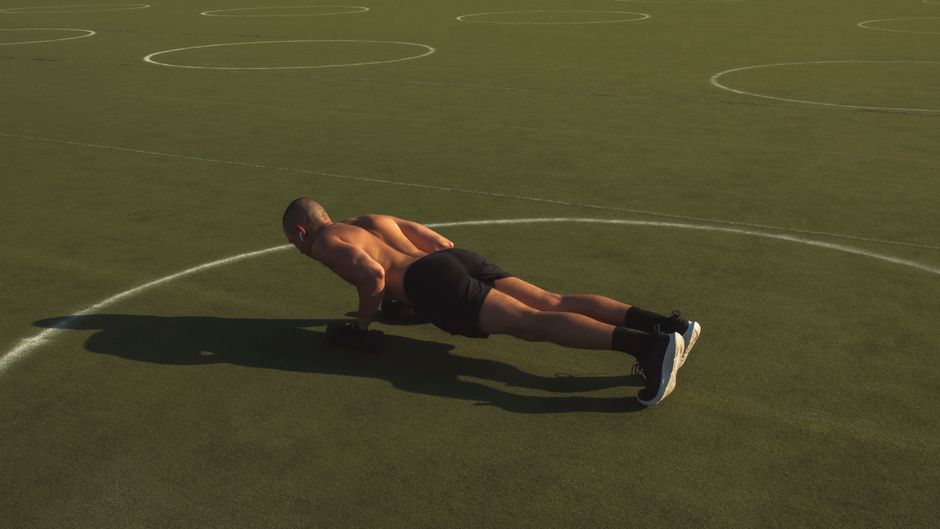
- Set your hands slightly wider than shoulder-width, palms flat, fingers spread and pointing forward.
- Get into a plank — body in one straight line from head to heels. Squeeze your glutes and brace your core like you're about to be poked in the stomach.
- Set your elbows. As you lower, your arms should form roughly a 45-degree angle with your body — not flared straight out to the sides like a "T".
- Lower under control until your chest is about a fist's height from the floor (or lightly touches). Keep your neck neutral — look at the floor a little ahead of you, not up.
- Press back up powerfully, keeping your body rigid the whole time. Fully straighten your arms at the top without letting your hips sag or pike up.
One rule above all: your body stays in a straight line the entire rep. If your hips drop or your butt sticks up, that's the rep breaking down.
The most common mistakes
- Sagging hips: Usually a weak or unbraced core. Squeeze your glutes and abs hard.
- Flaring elbows: Hard on the shoulders. Keep elbows at about 45 degrees.
- Half reps: Going partway down. Lower until your chest nearly touches for full benefit.
- Head dropping forward: Keep your neck in line with your spine.
- Rushing: Control the lowering phase; don't bounce off the floor.
Can't do a push-up yet? Start here
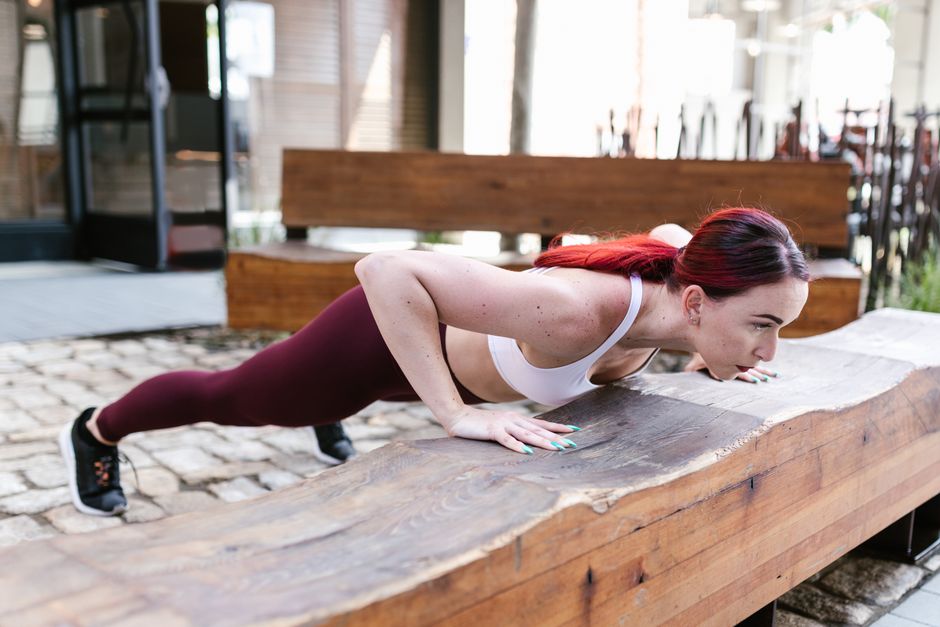
Skip the "girl push-up" on your knees — there's a better progression that carries straight over to the real thing because it keeps your body in a straight line:
- Wall push-ups — stand arm's length from a wall, hands on it, and push. Master these first.
- Incline push-ups — hands on a sturdy table, then a chair, then a low step. The lower the surface, the harder it gets.
- Knee push-ups — from the floor on your knees, keeping a straight line from knees to head.
- Negatives — from the top position on your toes, lower as slowly as you can (aim for 3–5 seconds), then reset.
- Full push-ups — put it together. Even one clean rep is a win; build from there.
Work on whichever step you can do for 3 sets of 8–12 reps, then move to the next.
Once full push-ups are easy: harder variations
- Tempo push-ups — lower for a slow 3-count to increase time under tension.
- Decline push-ups — feet elevated on a step or chair to shift load to the upper chest and shoulders.
- Diamond push-ups — hands close together under your chest to hammer the triceps.
- Archer push-ups — shift weight to one arm at a time, a step toward the one-arm push-up.
- Add reps and sets — progressive overload still applies to bodyweight moves.
How to program push-ups
Train them 2–3 times a week on non-consecutive days. A simple approach: do as many clean reps as you can in a set (stopping 1–2 reps before form breaks), rest 60–90 seconds, and repeat for 3–4 sets. Aim to add a rep or two each week.
For a full routine, pair push-ups with our no-equipment bodyweight workout and our beginner's guide to working out at home.
Frequently asked questions
How many push-ups should a beginner do?
Start with whatever you can do with good form — even 3–5 clean reps. Do 3 sets, stopping before your form breaks, and build up over time. Quality beats quantity every session.
Why can't I do a push-up?
Usually a mix of strength and technique. Build up with wall and incline push-ups, strengthen your core so your hips don't sag, and practice negatives. Most people get their first full rep within a few weeks of consistent work.
Are push-ups enough to build muscle?
Push-ups build real upper-body and core strength, especially for beginners. As they get easy, you'll need harder variations or added load (like a weighted vest or backpack) to keep progressing.
How often should I do push-ups?
Two to three times a week on non-consecutive days lets the muscles recover and grow. Daily push-ups can work for low reps, but more rest generally means better progress.
The bottom line
A proper push-up is a full-body strength move hiding in plain sight. Keep your body in a straight line, lower with control, and press all the way up. Can't do one yet? Build up with wall and incline versions. Already strong? Slow the tempo, elevate your feet, and keep adding reps.
Next, try our no-equipment bodyweight workout, or learn how to build muscle as a beginner.
Read next


Related articles
- The Cheapest Way to Build a Home Gym (2026 Update)
- Smart Home Gym Storage Ideas for Small Apartments
- The 5 Pieces You Actually Need for a Home Gym
- “Resistance Bands vs Dumbbells: Which Should You Buy First?”
- Best Home Gym Equipment Under $100
- How Many Calories Should You Eat to Lose Weight?
Further reading & trusted sources
The detail that makes the difference
If full push-ups aren’t there yet, do them on an incline (hands on a counter) rather than from the knees — incline push-ups carry over to the real thing better. Lowering with control builds more than bouncing through reps.
Maya’s editorial obsession is the gap between fitness hype and what the evidence actually shows — she’d rather hand you one boring habit that works than ten exciting ones that don’t. She builds FitNourish’s guides from mainstream, well-established sources (the CDC, the NHS, Mayo Clinic, and peer-reviewed research) and has a human review every one for accuracy before it publishes. She and the team are dedicated fitness enthusiasts and researchers, not doctors, so everything here is general information rather than medical advice. AI tools help with the research and drafting; the fact-checking and judgement are human.