 By Maya Reed, Editor
Reviewed & updated September 2026 · Researched, AI-assisted & human-reviewed
Educational information only — not medical advice. Learn more
As an Amazon Associate, we earn from qualifying purchases. This article is for general information and is not medical advice.
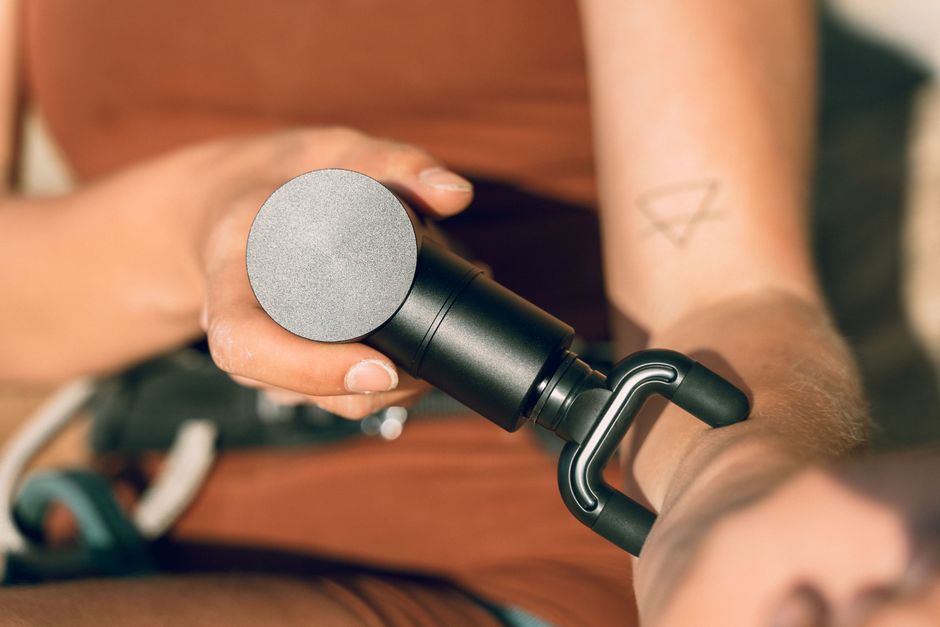
A massage gun delivers rapid bursts of pressure deep into a muscle — percussive therapy that many people swear by for easing soreness, loosening tight spots, and feeling fresher between workouts. A few minutes after training can make a real difference to how your legs feel the next day.
But the market is flooded with options ranging from pocket-sized minis to industrial-strength devices, and price doesn't always equal quality. Below are our top picks for home recovery, who each is best for, and a buying guide covering the specs that actually matter.
 Skip ahead toCurated by Maya · 6 min read
Why a massage gun is worth it
Massage guns use percussion — fast, repetitive pulses — to apply pressure deeper and faster than you can by hand. Many people find this helps reduce muscle soreness, improves the feeling of tightness, and is a convenient way to self-massage hard-to-reach areas. It's not magic and won't fix an injury, but as a quick, repeatable recovery tool it's genuinely useful.
Our top picks
| Category | Our pick | Best for |
|---|---|---|
| 🏆 Best overall | Mid-Range Percussion Massager | Most people, for everyday post-workout recovery |
| 💸 Best budget | Compact Mini Massage Gun | Travel, beginners, and tight budgets |
| 💪 Best for deep tissue | High-Torque Pro Massager | Heavy training loads and stubborn deep tightness |
🏆 Best overall: Mid-Range Percussion Massager
A mid-range device hits the balance most people actually need: enough power for sore legs and backs, a quiet motor, a comfortable grip, and a battery that lasts multiple sessions. Several speed settings and head attachments cover most muscle groups.
- Best for: Most people, for everyday post-workout recovery.
- Pros: Strong but quiet, good battery life, versatile attachments.
- Cons: Bulkier than a mini for travel.
💸 Best budget: Compact Mini Massage Gun
A mini massage gun is small, light, and surprisingly capable for the price. It fits in a gym bag and is perfect for quick sessions on calves, arms, and shoulders.
- Best for: Travel, beginners, and tight budgets.
- Pros: Affordable, portable, easy one-handed use.
- Cons: Less power and shorter battery than full-size units.
💪 Best for deep tissue: High-Torque Pro Massager
A high-torque "pro" device pushes deeper without stalling on dense muscle, with a longer stroke (amplitude) for more intense work. It's overkill for casual users but ideal for serious athletes.
- Best for: Heavy training loads and stubborn deep tightness.
- Pros: Powerful, deep amplitude, durable build.
- Cons: Pricey; can be too intense for beginners.
A few more options worth knowing
Beyond our top three, a few other styles suit specific needs (no links — just so you know what's out there):
- Heated massage guns add warmth, which some people find helps muscles relax faster.
- Ultra-quiet models matter if you'll use it near sleeping family or in an apartment.
- Adjustable-arm devices help you reach your own back and shoulders solo.
- Budget multi-attachment kits include heads for different muscle groups.
Buying guide: how to choose a massage gun
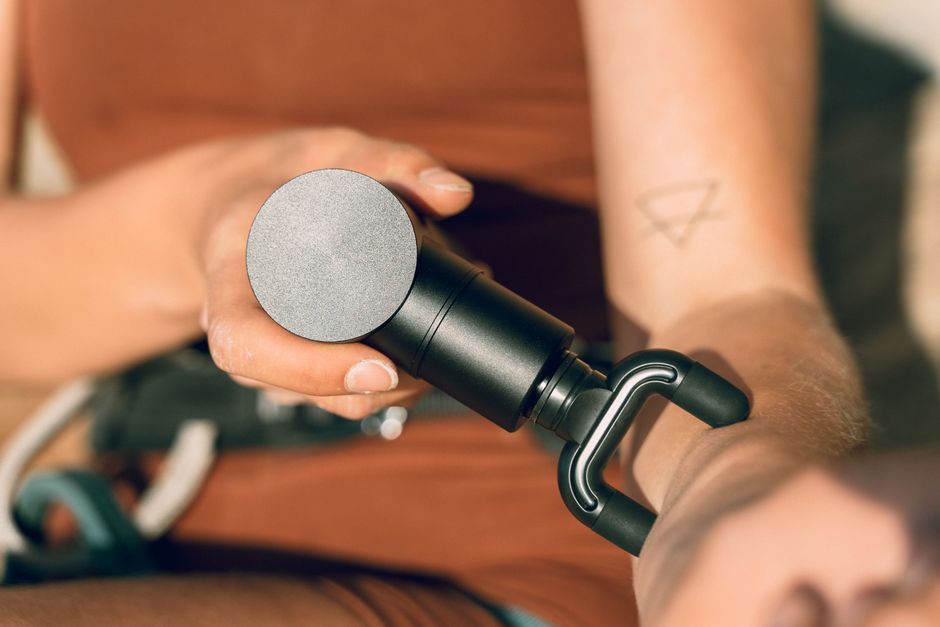
Amplitude (stroke depth). This is how far the head travels — roughly 10–12 mm is firm and deep; smaller strokes are gentler. Deeper isn't always better, especially for beginners.
Stall force. This is how much pressure the motor handles before stopping. Higher stall force means you can press harder into dense muscle without the head halting.
Noise. Cheaper or more powerful units can be loud. If you'll use it around others, look for "quiet" or low-decibel models.
Battery and weight. Look for a battery that lasts several sessions per charge, and remember you'll be holding it — lighter is easier on your arms.
How to use it safely
Glide the gun slowly over a muscle for 30–60 seconds per area, letting the percussion do the work — don't grind hard into one spot. Avoid bones, joints, the front of the neck, and any injured, bruised, or numb area. If something hurts sharply or you have a medical condition, check with a professional first.
Pair recovery with good sleep — see why sleep is the secret weapon of fitness — and good foods for muscle recovery.
Frequently asked questions
Do massage guns actually work?
Many people find massage guns reduce muscle soreness and ease tightness, and research on percussive therapy is promising for recovery and range of motion. They're a helpful recovery aid, not a treatment for injuries.
How long should I use a massage gun?
Around 30–60 seconds per muscle group, and a few minutes total per session. More isn't better — keep it gentle and stop if anything feels painful.
When should I use a massage gun?
After workouts to ease soreness, or before as part of a warm-up to loosen up. Avoid using it on injured, swollen, or numb areas.
Are massage guns safe?
For most healthy people, yes, when used on muscle (not bone, joints, or the neck). If you're pregnant, have a medical condition, or take blood thinners, check with a doctor first.
The bottom line
For most people, a mid-range percussion massager is the best all-round choice — powerful enough, quiet enough, and built to last. On a budget or for travel, a compact mini delivers most of the benefit. Training hard? A high-torque pro device goes deeper.
Recover smarter: read why sleep is the secret weapon of fitness and the best foods for muscle recovery next.
Read next
Related articles
- Best Cheap Cardio Equipment for Small Spaces (No Treadmill)
- 6 Best Creatine Supplements for Beginners (2026)
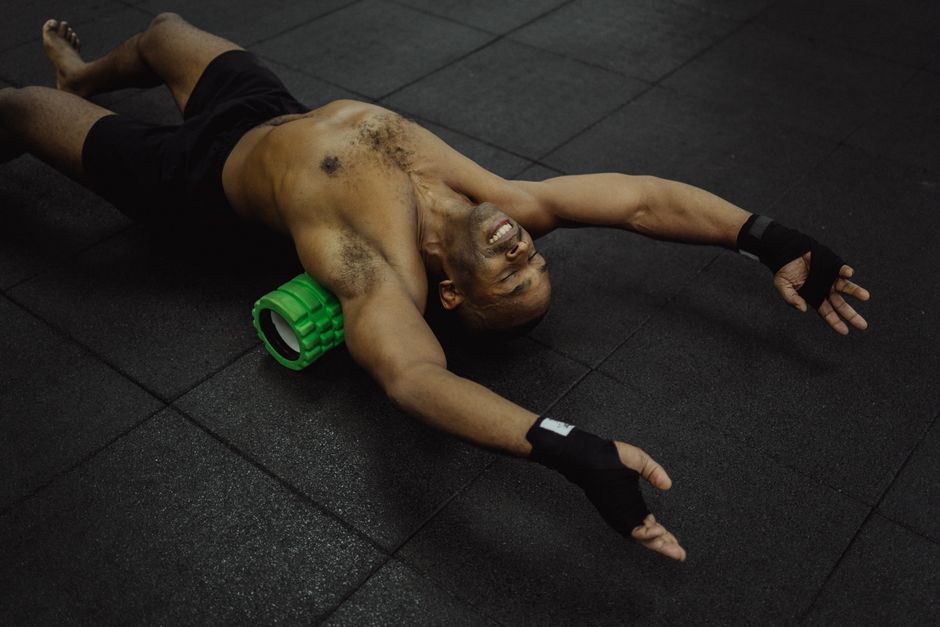
- 6 Best Foam Rollers for Recovery (2026)
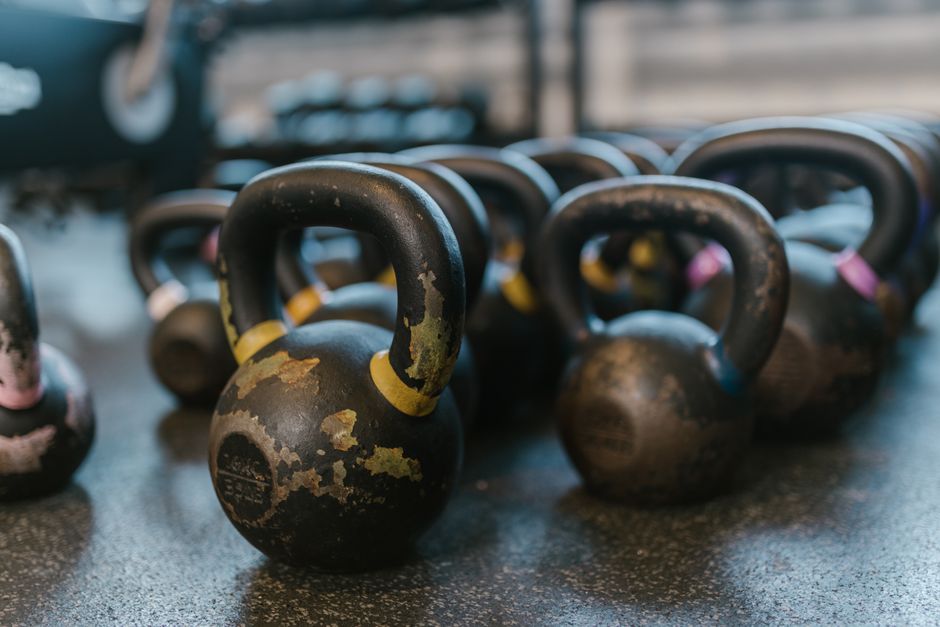
- 7 Best Kettlebells for Home Workouts (2026)
- Sleep and Fitness: Why It Matters (And How to Sleep Better)
- The Best Foods for Muscle Recovery After Training
Further reading & trusted sources
Where beginners usually go wrong
A massage gun feels great and can help you loosen up, but it’s a comfort tool, not a substitute for real recovery — sleep and food do the heavy lifting. Manage that expectation and it earns its place.
Maya’s editorial obsession is the gap between fitness hype and what the evidence actually shows — she’d rather hand you one boring habit that works than ten exciting ones that don’t. She builds FitNourish’s guides from mainstream, well-established sources (the CDC, the NHS, Mayo Clinic, and peer-reviewed research) and has a human review every one for accuracy before it publishes. She and the team are dedicated fitness enthusiasts and researchers, not doctors, so everything here is general information rather than medical advice. AI tools help with the research and drafting; the fact-checking and judgement are human.