 By Maya Reed, Editor
Reviewed & updated September 2026 · Researched, AI-assisted & human-reviewed
Educational information only — not medical advice. Learn more
Eight weeks is long enough to build a real strength foundation and short enough that you can actually see it through. This plan uses dumbbells (or resistance bands if that's what you have) and needs no gym membership — just consistency and a little floor space.
This article is for general fitness education, not medical advice. Check with a doctor before starting a new exercise program, especially if you have an existing injury or health condition.
 In this guideCurated by Maya · 8 min read
- Why 8 weeks (and why strength training specifically)
- What you’ll need
- The structure: 3 days a week, full body
- Weeks 1-2: Learn the movements
- Weeks 3-4: Add load and volume
- Weeks 5-6: Push the weight
- Weeks 7-8: Consolidate and test
- What to do about soreness and rest days
- Common mistakes that stall progress
- The takeaway
- Further reading & trusted sources
Why 8 weeks (and why strength training specifically)
Eight weeks is enough time for your nervous system to get noticeably better at recruiting muscle — most of the early "strength" gains beginners feel aren't new muscle tissue, they're your brain getting more efficient at firing the muscle you already have. That's why a first-timer can go from struggling with a 10-pound dumbbell to handling 20 pounds for the same reps in a matter of weeks, well before any visible muscle growth shows up.
Strength training also does more for day-to-day life than most people expect from a home routine. It protects bone density, makes everyday tasks (carrying groceries, climbing stairs, getting up off the floor) noticeably easier, and raises your resting metabolic rate slightly by adding muscle tissue that burns more energy than fat, even at rest. None of that requires a gym. A pair of adjustable dumbbells and a bit of floor space covers this entire plan — see our home gym setup ideas for beginners if you still need to pick equipment.
What you'll need
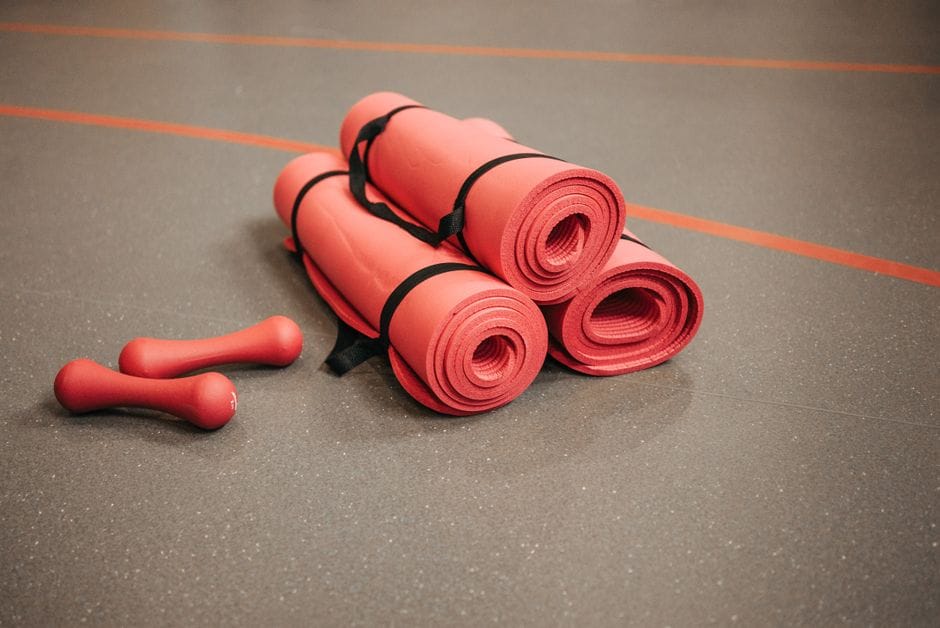
- A pair of dumbbells (adjustable ones save space — start light and go heavier as you progress)
- A mat or towel for floor work
- A sturdy chair or low bench (optional, for step-ups and tricep dips)
- About 30-40 minutes, 3 days a week
If you're working with a tight budget, our guide to the 5 pieces you actually need for a home gym covers exactly this kind of minimal setup.
The structure: 3 days a week, full body
This plan uses a full-body split three non-consecutive days a week (for example Monday, Wednesday, Friday), which is the setup most beginner research supports — it hits every major muscle group often enough to build strength quickly without requiring the recovery capacity of a 5-day program most beginners haven't built yet.
Each session follows the same shape: a short warm-up, five to six main exercises, and a brief cool-down. You'll do 2-3 sets of 8-12 reps per exercise, resting 60-90 seconds between sets.
Weeks 1-2: Learn the movements
The first two weeks are about pattern, not weight. Use a light enough dumbbell that your last rep still feels controlled — this is not the week to chase soreness.
Workout A
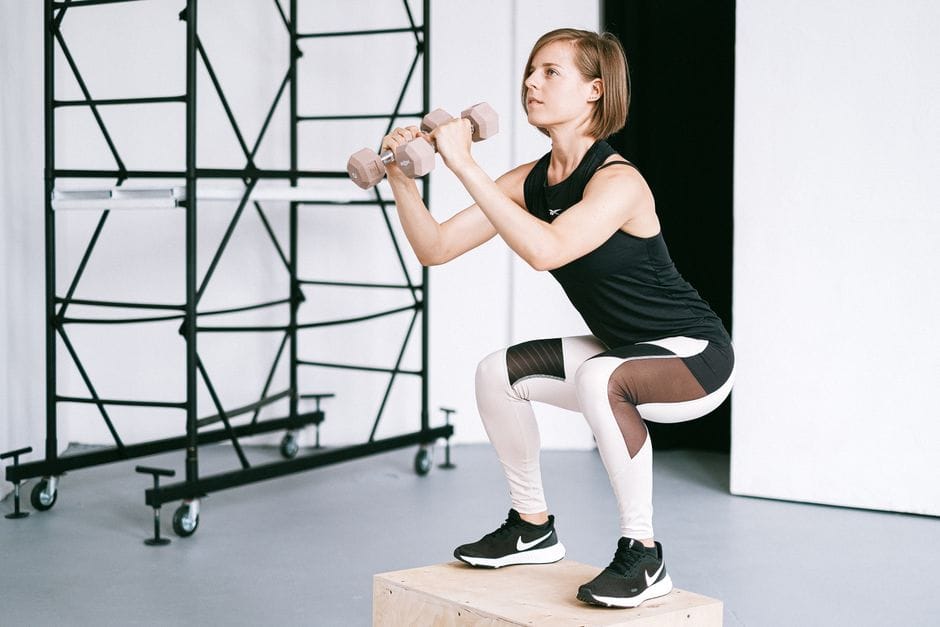
- Goblet squat — 2 sets x 10 reps
- Dumbbell row (one arm at a time) — 2 sets x 10 reps per side
- Push-up (knees down if needed) — 2 sets x 8 reps
- Glute bridge — 2 sets x 12 reps
- Plank — 2 sets, hold 20-30 seconds
Repeat this same workout all three days in weeks 1-2. Focus on form: full range of motion, controlled tempo, breathing out on the effort. If a movement feels off, our proper squat and proper plank form guides break down the common mistakes.
Weeks 3-4: Add load and volume
By week 3 the movements should feel familiar. Increase to 3 sets per exercise and add a second, slightly different workout so you're not doing the exact same session every time.
Workout A (Monday)
- Goblet squat — 3 sets x 10
- Dumbbell row — 3 sets x 10/side
- Push-up — 3 sets x 10
- Glute bridge — 3 sets x 12
- Plank — 3 sets, 30-40 seconds
Workout B (Wednesday, Friday)
- Dumbbell deadlift — 3 sets x 10
- Overhead press — 3 sets x 10
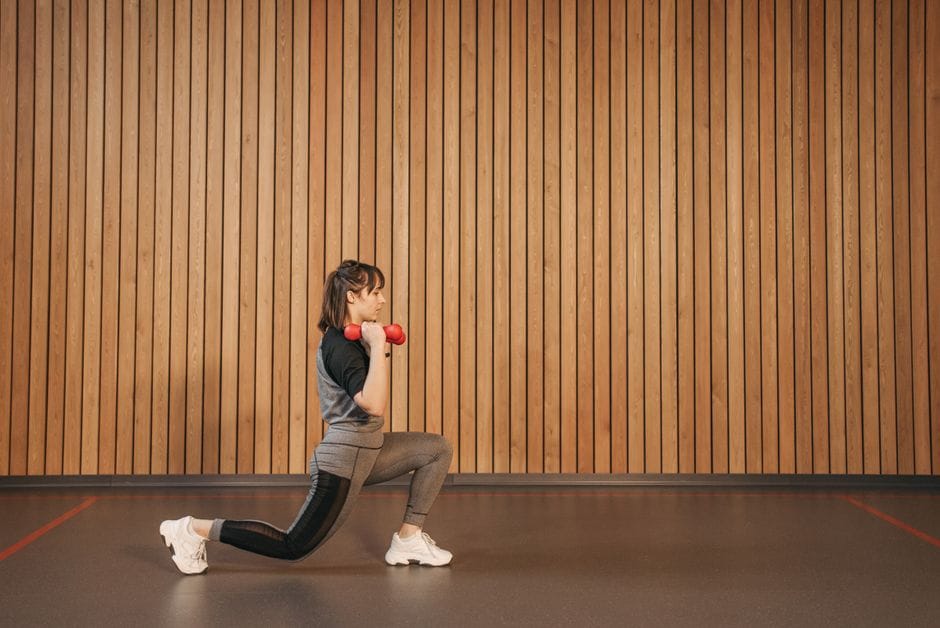
- Reverse lunge — 3 sets x 8/side
- Bent-over reverse fly — 2 sets x 12
- Side plank — 2 sets, 20 seconds/side
If deadlifts are new to you, spend extra time on the deadlift form guide before loading up — this is the movement most beginners rush.
Weeks 5-6: Push the weight
This is where visible strength gains show up. Increase weight on any exercise where you can complete all sets with 2+ reps left in the tank — that's the standard sign you're ready to progress, rather than a fixed schedule.
Alternate Workout A and B across the week (A / B / A one week, B / A / B the next), and add a sixth exercise to each session:
- Workout A: add kettlebell or dumbbell swings — 3 sets x 12
- Workout B: add a tricep dip off a sturdy chair — 3 sets x 10
Rest periods can shrink slightly here, to 45-75 seconds, since your work capacity has improved.
Weeks 7-8: Consolidate and test
The final two weeks aren't about adding more — they're about locking in what's working and seeing how far you've come. Keep the same Workout A/B split, but push for one more rep or a slightly heavier dumbbell on your top set of each exercise.
At the end of week 8, informally re-test: how much heavier is your working dumbbell than week 1? Can you do more push-up or plank reps than when you started? Most beginners see a genuine, measurable jump — not because eight weeks builds huge amounts of muscle, but because the neuromuscular efficiency gains from consistent training compound quickly early on.

What to do about soreness and rest days
Some muscle soreness in the first two weeks is normal and expected — it fades as your body adapts. It should never be so severe it changes how you walk or lasts more than 3-4 days; if it does, you likely jumped too much weight too fast. Light movement (a walk, some stretching) actually speeds recovery more than sitting still. For a deeper look at managing this, see how to recover from sore muscles faster.
Rest days matter as much as training days here — muscle adapts and strengthens during recovery, not during the workout itself. Three sessions a week with real rest between them consistently outperforms beginners who try to train daily and burn out by week three.
Common mistakes that stall progress
- Going too heavy too soon. Form breaks down before muscles do, and that's how strains happen. Pick a weight you can control for every rep.
- Skipping the warm-up. Even five minutes of light cardio and bodyweight movement primes the joints and reduces injury risk.
- Changing the plan every week. Progress needs repetition to measure against — bouncing between different programs each week makes it impossible to tell if you're actually improving.
- Under-eating protein. Muscle repair needs raw material; see our guide on how much protein you actually need per day if you're unsure you're getting enough.
The takeaway
An 8-week beginner strength program doesn't need fancy equipment or a gym — it needs a repeatable structure, a little added weight or difficulty every couple of weeks, and enough rest between sessions to actually adapt. Follow the A/B split above three days a week, track your working weights, and by week 8 you'll have a genuinely stronger, more capable body and a program you understand well enough to keep building on.
Frequently asked questions
Do I need a gym membership to build real strength?
No. A pair of adjustable dumbbells covers virtually every exercise in this plan, and progressive overload — gradually increasing weight, reps, or difficulty — is what drives strength gains, not the location you train in.
How much weight should I start with?
Start light enough that you can complete every rep with clean form and still have 2-3 reps left in reserve on your last set. It's easier and safer to add weight in week 2 than to fix bad form habits later.
Is 3 days a week actually enough?
Yes, especially for beginners. Full-body strength sessions three times a week, with rest days between, is one of the most well-supported training frequencies for building initial strength without overtraining.
What if I miss a workout?
Just pick the plan back up where you left off — don't try to double up sessions to "catch up." Consistency over the full 8 weeks matters far more than never missing a single day.
Read next

Further reading & trusted sources
The part that actually matters
The soreness people brace for in a new strength program tracks how unfamiliar a movement pattern is far more than how heavy the weight was, which is why the first session of week 1 often leaves beginners sorer than a heavier session in week 5 doing exercises they’ve now repeated many times. Beginners also tend to underestimate how much of an early ‘strength gain’ is the nervous system getting more efficient at recruiting existing muscle rather than new tissue being built — that’s precisely why noticeable jumps in working weight can happen well before any visible physical change.
Maya’s editorial obsession is the gap between fitness hype and what the evidence actually shows — she’d rather hand you one boring habit that works than ten exciting ones that don’t. She builds FitNourish’s guides from mainstream, well-established sources (the CDC, the NHS, Mayo Clinic, and peer-reviewed research) and has a human review every one for accuracy before it publishes. She and the team are dedicated fitness enthusiasts and researchers, not doctors, so everything here is general information rather than medical advice. AI tools help with the research and drafting; the fact-checking and judgement are human.