 By Maya Reed, Editor
Reviewed & updated September 2026 · Researched, AI-assisted & human-reviewed
Educational information only — not medical advice. Learn more
As an Amazon Associate, we earn from qualifying purchases. This article is for general information and is not medical advice.
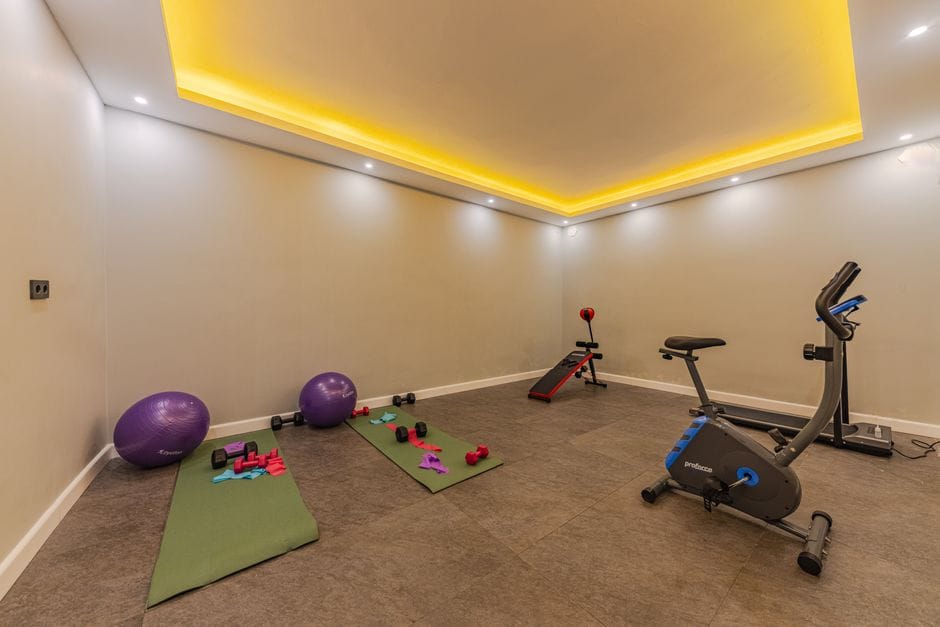
You don't need a spare room, a garage, or even much floor space to build a home gym that actually works. A corner of your bedroom, a sliver of the living room, or a closet shelf is enough. The trick isn't more space — it's choosing compact, versatile equipment and setting it up so it's easy to use and easy to put away.
This guide shows you exactly how to build a small-space home gym in an apartment, what to buy, and how to store it — even if you're working with a 6×6-foot patch of floor.
 On this pageCurated by Maya · 7 min read
How much space do you actually need?
A functional home gym fits in about 6×6 feet — roughly the footprint of a yoga mat plus a little room to swing your arms. That's enough for bodyweight training, dumbbell work, resistance bands, kettlebell swings, and stretching.
If you can clear a corner of a bedroom or living room, you have enough. You don't need a dedicated room; you need a dedicated spot you can return to.
The small-space starter kit
The secret to a small home gym is buying equipment that replaces multiple machines while taking up almost no room. Here are the essentials, in priority order:
- Resistance bands — the most versatile thing you can buy for under $40. One set trains every muscle group and stores in a drawer. See our guide to the best resistance bands for home workouts.
- An exercise mat — defines your space, protects your floor, and cushions your joints.
- Adjustable dumbbells — one compact pair replaces an entire weight rack by dialing the load up or down. Perfect for apartments. Here are the best adjustable dumbbells for small spaces.
- A kettlebell — one bell delivers a full-body strength-and-cardio workout. Our picks: the best kettlebells for home workouts.
Start with bands and a mat, then add an adjustable dumbbell pair or a kettlebell as your budget allows. That single combination covers strength, cardio, and mobility.
Setup ideas by space type
Studio or living room corner. Roll out a mat in a corner and keep your gear in a basket or ottoman nearby. When you're done, the mat goes vertical against the wall and the corner returns to normal.
Bedroom. The foot of the bed or the space beside a wardrobe works well. Store dumbbells and a kettlebell under the bed, and hang bands on a wall hook or over the door.
Closet "gym in a box." If floor space is truly tight, dedicate one shelf or a rolling cart to your equipment. A small cart (about 2 square feet) holds bands, a jump rope, light weights, and a towel, and rolls out when it's time to train.
Smart storage for tiny apartments
Storage is what makes a small-space gym sustainable. If your gear is a pain to set up, you won't use it.
- Vertical mat storage — stand the mat against a wall or hang it on a hook instead of leaving it rolled on the floor.
- Over-the-door hooks — perfect for resistance bands and a jump rope.
- Under-bed bins — ideal for adjustable dumbbells and a kettlebell.
- A rolling cart — keeps everything mobile so your "gym" appears and disappears in seconds.
A full small-space workout (no machines)
Here's a complete 20-minute session you can do in a 6×6 corner with just a mat, bands, and one weight:
- Warm up — 3 minutes of marching, arm circles, and bodyweight squats. (New to this? Read how to warm up before a workout.)
- Goblet squats — 3 sets of 12 with a dumbbell or kettlebell.
- Band rows — 3 sets of 15.
- Push-ups — 3 sets to near-failure.
- Kettlebell or dumbbell swings — 3 sets of 15 for cardio.
- Plank — 3 sets of 30–45 seconds.
Want a no-gear option for travel days? Try our bodyweight workout that needs no equipment.
Sample budgets
| Budget | What it gets you |
|---|---|
| Under $50 | Resistance band set + exercise mat — a genuine full-body gym |
| Under $150 | Add an adjustable dumbbell pair or a kettlebell |
| Under $300 | Bands, mat, adjustable dumbbells, and a kettlebell — covers nearly everything |
Building on a tighter budget? Our full guide to a home gym on a budget breaks down every dollar.
Mistakes to avoid
- Buying single-purpose machines. A bulky ab roller or a clunky bench eats space and gathers dust. Choose versatile gear.
- Over-buying up front. Start minimal. You can always add a piece once you've proven the habit sticks.
- Hiding your gear too well. If setup takes ten minutes, you'll skip workouts. Keep it one step from ready.
- Skipping the mat. It quietly defines your space and makes floor work far more comfortable — which means you'll actually do it.
The bottom line
A small apartment is not an excuse — it's a constraint that forces smart choices. Bands, a mat, and one adjustable weight give you a complete gym in the footprint of a bath towel. Set it up somewhere you'll see it, keep it easy to deploy, and the space you have is more than enough.
Ready to begin? Start with how to start working out at home for a simple first-week plan.
Read next

Frequently asked questions
Can you get a good workout in a small space?
Absolutely. Most effective home training uses bodyweight, bands, and a single pair of adjustable dumbbells or a kettlebell — none of which need more than a few square feet. Consistency matters far more than square footage.
What’s the most space-efficient equipment?
Resistance bands (they store in a drawer), adjustable dumbbells (one pair replaces a whole rack), a kettlebell, and a doorway pull-up bar give full-body coverage with a tiny footprint.
How do I keep gear out of the way in an apartment?
Choose equipment that stores vertically or slides under furniture, use an ottoman with hidden storage, and keep a rolled mat in a corner. The easier it is to put away, the more you’ll actually use it.
Related articles
- Sauna and Cold Therapy: What the Research Says
- How Many Calories Should You Eat to Lose Weight?
- Walking for Weight Loss: A Beginner’s Guide
- Intermittent Fasting for Beginners: A Complete Guide (2026)
- How Much Protein Do You Really Need? A Science-Backed Guide
- How to Lose Fat: A Complete Beginner’s Guide (2026)
Further reading & trusted sources
Worth knowing before you start
The real limit in a small space isn’t money, it’s friction — gear that takes ten minutes to set up gets skipped. Keep a mat and one adjustable weight within arm’s reach and you’ll train far more than someone with a full garage gym they never enter.
Maya’s editorial obsession is the gap between fitness hype and what the evidence actually shows — she’d rather hand you one boring habit that works than ten exciting ones that don’t. She builds FitNourish’s guides from mainstream, well-established sources (the CDC, the NHS, Mayo Clinic, and peer-reviewed research) and has a human review every one for accuracy before it publishes. She and the team are dedicated fitness enthusiasts and researchers, not doctors, so everything here is general information rather than medical advice. AI tools help with the research and drafting; the fact-checking and judgement are human.