 By Maya Reed, Editor
Reviewed & updated September 2026 · Researched, AI-assisted & human-reviewed
Educational information only — not medical advice. Learn more
Flexibility is the quiet foundation of a body that moves well. It's what lets you tie your shoes without strain, reach the top shelf without a twinge, and squat all the way down without your heels lifting. The good news: flexibility is highly trainable at any age, and you don't need to be "naturally bendy" to make real progress. This guide breaks down exactly how flexibility works and gives you a simple, sustainable plan to improve it.
FitNourish shares general fitness information, not medical advice. If you have an injury or a health condition, check with a qualified professional before starting a new stretching routine.
 Quick navigationCurated by Maya · 7 min read
What flexibility actually is
Flexibility is the range of motion available at a joint. It depends on several things working together: the length and elasticity of your muscles, the health of the surrounding connective tissue, and — crucially — your nervous system's willingness to allow a stretch. That last part surprises people. A lot of "tightness" isn't a short muscle; it's your nervous system applying the brakes because the position feels unfamiliar or unsafe. Train consistently and that protective tension relaxes, which is why flexibility often improves faster than you'd expect.
There's a related quality worth knowing: mobility. Flexibility is passive range of motion (how far a joint can move), while mobility is how well you can move into and control that range with strength. You want both — flexibility without control is just looseness.
The two kinds of stretching (and when to use each)
Dynamic stretching means moving through a range of motion with control — leg swings, arm circles, walking lunges, hip openers. It warms the tissues, raises your heart rate, and primes the joints. Do this before a workout.
Static stretching means holding a stretch in a fixed position for 20–60 seconds. It's most effective when the body is already warm, so it belongs after a workout or in a dedicated flexibility session — not as a cold warm-up, where long static holds can briefly dull power output.
A third, very effective method is PNF (contract-relax): you stretch a muscle, contract it against gentle resistance for a few seconds, then relax and stretch a little deeper. It can produce quick range-of-motion gains, but go easy and never force it.
A simple weekly flexibility plan
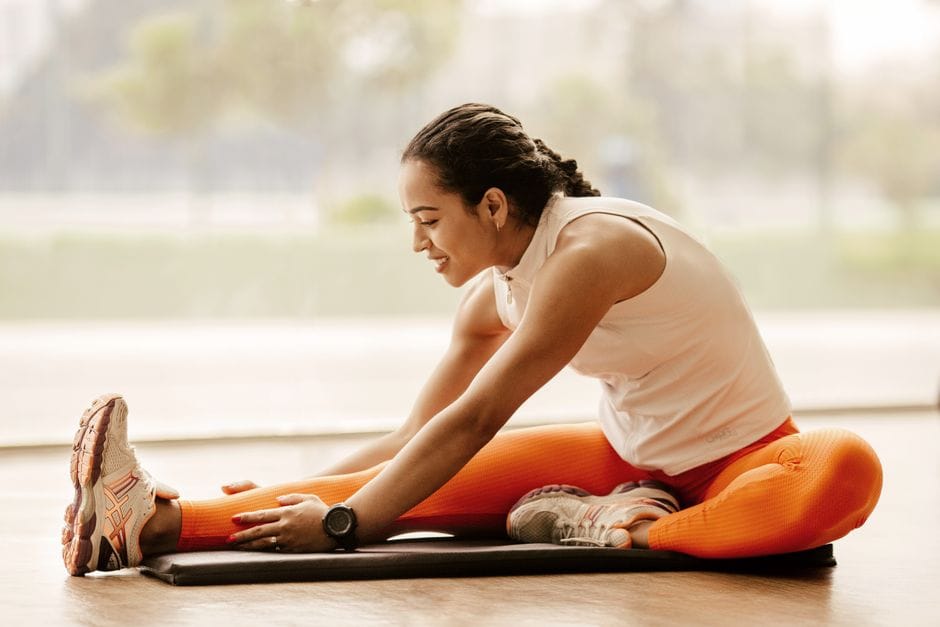
You don't need an hour a day. Consistency beats duration. Aim for 10–15 minutes, 4–5 days a week, focusing on the areas most people are tight: hips, hamstrings, chest and shoulders, and the upper back.
- Warm up first (3–5 min): light movement — a brisk walk, marching in place, or arm and leg swings. Never stretch cold muscles hard.
- Hold each static stretch 20–45 seconds, breathing slowly. You should feel a mild pull, never sharp pain.
- Repeat each stretch 2–3 times, easing a touch deeper as the muscle releases.
- Breathe. Exhale as you settle into the stretch; holding your breath tightens everything up.
Five high-value stretches for beginners
- Standing hamstring stretch — hinge at the hips with a soft knee and reach toward your shins or floor. Targets the back of the legs, which pull on the lower back when tight.
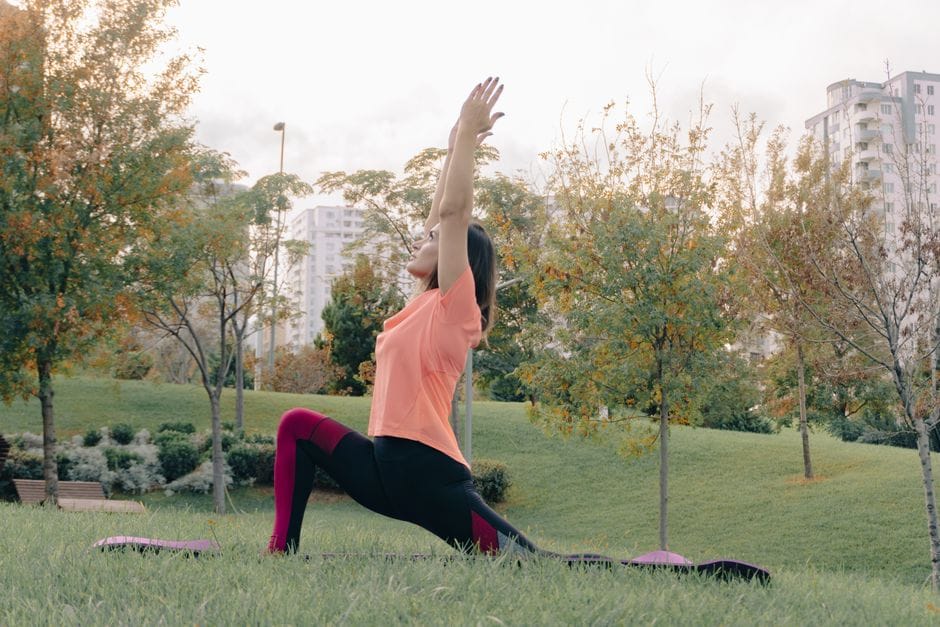
- Kneeling hip-flexor stretch — half-kneel and gently push your hips forward. Antidote to all-day sitting.
- Doorway chest stretch — forearm on a doorframe, step through gently. Opens the chest and counters rounded "desk posture."
- Cat-cow — on all fours, alternate arching and rounding your spine. Mobilizes the whole back.
- Figure-four glute stretch — lying on your back, cross one ankle over the opposite knee and pull the leg toward you. Releases tight hips and glutes.
How long until you see results
With consistent practice, most people notice meaningful change in 4 to 8 weeks. Some "tightness" eases within days as your nervous system adapts; deeper structural gains take longer. The biggest mistake is going hard for a week, getting sore, and quitting. Flexibility responds to frequent, gentle, repeated exposure far better than to occasional aggressive sessions.
Common mistakes to avoid
- Bouncing in a stretch (ballistic stretching) — it triggers a reflex that tightens the muscle and risks strain. Hold steady instead.
- Forcing through pain — a stretch should feel like tension, not pain. Pain is your body's stop sign.
- Only stretching after you're already injured — flexibility is preventive maintenance, best done regularly.
- Ignoring strength — a strong, flexible muscle is far more useful (and safer) than a loose, weak one. Pair stretching with basic strength work.
The takeaway
Flexibility is trainable for everyone, regardless of age or starting point. Warm up first, use dynamic stretches before activity and static holds after, breathe through each stretch, and aim for short sessions most days of the week rather than rare marathon ones. Focus on the hips, hamstrings, chest, and upper back, never force through pain, and give it four to eight weeks of consistency. Move a little better every week and the results compound — into a body that feels younger, moves easier, and holds up for the long run.
Frequently asked questions
How often should I stretch to improve flexibility?
Aim for 10–15 minutes, 4–5 days a week. Frequent, gentle sessions produce far better results than occasional long, intense ones. Daily light stretching is fine as long as you're not forcing painful ranges.
Should I stretch before or after a workout?
Use dynamic stretches (controlled movements) before, to warm up and prime the joints, and save static holds for after, when muscles are warm. Long static stretches on cold muscles can briefly reduce power and offer little benefit as a warm-up.
Why am I so tight even though I stretch?
Tightness is often your nervous system limiting range, not a permanently short muscle — and it eases with consistency. Other culprits include prolonged sitting, dehydration, lack of strength in the range, and stretching too aggressively, which makes muscles guard. Stay gentle and regular.
Can I become more flexible at any age?
Yes. Flexibility declines with inactivity, not age itself, and responds to training throughout life. Older beginners may progress a little more gradually, but consistent, gentle stretching improves range of motion at any age.
Read next


Related articles
- The Best Full-Body Dumbbell Workout (For Home or Gym)
- How to Get Abs: An Honest Guide to a Six-Pack
- Running for Beginners: How to Start and Stick With It
- 8 Best Adjustable Dumbbells for Small Spaces in 2026
- 7 Best Resistance Bands for Home Workouts (2026)
- Home Gym Setup Ideas for Beginners
Further reading & trusted sources
The part that actually matters
Flexibility improves with consistent, gentle, regular stretching — a little daily beats one hard session a week. Forcing a stretch into pain is counterproductive; the body resists rather than loosens.
Maya’s editorial obsession is the gap between fitness hype and what the evidence actually shows — she’d rather hand you one boring habit that works than ten exciting ones that don’t. She builds FitNourish’s guides from mainstream, well-established sources (the CDC, the NHS, Mayo Clinic, and peer-reviewed research) and has a human review every one for accuracy before it publishes. She and the team are dedicated fitness enthusiasts and researchers, not doctors, so everything here is general information rather than medical advice. AI tools help with the research and drafting; the fact-checking and judgement are human.