 By Maya Reed, Editor
Reviewed & updated September 2026 · Researched, AI-assisted & human-reviewed
Educational information only — not medical advice. Learn more
Stiff hips, a cranky lower back, shoulders that won't fully reach overhead — mobility work is the quiet fix most people skip in favor of cardio and lifting. This guide breaks down a simple, beginner-friendly routine you can do in ten minutes a day, no equipment required.
This article shares general fitness information, not medical advice. Check with a healthcare provider before starting a new exercise routine, especially if you have an existing injury or condition.
 Skip ahead toCurated by Maya · 7 min read
- What mobility actually means (and how it’s different from stretching)
- Why beginners should start here, not with intense workouts
- The 10-minute daily mobility routine
- Common mistakes that stall progress
- When to add mobility work: before or after training?
- How to know it’s working
- The takeaway
- Related articles
- Further reading & trusted sources
What mobility actually means (and how it's different from stretching)
Mobility is your ability to move a joint through its full range of motion under control — not just how far you can passively stretch. A gymnast doing the splits has flexibility; someone who can control a deep squat with a straight back and flat heels has mobility. Both matter, but mobility is what actually shows up in daily life: bending to tie your shoes, reaching a top shelf, or getting up off the floor without wincing.
The good news is that mobility responds fast. Unlike strength, which takes months to build, most people feel looser and move more freely within one to two weeks of consistent daily work.
Why beginners should start here, not with intense workouts
Jumping straight into heavy lifting or high-intensity cardio with restricted mobility is how a lot of avoidable injuries happen. If your ankles can't dorsiflex properly, your knees compensate during squats. If your thoracic spine is locked up, your shoulders take on stress they weren't built for during overhead presses. A few minutes of daily mobility work is cheap insurance against the aches that make people quit exercise altogether.
It also just feels good — this is one of the few kinds of exercise that delivers immediate, noticeable relief.
The 10-minute daily mobility routine
Do each move for 30-45 seconds per side (or per rep count noted), moving slowly and breathing steadily. No bouncing.
- Cat-cow (1 minute): On hands and knees, alternate arching and rounding your spine, syncing with your breath. Loosens the entire spine.
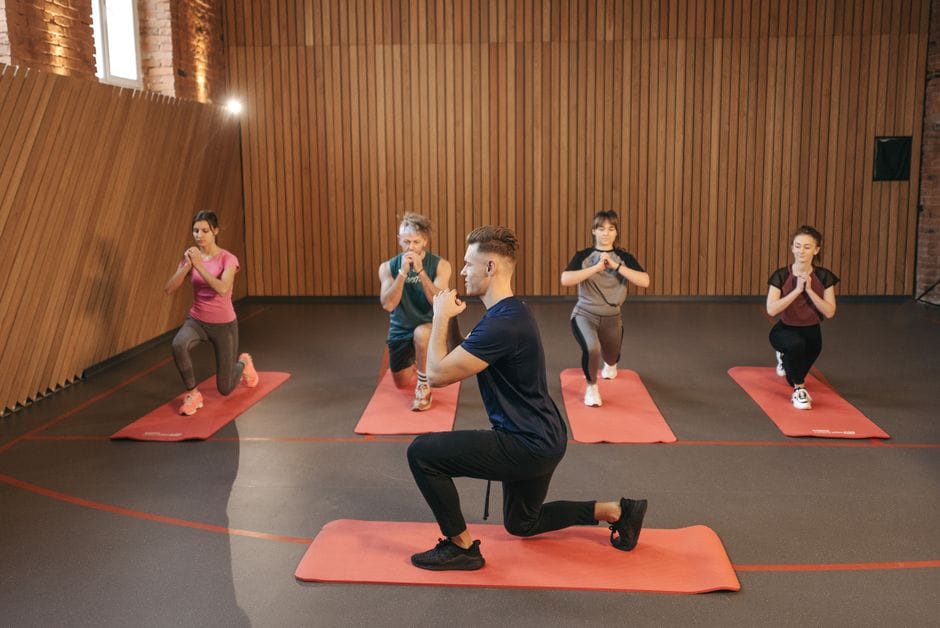
- World's greatest stretch (30 sec/side): From a lunge position, drop your back knee down, rotate your torso toward your front leg and reach that arm to the ceiling. Hits hips, hamstrings, and thoracic spine in one move.
- 90/90 hip switch (1 minute): Sit with both knees bent at 90 degrees, one in front and one to the side, then rotate to switch sides without using your hands. Excellent for hip rotation.
- Ankle rocks (30 sec/side): In a half-kneeling position, rock your front knee forward over your toes without lifting the heel. Builds ankle dorsiflexion for better squats.
- Thread the needle (30 sec/side): From hands and knees, slide one arm under your body and rotate your gaze toward the ceiling. Opens the upper back and shoulders.
- Standing forward fold with shoulder roll (1 minute): Fold forward, let your head hang, and slowly roll your shoulders. Releases the lower back and neck tension.
- Deep squat hold (1 minute): Sit as low as you comfortably can with feet flat, holding onto something if needed. One of the best full-body mobility tests and trainers there is.

Common mistakes that stall progress
Bouncing instead of holding. Ballistic bouncing at end range can strain a joint that isn't ready. Slow and controlled wins.
Only stretching, never loading. Passive stretching loosens tissue temporarily, but pairing mobility work with light strength (like the deep squat hold) teaches your body to actually control that new range — which is what makes it stick.
Skipping the areas that feel fine. Most people only stretch what already feels tight and ignore joints that feel "okay," which are often the ones quietly getting stiffer. A full-body routine catches problems before they become painful.
Doing it once a week. Mobility is a use-it-or-lose-it system. Ten minutes daily beats a single 45-minute session on Sunday.
When to add mobility work: before or after training?
Light, dynamic versions of these moves work well as a warm-up before training — they raise tissue temperature and rehearse the ranges you're about to load. Longer, more static holds are better saved for after a workout or on rest days, when your muscles are already warm and you're not trying to build explosive power right afterward.
If you only have time for one session, an evening routine tends to stick better for beginners since it doesn't compete with pre-workout time pressure.
How to know it's working
You don't need fancy tests. Track these simple markers every couple of weeks:
- Can you get into a deep squat with heels flat and hold it comfortably?
- Can you reach both arms overhead without your lower back arching?
- Does getting up off the floor feel effortless, or do you still need to use your hands?
Improvement in any of these is a real, measurable sign your mobility work is paying off — often faster than progress shows up in the mirror.
The takeaway
Mobility is the most overlooked piece of a sustainable fitness routine. Ten focused minutes a day — done consistently, without bouncing, covering the whole body rather than just the tight spots — will make everything else you do, from lifting to running to just living in your body, feel easier within a couple of weeks.
Frequently asked questions
Do I need any equipment for mobility exercises?
No. Every move in this routine uses just your bodyweight and a mat or soft floor. A yoga mat helps with comfort but isn't required.
How long until I notice a difference?
Most beginners notice looser hips and shoulders within one to two weeks of daily practice. Full changes in range of motion, like a comfortable deep squat, can take four to six weeks.
Can I do mobility work every single day?
Yes — unlike strength training, mobility work doesn't require rest days since it's low-intensity and doesn't create the same muscle breakdown.
Is mobility work enough on its own, or do I still need to strength train?
Mobility and strength work together rather than replace each other. Mobility gives you the range of motion; strength training teaches your muscles to control and use that range under load.
Read next



Related articles
- How Much Water Should You Drink? A Simple, Honest Guide
- How to Stay Motivated to Work Out (And Build Habits That Last)
- Sleep and Fitness: Why It Matters (And How to Sleep Better)
- Yoga for Beginners: A Simple Guide to Getting Started
- 15 Tiny Daily Habits That Quietly Transform Your Health
- Why Strength Training May Help You Live Longer (The Research)
Further reading & trusted sources
Where beginners usually go wrong
Mobility gains show up faster than strength gains — most people notice a looser deep squat or overhead reach within one to two weeks of daily practice. The mistake is treating it like stretching only when tight, instead of a short daily habit covering the whole body.
Maya’s editorial obsession is the gap between fitness hype and what the evidence actually shows — she’d rather hand you one boring habit that works than ten exciting ones that don’t. She builds FitNourish’s guides from mainstream, well-established sources (the CDC, the NHS, Mayo Clinic, and peer-reviewed research) and has a human review every one for accuracy before it publishes. She and the team are dedicated fitness enthusiasts and researchers, not doctors, so everything here is general information rather than medical advice. AI tools help with the research and drafting; the fact-checking and judgement are human.