 By Maya Reed, Editor
Reviewed & updated September 2026 · Researched, AI-assisted & human-reviewed
Educational information only — not medical advice. Learn more
The Russian twist looks simple — sit back, rotate side to side, done. But most people turn it into a fast, floppy arm-swing that barely touches the obliques it's meant to train. Done with control, it's one of the most effective rotational core exercises you can do with just bodyweight or a single dumbbell.
This is general fitness information, not medical advice. Talk to a doctor or physical therapist before starting a new exercise routine, especially if you have lower back pain or an existing injury.
 What this guide coversCurated by Maya · 7 min read
What is a Russian twist?
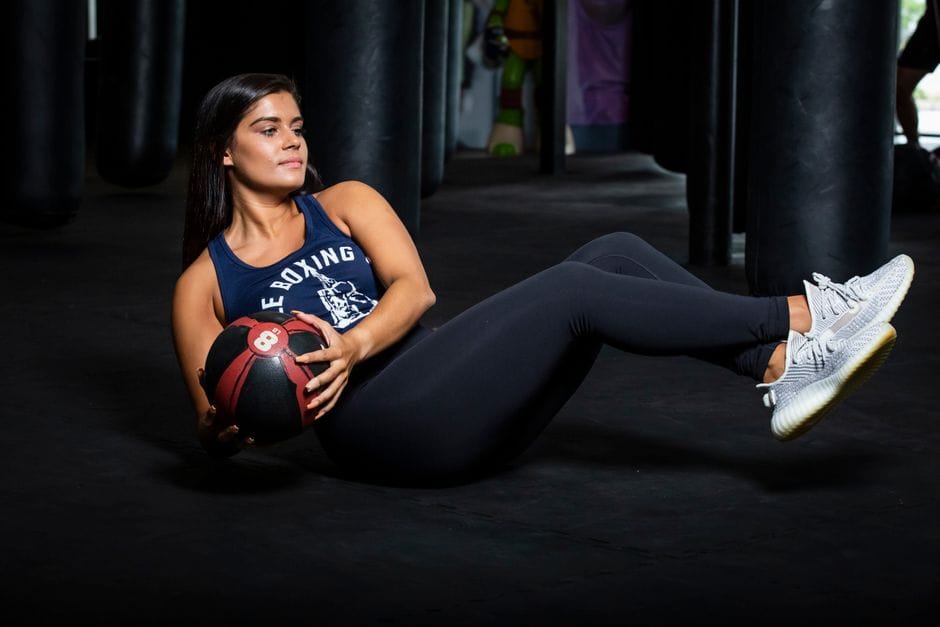
The Russian twist is a seated core exercise where you lean back to roughly a 45-degree angle, lift your feet (or keep them lightly grounded), and rotate your torso side to side, usually tapping a weight or your hands to the floor on each side. It targets the obliques — the muscles along the sides of your torso responsible for rotation — along with the rectus abdominis and deep core stabilizers that keep your spine steady during the twist.
Unlike crunches or planks, which train the core in a fixed position, the Russian twist trains rotation, which is closer to how your core actually works in real movement — swinging a golf club, throwing a ball, or simply turning to grab something behind you.
Why the Russian twist matters
Most core routines are heavy on flexion (crunches, sit-ups) and anti-extension (planks) but light on rotation. That's a gap, because rotational strength and control show up constantly outside the gym — in sports, in everyday twisting motions, and in protecting the spine during any activity that involves turning under load.
The Russian twist is one of the few common exercises that trains controlled rotation directly. Done correctly, it builds oblique strength and teaches your core to resist and control twisting forces, which carries over to almost every other lift and movement pattern that involves the trunk.
Step-by-step: how to do a Russian twist
- Sit on the floor with your knees bent, feet flat on the ground.
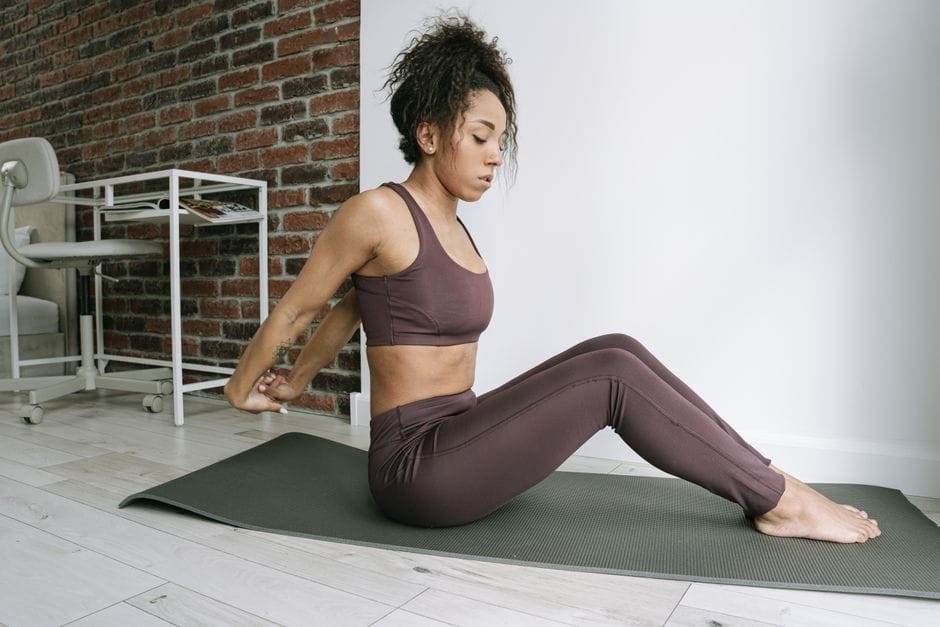
- Lean back slightly, keeping your spine long and chest up, until you feel your core engage — roughly a 45-degree angle from the floor. Don't round your lower back to get there.
- Lift your feet slightly off the ground if you can maintain form (beginners can keep heels lightly touching the floor for balance).
- Clasp your hands together or hold a light weight in front of your chest.
- Rotate your torso to one side, bringing your hands (or the weight) toward the floor beside your hip — moving from the ribs, not just swinging your arms.
- Rotate through center to the other side, controlling the movement rather than letting momentum carry you.
- Keep your hips and legs as still as possible — the rotation should come from your torso, not from rocking your legs side to side.
Aim for 10-15 controlled rotations per side (20-30 total reps), 2-3 sets, 2-3 times per week. Slower and controlled beats fast and sloppy every time with this exercise.
Common mistakes
Swinging the arms instead of rotating the torso. This is the single biggest error. If only your arms are moving while your ribcage stays still, you've turned a core exercise into an arm exercise. The rotation needs to come from your midsection.
Rounding the lower back. Leaning back too far or losing core tension causes the lower back to round, which shifts load away from the obliques and onto the spine in a way it isn't built to handle repeatedly. Keep your chest lifted and spine long throughout.
Moving too fast. Fast, momentum-driven twists feel more intense but do less actual work. Slowing down forces the obliques to control the rotation instead of letting momentum do the job.
Rocking the legs side to side. If your feet are lifted and your legs sway with each twist, you're using your hip flexors to generate the movement instead of your core. Keep the lower body quiet and stable.
Adding weight before mastering bodyweight form. A weight plate or dumbbell increases the temptation to swing. Master the controlled bodyweight version first, then add light resistance once your form is solid.
Russian twist variations
Feet-down Russian twist. Keeping your heels on the floor reduces the balance demand, making this the best starting point for beginners or anyone with lower back sensitivity.
Weighted Russian twist. Holding a light dumbbell, kettlebell, or weight plate increases resistance. Start light — even 5-10 pounds changes the difficulty significantly once your feet are lifted.
Medicine ball Russian twist. Using a medicine ball lets you tap or bounce it off the floor on each side, which is a good option for adding a slight plyometric element once basic form is solid.
Standing cable twist. For a standing alternative that removes the balance challenge of the seated position, a cable or band anchored at chest height and rotated through with straight arms trains a similar rotational pattern.
Where the Russian twist fits in your workout
The Russian twist works well as a finisher or accessory movement, not a primary lift. Common placements:
- At the end of a core circuit, paired with planks and dead bugs for a complete anti-extension plus rotation routine.
- As part of a warm-up for sports involving rotation, like golf, tennis, or baseball.
- Superset with an anti-rotation exercise like a Pallof press to train both resisting and producing rotation.
Two to three sets of controlled reps, two to three times a week, is enough to build meaningful oblique strength without overtraining a small muscle group.
The takeaway
The Russian twist earns its place in a core routine specifically because it trains rotation, a movement pattern most ab exercises skip entirely. The payoff depends almost entirely on control — a slow, deliberate twist from the ribs works the obliques far harder than a fast arm-swing ever will, even though the fast version feels more intense in the moment. Master the bodyweight version first, keep your lower back long, and add resistance only once the movement is clean.
Frequently asked questions
Do I need a weight to do Russian twists?
No. Bodyweight Russian twists are effective on their own, especially for beginners. Add a light weight only once you can perform the movement with clean, controlled rotation and no lower back rounding.
Are Russian twists bad for your back?
Not inherently, but they can aggravate the lower back if performed with poor form — especially rounding the spine or swinging with momentum. Keeping your chest up, spine long, and movement controlled makes this a safe exercise for most people.
Should my feet be on the ground or lifted?
Either works. Feet-down is easier and a better starting point for beginners or anyone prioritizing lower back comfort. Lifting the feet increases the core stability demand and is a natural progression once the feet-down version feels easy.
How many Russian twists should I do?
10-15 controlled rotations per side, for 2-3 sets, 2-3 times per week is a solid target for most people. Prioritize clean form and full range of motion over chasing a higher rep count.
Read next
Further reading & trusted sources
The detail that makes the difference
The tell that someone is arm-swinging instead of rotating from the ribs is that the weight or hands move but the shoulders barely turn relative to the hips — filming from directly above makes this obvious in a way it never feels from the inside. Feet-down is a legitimate long-term choice, not just a beginner stepping stone, since lifting the feet mainly adds a balance challenge rather than more direct oblique work.
Maya’s editorial obsession is the gap between fitness hype and what the evidence actually shows — she’d rather hand you one boring habit that works than ten exciting ones that don’t. She builds FitNourish’s guides from mainstream, well-established sources (the CDC, the NHS, Mayo Clinic, and peer-reviewed research) and has a human review every one for accuracy before it publishes. She and the team are dedicated fitness enthusiasts and researchers, not doctors, so everything here is general information rather than medical advice. AI tools help with the research and drafting; the fact-checking and judgement are human.