 By Maya Reed, Editor
Reviewed & updated September 2026 · Researched, AI-assisted & human-reviewed
Educational information only — not medical advice. Learn more
The tricep pushdown is one of the most common cable exercises in any gym, and also one of the most commonly done with sloppy form. Done right, it isolates the triceps and builds real arm size and pressing strength. Done wrong, it turns into a shoulder-and-lat exercise that barely touches the muscle it's supposed to train.
This article is for general fitness education only and is not medical advice. Talk to a doctor or physical therapist before starting a new exercise program, especially if you have an elbow, wrist, or shoulder injury.
 Quick navigationCurated by Maya · 8 min read
- What the tricep pushdown actually trains
- Step-by-step: how to do a tricep pushdown
- The most common form mistakes
- Attachment choice: bar vs. rope vs. V-bar
- Programming: sets, reps, and where it fits
- Tricep pushdown variations to try
- Who should be cautious with this exercise
- The takeaway
- Further reading & trusted sources
What the tricep pushdown actually trains
The tricep pushdown targets the triceps brachii, the three-headed muscle on the back of your upper arm that makes up roughly two-thirds of your arm's total size — more than the biceps. Because the exercise is performed on a cable, it keeps constant tension on the muscle throughout the entire range of motion, unlike a dumbbell exercise where tension can drop off at certain angles. That makes it a genuinely effective isolation move for triceps size and lockout strength for pressing movements like the bench press and overhead press.
Step-by-step: how to do a tricep pushdown
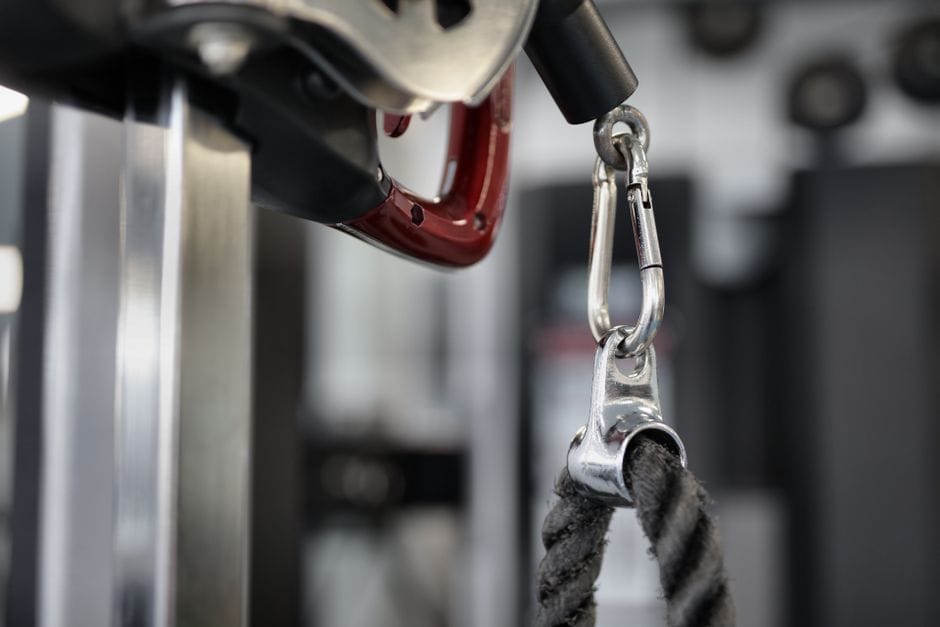
- Set the cable and attachment. Attach a straight bar, rope, or V-bar to a high pulley. Set the pulley near the top of the tower so the cable pulls down in a straight line in front of you.
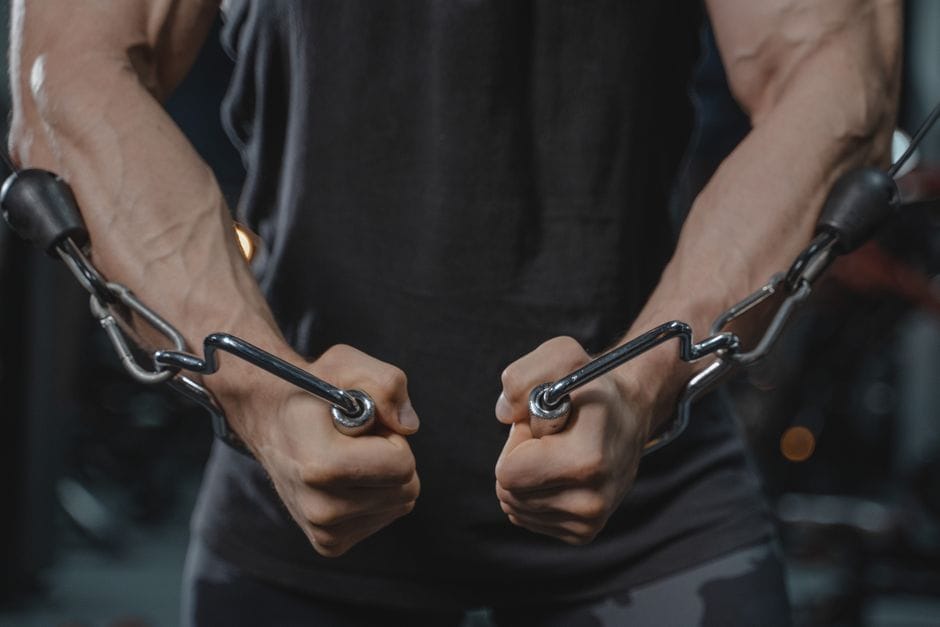
- Grip and stance. Stand facing the machine with feet shoulder-width apart, knees slightly bent, and core braced. Grip the attachment with palms facing down (straight bar/V-bar) or facing each other (rope).
- Pin your elbows. Tuck your elbows tight against your sides and keep them there for the entire set. This is the single most important cue — elbows that drift forward or flare out turn the move into a chest-and-shoulder press.
- Push down and extend. Push the bar or rope down until your arms are fully straight, squeezing the triceps hard at the bottom. Only your forearms should move; your upper arms stay locked in place.
- Control the return. Let the weight rise back up in a slow, controlled motion until your forearms are roughly parallel to the floor. Don't let the weight stack slam or your elbows drift backward past your torso.
- Repeat for reps. A typical working set is 10-15 reps, since triceps respond well to slightly higher rep ranges with strict form.
The most common form mistakes
- Elbows flaring or drifting forward. This is by far the most common error and it shifts work onto the chest and front shoulders. If you find your elbows moving, drop the weight until you can keep them pinned.
- Leaning on the bar with body weight. Pushing down with momentum from your torso instead of your triceps lets you move more weight but trains almost nothing. Keep your torso still and let your arms do the work.
- Not fully extending at the bottom. Stopping short of full elbow extension skips the peak contraction, which is where a lot of the triceps activation happens. Push all the way through, without hyperextending or locking out violently.
- Using too much weight. Because the elbows are an easy joint to cheat with body English, it's tempting to stack more plates than you can control. Lighter weight with strict elbow position beats heavy weight with sloppy form every time.
- Letting the weight stack slam between reps. This removes tension from the muscle and turns a controlled exercise into a series of jerky pulls. Control the eccentric (upward) portion just as much as the pushdown itself.
Attachment choice: bar vs. rope vs. V-bar
| Attachment | What it emphasizes | Best for |
|---|---|---|
| Straight bar | Even tension across all three triceps heads | Building raw strength, easy to learn |
| Rope | Extra contraction at the bottom because hands can splay outward | Peak squeeze and the "horseshoe" shape |
| V-bar (angled) | Neutral grip, often more comfortable on the wrists | Lifters with wrist or elbow sensitivity |
None of these is objectively "better" — rotating between them over time is a simple way to vary the stimulus and keep progress moving.
Programming: sets, reps, and where it fits
For most people, 2-3 sets of 10-15 reps once or twice a week is enough to see steady progress, placed after your main pressing work (bench press, overhead press, or dips) since the triceps are already partially fatigued from those compound lifts. If your main goal is arm size, you can add a second tricep exercise like skull crushers or overhead extensions on a different day to hit the muscle from another angle, since the long head of the triceps responds especially well to overhead positions.
Tricep pushdown variations to try
- Single-arm pushdown: Uses a D-handle attachment and trains each arm independently, which helps fix strength imbalances between sides.
- Reverse-grip pushdown: Palms face up instead of down, shifting more emphasis to the lateral head and forearms.
- Overhead cable extension: Facing away from the machine, this stretches the long head of the triceps under load, which the standard pushdown doesn't do as well.
- Bodyweight version: No cable machine? A resistance band anchored high on a door, or dips on a bench, can train the same movement pattern at home.
Who should be cautious with this exercise
Anyone with an existing elbow injury (like tennis or golfer's elbow) or shoulder impingement should approach this cautiously, since repeated elbow extension under load can aggravate those conditions. Starting with very light weight, warming the elbows up with some bodyweight extensions first, and stopping if you feel sharp joint pain (as opposed to normal muscle fatigue) are reasonable precautions. If pain persists, that's a conversation for a physical therapist, not something to push through.
The takeaway
The tricep pushdown is a simple, effective isolation exercise, but its effectiveness lives entirely in the details — pinned elbows, full extension, and controlled tempo. Get those three things right and even a modest weight will build real triceps strength and size over time. Chase heavier numbers with sloppy elbow position and you'll plateau while risking your joints for no extra benefit.
Frequently asked questions
Should I do tricep pushdowns before or after bench press?
After. Triceps are a secondary mover in pressing exercises, so pre-fatiguing them with pushdowns first can reduce how much weight you can safely press. Do compound pressing movements first, then isolate the triceps.
Why don't I feel my triceps working during pushdowns?
The most likely cause is elbows drifting away from your sides, which shifts the work to your shoulders and chest. Drop the weight significantly and focus purely on keeping your upper arms still — you should feel a distinct burn in the back of your arm by the last few reps.
Can I do tricep pushdowns every day?
It's not recommended. Like any resistance exercise, the triceps need roughly 48 hours to recover and rebuild between sessions. Two to three times per week with adequate rest between sessions is a more effective, sustainable approach.
What's a good starting weight for tricep pushdowns?
There's no universal number since it depends on your strength level, but a reasonable rule of thumb is to pick a weight where the last 2-3 reps of a 12-15 rep set are genuinely challenging while you can still keep your elbows pinned. If you can't maintain form, the weight is too heavy.
Read next
Further reading & trusted sources
A common mistake to skip
Elbows creeping forward is easy to miss from the front but shows up immediately on video from the side, since the movement quietly shifts from an elbow-hinge to a shoulder-and-chest press without feeling any different to the lifter. Rope attachments let the hands splay outward at the bottom for extra peak contraction, but that only adds value if the elbows stay pinned through the whole rep — flaring elbows with a rope loses more than it gains compared to a plain straight bar done strictly.
Maya’s editorial obsession is the gap between fitness hype and what the evidence actually shows — she’d rather hand you one boring habit that works than ten exciting ones that don’t. She builds FitNourish’s guides from mainstream, well-established sources (the CDC, the NHS, Mayo Clinic, and peer-reviewed research) and has a human review every one for accuracy before it publishes. She and the team are dedicated fitness enthusiasts and researchers, not doctors, so everything here is general information rather than medical advice. AI tools help with the research and drafting; the fact-checking and judgement are human.