 By Maya Reed, Editor
Reviewed & updated September 2026 · Researched, AI-assisted & human-reviewed
Educational information only — not medical advice. Learn more
The face pull is the exercise most home gym owners skip and most physical therapists wish everyone would do. It targets the rear delts, upper back, and rotator cuff muscles that desk-bound posture quietly weakens over years of sitting and pressing.
This is general fitness information, not medical advice. Talk to a doctor or physical therapist before starting a new exercise routine, especially if you have shoulder pain or an existing injury.
 What this guide coversCurated by Maya · 7 min read
What is a face pull?
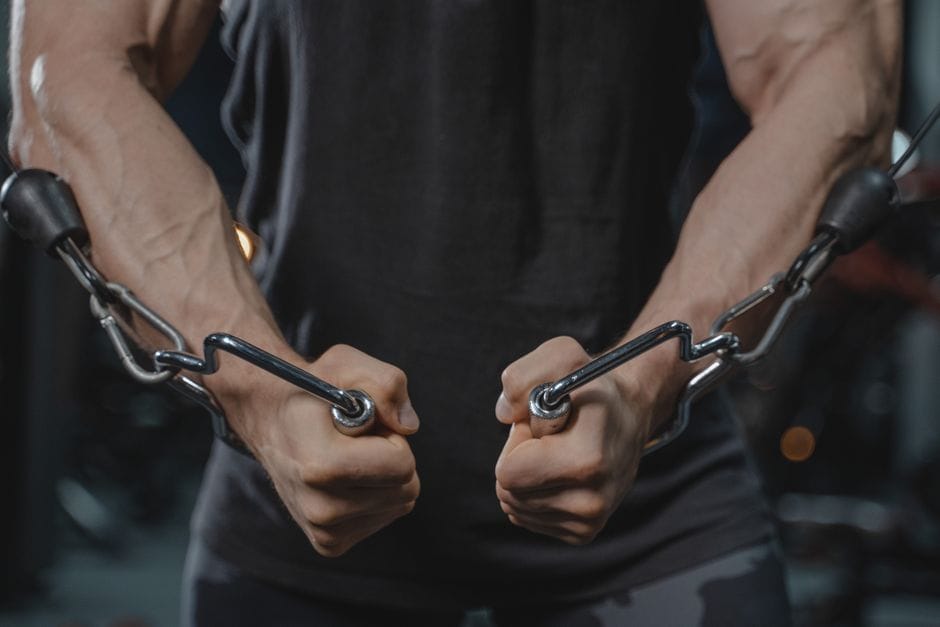
A face pull is a pulling exercise where you pull a rope or band attachment toward your face, elbows high, finishing with your hands near your ears and your shoulder blades squeezed together. It's typically done on a cable machine at chest-to-eye height, but resistance bands work just as well at home.
Unlike rows, which mostly hit the mid-back, face pulls emphasize the rear deltoids and the external rotators of the shoulder — muscles that almost never get direct work in a typical push/pull/legs routine built around bench press, squats, and deadlifts.
Why face pulls matter more than they look
Most strength programs are pull-dominant on paper but push-dominant in practice. Bench press, overhead press, and push-ups all load the front of the shoulder. Without direct rear-delt and rotator cuff work, that imbalance compounds — rounded shoulders, a forward head position, and shoulder impingement risk all trace back to this same gap.
Face pulls close that gap directly. They're one of the few exercises that train external rotation and horizontal abduction at the same time, which is exactly the movement pattern most people are missing.
Step-by-step: how to do a face pull
- Set the cable at upper-chest to eye height. Attach a rope handle. If using a band, anchor it at the same height around a pole or door anchor.
- Grip the rope with an overhand or neutral grip, one hand on each end, thumbs pointing back toward you.
- Step back to create tension, feet shoulder-width apart, knees soft, core braced.
- Pull the rope toward your face, leading with your elbows — not your hands. Your elbows should rise to about shoulder height or slightly above.
- Finish with your hands near your ears, rope ends splitting apart, palms facing roughly forward. Your upper arms should form a "goalpost" shape.
- Squeeze your shoulder blades together and pause for a full second at the end position.
- Control the return — don't let the weight yank your arms back forward. Take 2-3 seconds to reverse.
Aim for 12-15 reps for 2-3 sets, 2-3 times per week. This is a light-weight, high-quality-rep exercise — it is not meant to be loaded heavy.
Common mistakes
Using too much weight. This is the single biggest error. Face pulls are a corrective, activation-focused movement. If you're using enough weight that your elbows drop or your torso leans back to generate momentum, you've lost the point of the exercise entirely.
Pulling with the hands instead of the elbows. If your hands lead the movement, you'll turn this into a shrug-row hybrid that misses the rear delts. Think "elbows out and back" the whole way.
Not externally rotating at the top. The rotation — turning your palms from facing down/back to facing forward at the finish — is what activates the rotator cuff specifically. Skipping it turns the face pull into a glorified upright row.
Shrugging instead of retracting. Keep your shoulders down away from your ears throughout. If your traps are doing most of the work, drop the weight and reset your form.
Rushing the tempo. Face pulls done fast recruit momentum, not muscle. Slow down, especially on the return.
Face pull variations
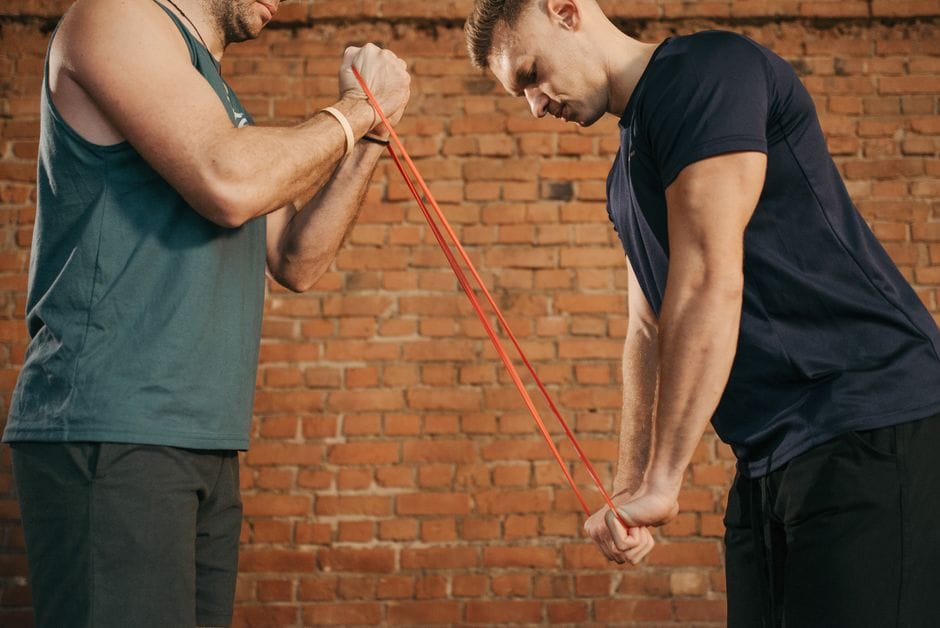
Band face pull. The most accessible version for home gyms — just needs a resistance band and a door anchor or sturdy pole. Bands also add resistance that increases through the range of motion, which pairs naturally with this exercise.
Half-kneeling face pull. Kneeling on one knee removes the ability to lean back and cheat the movement with your torso, forcing stricter form.
Face pull with external rotation hold. Add a 1-2 second pause at the top with an exaggerated external rotation for extra rotator cuff emphasis. Use lighter weight for this variation.
Single-arm face pull. Working one side at a time on a cable stack can help identify and fix left-right imbalances in shoulder strength.
Where face pulls fit in your workout
Face pulls work well as an accessory movement, not a main lift. Common placements:
- After pressing work (bench press, overhead press) to counterbalance the pushing volume.
- As a warm-up activation drill with very light resistance before shoulder or back day.
- Superset with a pulling exercise like rows or lat pulldowns to hit the whole back.
Two to three sets, two to three times a week is enough — this isn't a muscle you need to hammer with heavy volume, it's one you need to wake up consistently.
The takeaway
Face pulls are a small-looking exercise with an outsized payoff: better shoulder health, improved posture, and a more balanced upper body. They cost you almost nothing in terms of time or equipment — a resistance band and five minutes, two or three times a week — but the shoulder-health return compounds over months of consistent pressing and pulling elsewhere in your program. If you press regularly and don't currently do any rear-delt or rotator cuff work, this is the single easiest gap to close.
Frequently asked questions
Do I need a cable machine to do face pulls?
No. A resistance band anchored at chest height works just as well, and for many home gym owners it's actually the more practical option. The band even adds a useful strength curve, getting harder as you pull through the range.
How much weight should I use for face pulls?
Start light — light enough that you can maintain perfect form for 15 reps without your elbows dropping or your torso leaning back. Most people are surprised at how little weight is appropriate here compared to other pulling exercises.
Can face pulls fix rounded shoulders on their own?
They help, but they're one piece of a bigger picture that includes overall posture habits, thoracic mobility, and balanced training volume between pushing and pulling. Face pulls are a strong, low-cost addition — not a standalone fix.
How often should I do face pulls?
Two to three times per week is a solid target for most people, either as a dedicated accessory exercise or folded into your warm-up before upper-body training days.
Read next

Further reading & trusted sources
What to actually expect
Most people load way more weight than the exercise needs and end up doing an upright row instead of a face pull — the giveaway is elbows dropping below shoulder height. Drop the weight until you can actually hold the external rotation at the top for a full second.
Maya’s editorial obsession is the gap between fitness hype and what the evidence actually shows — she’d rather hand you one boring habit that works than ten exciting ones that don’t. She builds FitNourish’s guides from mainstream, well-established sources (the CDC, the NHS, Mayo Clinic, and peer-reviewed research) and has a human review every one for accuracy before it publishes. She and the team are dedicated fitness enthusiasts and researchers, not doctors, so everything here is general information rather than medical advice. AI tools help with the research and drafting; the fact-checking and judgement are human.