 By Maya Reed, Editor
Reviewed & updated September 2026 · Researched, AI-assisted & human-reviewed
Educational information only — not medical advice. Learn more
Building a home gym for the first time can feel overwhelming — rows of equipment you don't recognize, conflicting advice online, and a price tag that spirals fast. The good news: a setup that actually gets used is simpler and cheaper than most beginners expect.
This article shares general fitness information for educational purposes only. It is not a substitute for medical advice. If you have any health conditions, consult a qualified healthcare professional before starting a new exercise routine.
 On this pageCurated by Maya · 9 min read
- Start With the Floor, Not the Gear
- Pick Your First “One Piece” of Equipment
- Layout Ideas for Small Spaces
- The “Three-Day Beginner” Equipment Plan
- What Beginners Actually Get Wrong
- Do You Need a Bench?
- Setting Up Without a Mirror
- What a Good Beginner Schedule Looks Like
- Keeping Motivation High
- The Takeaway
- Related articles
- Further reading & trusted sources
Start With the Floor, Not the Gear
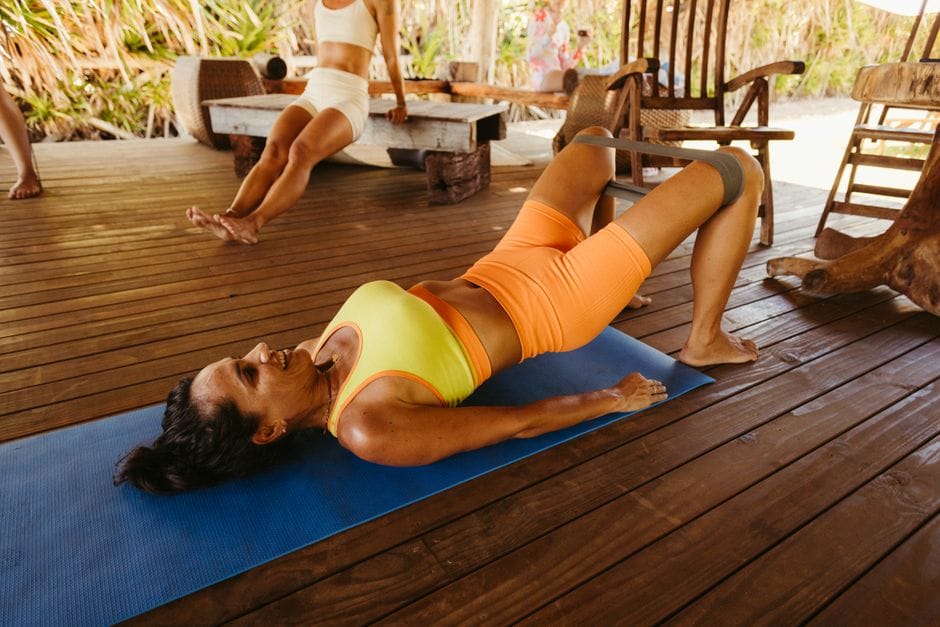
The single most useful thing in any home gym is a good exercise mat. Before you buy any equipment, sort the floor. A quality mat (at least 6mm thick) gives you a safe surface for stretching, core work, push-ups, and cool-downs.
If your floor is hard tile or wood, look for high-density foam or rubber-backed mats — they absorb impact and won't skid. A 6×4-foot mat covers most bodyweight movements without taking over the room. Thickness matters more than brand: a thin yoga mat feels fine for yoga and terrible for a plank.
Start here, get your floor situation sorted, and everything else layers on top.
Pick Your First "One Piece" of Equipment
Beginners often make the mistake of buying a full set of equipment all at once. The better approach: pick one versatile piece and actually use it for 6–8 weeks before expanding.
The three best first picks for beginners:
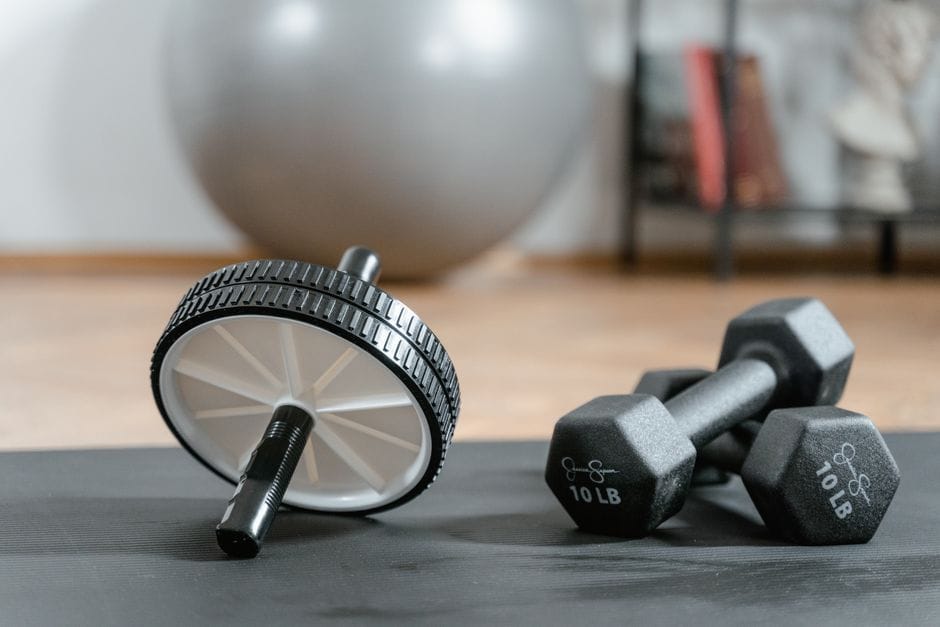
Adjustable dumbbells. A single pair with a selector dial covers a huge range — from light upper-body work to heavier lower-body moves. They save space and money versus buying individual pairs. Dial-type is faster to adjust; spin-lock is cheaper. Either works; just keep them accessible (not shoved in a closet).
A resistance band set. The most underrated beginner choice. Light to carry, effective at every strength level, and cheap. A set of 3–4 resistance levels under $30 covers rows, presses, squats, lateral raises, and glute work. It's also the easiest home gym to travel with or use in a rental.
A single kettlebell. Best if you want to learn swings, deadlifts, and carries. Buy heavier than feels right in the shop — a good swing weight for most adults is 16–20 kg. One kettlebell with a solid programme goes surprisingly far.
You don't need all three. Pick the one that matches how you like to train, or what feels most approachable, and master it first.
Layout Ideas for Small Spaces
Most beginners don't have a dedicated gym room. That's fine. The key is making the space easy to use without rearranging the furniture every time.
Corner fold-away setup: keep your mat rolled behind a door or in a corner. Dumbbells or bands on a small shelf within arm's reach. The whole thing folds/stacks in under a minute.
Under-bed storage: flat resistance bands, a jump rope, and a foam roller all fit in a low storage container under the bed — out of sight and easy to pull out.
Living room double-duty: many beginners train in the living room by pushing one piece of furniture back a few feet. A rug that's already there often doubles as a workout area. The trick is making the "clear zone" obvious and permanent, even if small.
Garage corner: if you have garage space, you can go heavier — a 4×6-foot rubber-topped platform, a pair of dumbbells, and a foldable bench is a complete setup for under $200.
The rule: every extra step between you and working out is a reason to skip it. Set it up so you can start in 30 seconds.
The "Three-Day Beginner" Equipment Plan
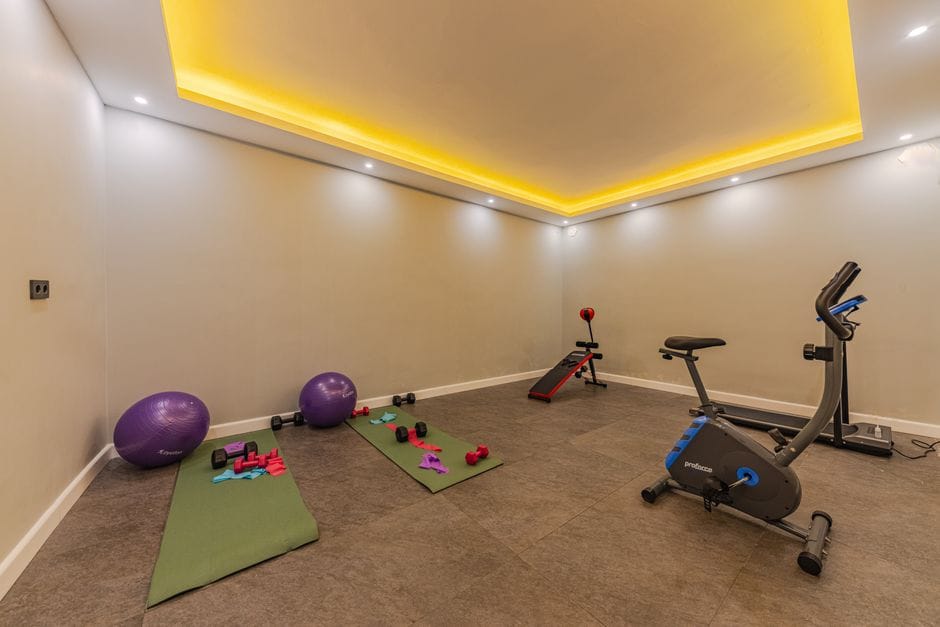
Here's a starting equipment list for someone building from scratch on a budget:
| Priority | Item | Why |
|---|---|---|
| 1 | Exercise mat (6mm+) | Foundation for all floor work |
| 2 | Resistance band set | Full-body, cheap, versatile |
| 3 | Pair of adjustable dumbbells | Adds load progressively |
| 4 | Doorframe pull-up bar | Upper body pulling (often overlooked) |
| 5 | Foam roller | Recovery, not training — but earns its keep |
You don't need all five on day one. Items 1 and 2 alone support weeks of solid training. Add item 3 when you feel you're outgrowing bands, item 4 when you want pull-up strength, item 5 when soreness becomes a daily issue.
What Beginners Actually Get Wrong
The most common beginner home gym mistake isn't the wrong equipment — it's storing equipment in a way that makes it awkward to use. Dumbbells stuffed under a bed in a bag, a mat rolled up in the attic, a kettlebell shoved behind the washing machine. Out of sight really does mean out of mind.
The second mistake is going too light. Beginners often buy the cheapest or smallest option assuming they'll "grow into heavier." The reality is that light dumbbells (under 10 lbs) feel challenging on day one and get outgrown in weeks. If you're buying fixed dumbbells, buy in a range — something you can barely press for 8 reps and something lighter for isolation work. Or just go adjustable from the start.
Third: skipping progression. A home gym workout only works long-term if you track what you did and add a little more next time — one more rep, a slightly heavier band, slowing the tempo. Without that, your body adapts and you plateau. Keep a small notebook or a note in your phone.
Do You Need a Bench?
Not immediately. Most beginner movements work just as well on the floor or standing. A bench becomes useful when you want to do dumbbell chest presses with full range of motion, or incline rows, or step-ups.
If you do buy a bench, a foldable utility bench (sometimes called an adjustable weight bench) is better than a flat one — you get incline options without significantly more space. Most fold to about 12 inches wide for storage.
Skip it for the first few months; add it once your programming actually calls for it.
Setting Up Without a Mirror
Gyms have mirrors so you can watch your form. At home, a phone on a book or low surface propped to record you from the side is a better option than buying a wall mirror. Watch the playback after each set. You'll spot things you'd never feel — a forward lean in a squat, an uneven press, a half-range pull. This is the cheapest form coaching available.
What a Good Beginner Schedule Looks Like
Equipment matters less than consistency. A basic beginner schedule with the equipment above might look like:
- Day 1: Upper body push (push-ups, dumbbell press, band shoulder press)
- Day 2: Rest or a 20-minute walk
- Day 3: Lower body (goblet squats, band lateral walks, Romanian deadlift with dumbbells)
- Day 4: Rest
- Day 5: Full body or cardio (circuits, jump rope, bodyweight flow)
- Days 6–7: Rest or light movement
Three focused sessions a week is enough to build strength and consistency as a beginner. More isn't automatically better — recovery is where progress actually happens.
Keeping Motivation High
The home gym advantage is accessibility; the home gym disadvantage is no social accountability. A few things that help:
- Same time, same spot. Routine beats motivation. Train at the same hour in the same corner so it becomes automatic.
- Short workouts count. A 20-minute session you finish beats a 60-minute one you skip. Start shorter than you think you need to.
- Track something. Even just "did I train today — yes/no" builds momentum. A simple habit tracker app or a printed calendar with X's works.
- Put on something you actually want to wear. This sounds small and it isn't. The easier it feels to start, the more often you do.
The Takeaway
A beginner home gym doesn't need to be elaborate. Start with a mat, add one versatile piece of equipment you'll actually use, store it somewhere visible and accessible, and train three times a week with intention. That setup — costing as little as $50–$100 to start — is better than a $2,000 rig you set up in January and forget by March.
Equipment is just a tool. What matters is the habit of showing up. Get the basics right, train consistently, and add gear only when you've genuinely outgrown what you have.
Frequently Asked Questions
How much does a beginner home gym cost?
A functional beginner setup (mat + resistance bands) can cost as little as $40–$60. Adding adjustable dumbbells brings it to $150–$250 depending on the brand. You don't need to spend more than that to get real results as a beginner.
What's the most important piece of equipment for a beginner?
A quality exercise mat and a resistance band set. Together they support dozens of effective exercises and cost under $50. Add dumbbells once you feel you need more load.
Do I need a mirror in my home gym?
No. A phone propped to record your form from the side is more useful and costs nothing. Watch the playback to check form instead of trying to catch yourself in the moment.
How much space do I need for a home gym?
A 6×6-foot clear area is enough for most beginner workouts. Even smaller works for band and mat exercises. You don't need a dedicated room — a cleared corner of the bedroom or living room is fine.
Read next
Related articles
- Pilates for Beginners: The Complete Guide to Starting at Home
- Zone 2 Cardio: The Science of Training Slow to Get Fitter
- How to Build a Workout Routine from Scratch
- How to Do Push-Ups: Proper Form and Progressions for Beginners
- 7 Best Kettlebells for Home Workouts (2026)
- The Best No-Equipment Bodyweight Workout for Beginners
Further reading & trusted sources
Where beginners usually go wrong
The real barrier for beginner home gyms isn’t money — it’s storage friction. Equipment that takes more than 30 seconds to retrieve gets skipped on tired days. Keeping a mat and one piece of equipment visible and within arm’s reach changes behaviour more reliably than buying more gear.
Maya’s editorial obsession is the gap between fitness hype and what the evidence actually shows — she’d rather hand you one boring habit that works than ten exciting ones that don’t. She builds FitNourish’s guides from mainstream, well-established sources (the CDC, the NHS, Mayo Clinic, and peer-reviewed research) and has a human review every one for accuracy before it publishes. She and the team are dedicated fitness enthusiasts and researchers, not doctors, so everything here is general information rather than medical advice. AI tools help with the research and drafting; the fact-checking and judgement are human.