 By Maya Reed, Editor
Reviewed & updated September 2026 · Researched, AI-assisted & human-reviewed
Educational information only — not medical advice. Learn more
The leg press looks foolproof — sit down, push a plate, repeat. That simplicity is exactly why so many people get it wrong without realizing it, loading up heavy weight while their lower back rounds off the seat pad or their knees cave inward on every rep. Done correctly, it's one of the safest ways to build serious leg strength without the balance and coordination demands of a barbell squat.
This article is for general fitness education only and is not medical advice. Talk to a doctor or physical therapist before starting a new exercise program, especially if you have a knee, hip, or lower back condition.
 Jump to a sectionCurated by Maya · 8 min read
What the leg press actually trains
The leg press is a compound, machine-guided exercise that primarily targets the quadriceps, with significant involvement from the glutes and hamstrings depending on foot position. Because the machine supports your back and controls the bar path, it removes the stabilization demands of a free-weight squat, which lets you isolate leg strength more directly and often push closer to muscular failure with less overall fatigue. That makes it a useful complement to squats rather than a straight replacement — most well-rounded leg days use both.
Step-by-step: how to do a leg press
- Set your seat position. Adjust the seat so that when your feet are on the platform, your knees form roughly a 90-degree angle at the bottom of the movement. Too close and you'll be crushed at the bottom; too far and you lose range of motion.
- Place your feet correctly. Stand feet shoulder-width apart in the middle of the platform, toes pointed slightly outward. This foot placement biases the quads while staying comfortable for most knees.
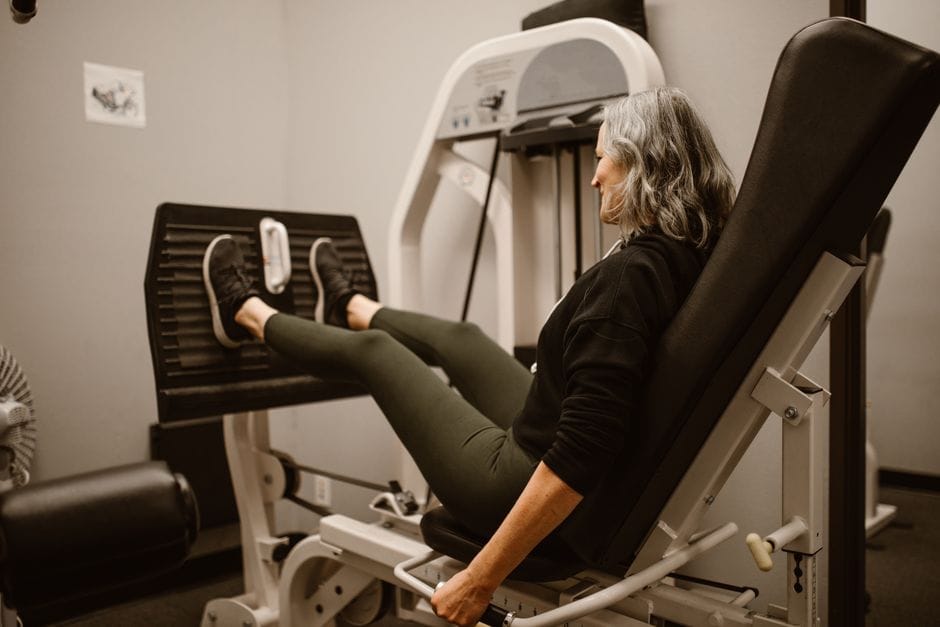
- Brace your back against the pad. Press your lower back flat against the seat pad and keep it there for the entire set. This is the single most important safety cue on this machine.
- Unrack and lower with control. Release the side safety handles, then lower the platform by bending your knees until they reach about 90 degrees — never let your lower back round off the pad to chase extra depth.
- Press through your heels. Drive the platform away by pushing through your whole foot, with slight emphasis on the heel, until your legs are extended but not locked out.
- Avoid locking your knees. Stop just short of full lockout at the top to keep tension on the muscle and avoid transferring load into the knee joint itself.
- Repeat for reps. A typical working set is 8-12 reps for strength and size, or 12-15 for more of a metabolic burn.
The most common form mistakes
- Lower back rounding off the pad. This is the most serious mistake on this machine — letting your hips tuck under and your back lift off the pad to squeeze out extra depth puts real strain on the lumbar spine. If your back lifts off before your knees hit 90 degrees, that's your actual depth limit.
- Knees caving inward. Watching the knees track in line with the toes, rather than collapsing inward on the push, protects the knee joint and keeps the quads doing the work they're meant to do.
- Locking the knees out hard at the top. Slamming into full lockout with heavy weight transfers stress from the muscle onto the joint itself and is a common way lifters aggravate their knees over time.
- Going too heavy, too fast. Because the machine feels stable and supported, it's tempting to stack more plates than your form can handle. If you need to round your back or bounce the weight off the bottom to move it, the load is too heavy.
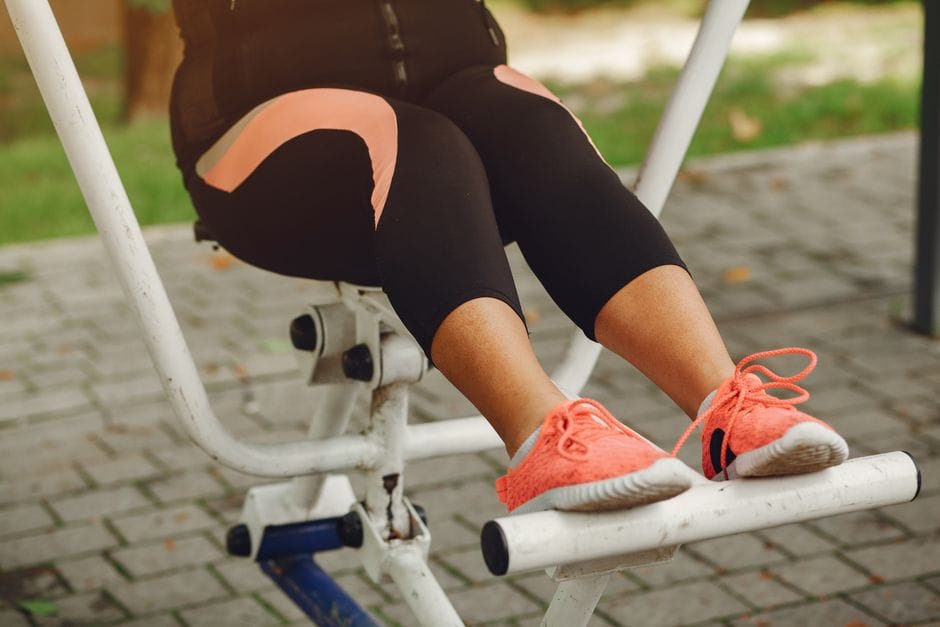
- Placing feet too low on the platform. Feet positioned near the bottom edge shift excessive stress onto the knees and can put your heels at risk of lifting off. Keep feet centered, roughly shoulder-width, for a safer, more balanced load path.
Foot placement and what it changes
| Foot position | What it emphasizes | Notes |
|---|---|---|
| Shoulder-width, centered | Balanced quad and glute activation | The default, safest starting position |
| High on the platform | More glutes and hamstrings | Reduces knee stress, good for knee sensitivity |
| Low on the platform | More quads | Increases knee stress, use lighter weight |
| Wide stance, toes out | More inner thigh and glutes | Comfortable for people with tighter hips |
| Narrow stance | More outer quad emphasis | Can feel less stable for some lifters |
Small shifts in foot placement change the emphasis of the exercise more than most people expect, so it's worth experimenting within a comfortable range rather than sticking to one position out of habit.
Programming: sets, reps, and where it fits
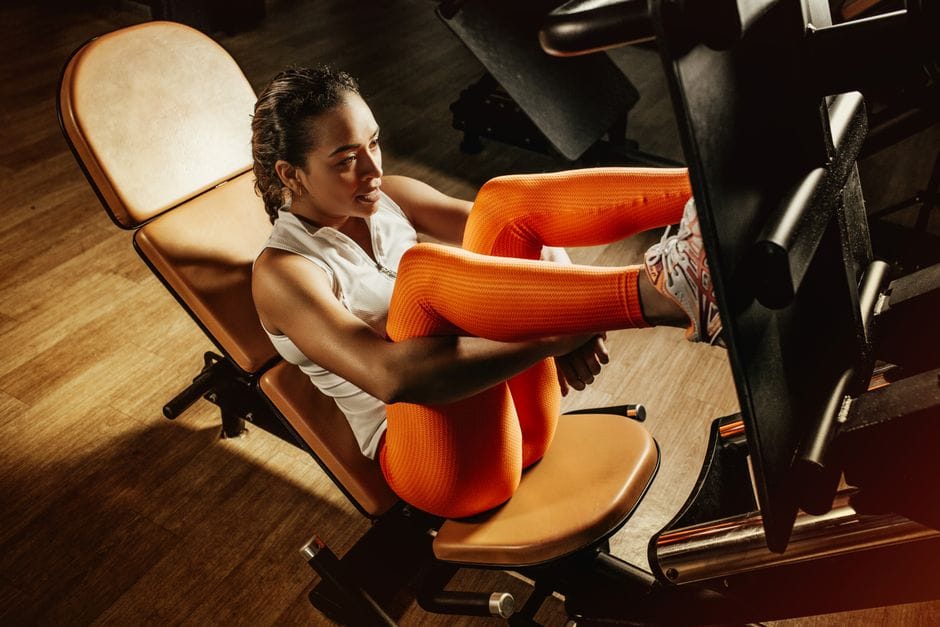
For most lifters, 3-4 sets of 8-12 reps once or twice a week works well, placed after a compound free-weight movement like squats or lunges since the leg press is easier to load safely once you're already warmed up. Because it's lower-skill and lower-fatigue on the nervous system than a barbell squat, it's also a reasonable exercise to push closer to failure on your last set or two, which is harder to do safely with a loaded barbell on your back.
Leg press variations to try
- Single-leg press: Pressing one leg at a time exposes and helps correct strength imbalances between sides that a two-legged press can hide.
- Narrow-stance press: Feet close together shifts more emphasis onto the outer quad sweep, a common target for lifters chasing leg definition.
- Wide-stance press: Feet wide with toes turned out brings the inner thighs and glutes more into the movement.
- Partial-range press: Working only the top or bottom half of the range can be useful for building strength through a specific sticking point, though it shouldn't replace full range of motion training entirely.
Who should be cautious with this exercise
Anyone with an existing knee injury, herniated disc, or lower back issue should approach the leg press carefully, since the seated, angled position changes how load travels through the spine and knees compared to a standing squat. Keeping the load light while dialing in a pain-free range of motion, never letting the lower back round off the pad, and stopping at any sign of sharp joint pain are reasonable starting precautions. Ongoing pain is a conversation for a physical therapist, not something to work through.
The takeaway
The leg press is a genuinely effective, joint-friendly way to build leg strength, but its safety and effectiveness both hinge on the same details: back flat against the pad, controlled depth, and knees tracking properly. Get those right and it's one of the more forgiving heavy-load exercises in the gym. Ignore them and the machine's stability becomes a false sense of security that lets bad form go unnoticed.
Frequently asked questions
How deep should I go on a leg press?
Deep enough that your knees reach roughly 90 degrees, but never so deep that your lower back lifts off the seat pad. Your back staying flat against the pad is the real limit on depth, not a fixed knee angle.
Is the leg press a good substitute for squats?
It's a strong complement but not a full substitute. The leg press isolates the legs without training balance, core stability, and the standing hip mechanics that a barbell squat builds. Most well-rounded programs include both.
Why do my knees hurt during leg presses?
The most common causes are locking out the knees hard at the top, placing feet too low on the platform, or going too heavy for your current range of motion. Adjust foot placement higher, avoid a hard lockout, and reduce the weight before assuming it's an injury issue.
How much weight should I start with on a leg press?
There's no universal number since leg press machines vary and the sled itself often weighs more than it looks, so start light enough to comfortably hit 12-15 controlled reps with your back flat against the pad, then add weight gradually from there.
Read next
Further reading & trusted sources
Worth knowing before you start
The seat position matters more than most people realize when they first sit down, since a seat set even a couple notches too close forces the lower back to round off the pad before the knees ever reach 90 degrees — the fix is adjusting the seat, not just being more careful about depth. Locking the knees out hard at the top of each rep transfers stress straight into the joint the same way it does on a squat, which is why the cue to stop just short of lockout matters just as much on a supported machine as it does on a free-weight lift.
Maya’s editorial obsession is the gap between fitness hype and what the evidence actually shows — she’d rather hand you one boring habit that works than ten exciting ones that don’t. She builds FitNourish’s guides from mainstream, well-established sources (the CDC, the NHS, Mayo Clinic, and peer-reviewed research) and has a human review every one for accuracy before it publishes. She and the team are dedicated fitness enthusiasts and researchers, not doctors, so everything here is general information rather than medical advice. AI tools help with the research and drafting; the fact-checking and judgement are human.