 By Maya Reed, Editor
Reviewed & updated September 2026 · Researched, AI-assisted & human-reviewed
Educational information only — not medical advice. Learn more
Calves are one of the most skipped muscle groups in the gym, usually reduced to a rushed set at the end of leg day. The calf raise is simple to learn but easy to do badly, and small form mistakes are exactly why so many people train calves for months without seeing much change.
This is general fitness information, not medical advice. Talk to a doctor or physical therapist before starting a new exercise routine, especially if you have ankle, knee, or Achilles issues.
 Skip ahead toCurated by Maya · 7 min read
What is a calf raise?
A calf raise is a lower-leg exercise where you rise up onto the balls of your feet, lifting your heels off the ground, then lower back down with control. It targets the two main calf muscles — the gastrocnemius (the larger, more visible muscle) and the soleus (a flatter muscle underneath that does more work when the knee is bent).
You can perform calf raises standing (which emphasizes the gastrocnemius) or seated with the knees bent (which shifts more load to the soleus). Both variations can be done with just bodyweight, dumbbells, a barbell, or a dedicated calf-raise machine.
Why calf raises matter
The calves support nearly every lower-body movement — walking, running, jumping, and stabilizing the ankle during squats and lunges — yet they're one of the most undertrained muscle groups because progress is slow and the exercise feels unglamorous compared to squats or deadlifts.
Strong calves also protect the ankles and Achilles tendon. Weak, undertrained calf muscles are a common contributing factor in ankle rolls and Achilles strain, especially for people who run or play sports that involve quick direction changes.
Beyond aesthetics, calf strength directly affects how much power you can generate off the ground, which is why sprinters, basketball players, and Olympic lifters all dedicate specific training time to this muscle group rather than treating it as an afterthought.
Step-by-step: how to do a standing calf raise
- Stand tall with your feet hip-width apart, either on flat ground or with the balls of your feet on a raised platform (like a step) so your heels can dip below the platform for a deeper stretch.
- Hold onto something for balance if needed — a wall, rack, or pair of dumbbells at your sides for added resistance.
- Press through the balls of your feet and rise up as high as you can, fully extending your ankles so your heels lift well off the ground.
- Pause and squeeze at the top for a full second, focusing on contracting the calf rather than bouncing through the movement.
- Lower slowly back down, letting your heels drop below the level of your toes if you're using a raised platform, to get a full stretch at the bottom.
- Repeat for the full rep range without letting your ankles roll inward or outward.
Aim for 3-4 sets of 12-20 reps, 2-3 times per week. Calf muscles tend to respond better to higher rep ranges and slower tempos than heavier, lower-rep work.
Common calf raise mistakes
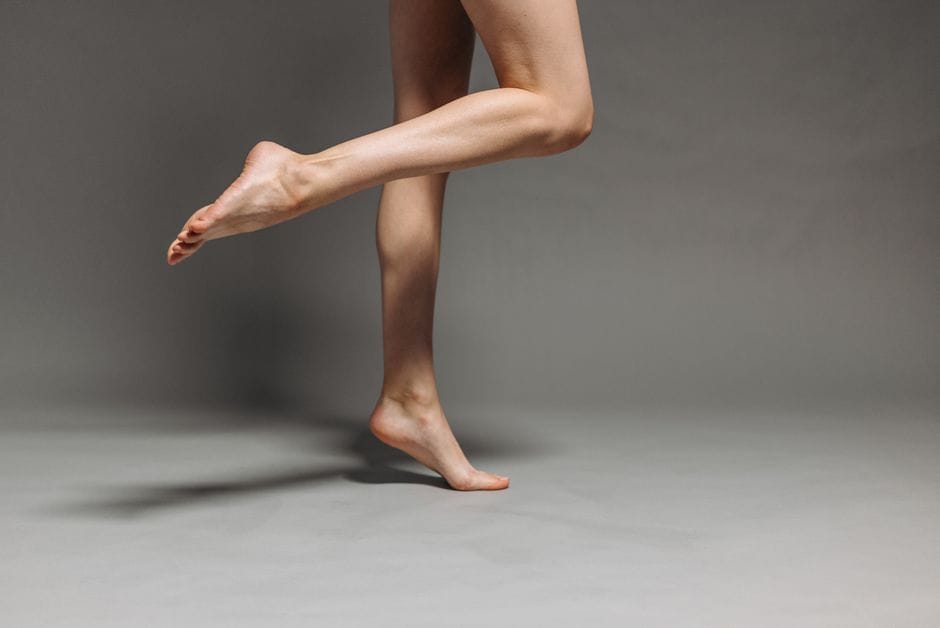
Bouncing instead of controlling the movement. Using momentum to bounce out of the bottom position takes tension off the calf muscle and turns the exercise into not much more than jumping in place. Slow the tempo down, especially on the way down.
Not using a full range of motion. Stopping short at the top (a partial "pulse") or not dropping the heels low enough at the bottom cuts the exercise's effectiveness roughly in half. The stretch at the bottom is just as important as the contraction at the top.
Letting the ankles cave in or out. Watch your ankles in a mirror or on video — they should track straight up and down. Rolling to the outside or inside edges of your feet shifts stress onto the ankle joint instead of the calf muscle.
Training only standing raises. Because the gastrocnemius and soleus respond differently depending on knee position, skipping seated raises (or the reverse) leaves part of the calf undertrained. Rotating both variations across the week covers the whole muscle group.
Going too heavy too fast. Calves are a small muscle group used to constant daily load from walking, so they can handle volume, but jumping straight to heavy weight before your form is dialed in is a common way to end up with tight, sore Achilles tendons the next day.
Seated calf raises: the other half of the picture
Seated calf raises are done with knees bent at roughly 90 degrees, either on a dedicated machine or by placing a weight across your lap while sitting on a bench with your toes on a raised platform. Because the knee is bent, the gastrocnemius is shortened and largely taken out of the movement, putting more of the workload on the soleus.
Including both standing and seated variations across a training week is the most reliable way to develop calves that look proportional and hold up under the demands of running, jumping, and everyday walking.
How often to train calves
Because calf muscles are used constantly throughout the day for walking and standing, they tend to recover faster than larger muscle groups like the quads or back. Training calves 2-4 times per week, with at least a day of rest between sessions, is a reasonable range for most people looking to build noticeable size and strength.
Progress with calves is often slower than other muscle groups, so consistency over months — not a single perfect workout — is what actually drives visible change.
The takeaway
The calf raise is a simple movement, but full range of motion, a controlled tempo, and consistent training frequency matter more here than in almost any other exercise. Rushing through partial reps at the end of leg day is the single biggest reason people train calves for years without much to show for it. Slow down, use a full stretch and squeeze, and rotate standing and seated variations to train both major calf muscles.
Frequently asked questions
How many calf raises should I do a day?
There's no need to do them daily — 2-4 sessions per week of 3-4 sets in the 12-20 rep range is a solid range for most people. More important than frequency is doing each rep with a full range of motion and a controlled tempo.
Why aren't my calves growing even though I train them?
The most common culprits are partial range of motion (not dropping the heels low enough or not rising all the way up), using momentum instead of controlled reps, and simply not training them often enough given how resilient the muscle group is to fatigue.
Should I do calf raises with straight or bent knees?
Both — straight-knee (standing) raises emphasize the gastrocnemius, while bent-knee (seated) raises emphasize the soleus. Rotating both across your week trains the full calf rather than just one muscle.
Can I do calf raises without any equipment?
Yes. Bodyweight standing calf raises off the edge of a stair step, using the railing for balance, are an effective starting point and can be made harder over time by holding a backpack with added weight or slowing the tempo down.
Read next
Further reading & trusted sources
The part that actually matters
Progress on calf raises is genuinely slower than on almost any other muscle group, which is exactly why so many people quit the exercise before it’s had time to work — the calves get low-level loading all day from walking, so they need real volume and consistency over months, not weeks, before visible change shows up. Dropping the heels below the platform edge at the bottom of each rep matters more than most people realize, since skipping that stretch quietly cuts the exercise’s effectiveness even when the rep still looks correct.
Maya’s editorial obsession is the gap between fitness hype and what the evidence actually shows — she’d rather hand you one boring habit that works than ten exciting ones that don’t. She builds FitNourish’s guides from mainstream, well-established sources (the CDC, the NHS, Mayo Clinic, and peer-reviewed research) and has a human review every one for accuracy before it publishes. She and the team are dedicated fitness enthusiasts and researchers, not doctors, so everything here is general information rather than medical advice. AI tools help with the research and drafting; the fact-checking and judgement are human.