 By Maya Reed, Editor
Reviewed & updated September 2026 · Researched, AI-assisted & human-reviewed
Educational information only — not medical advice. Learn more
The hip thrust is one of the most effective glute-building exercises you can do, but it's also one of the most commonly botched — half-range reps, arched lower backs, and necks cranked backward are everywhere in gym videos. Get the setup and the mechanics right, and it becomes one of the safest, highest-payoff moves for building strength in your glutes and hamstrings.
This article is general fitness information, not medical advice. Check with a doctor before starting a new exercise routine, especially if you have an existing injury.
 What this guide coversCurated by Maya · 7 min read
Why the hip thrust works so well
Most lower-body exercises — squats, lunges, deadlifts — put real emphasis on the glutes, but none of them load the glutes through their full range of motion at the top of a hip extension quite like the hip thrust does. Because your torso is elevated and stable against a bench, the exercise isolates hip extension almost entirely, meaning more of the work lands directly on the glutes instead of getting shared with your quads or lower back. That's why it's become a staple in glute-focused programs rather than a niche accessory move.
Setting up correctly
- Sit on the ground with your upper back against a bench, shoulder blades roughly at the edge of the bench pad.
- Roll a barbell over your hips (use a barbell pad — this step is non-negotiable for comfort at any real weight) or start with just your body weight or a dumbbell across your hips while learning the pattern.
- Plant your feet flat, roughly hip-width apart, shins close to vertical when your hips are up — if your knees track well past your toes at the top, walk your feet in slightly.
- Bench height matters: it should hit low enough on your back that you can get your torso roughly parallel to the floor at the top of the movement, not just a partial lift.
The movement itself
Drive through your heels and push your hips up toward the ceiling, squeezing your glutes hard at the top until your torso and thighs form a relatively straight line from shoulders to knees. Pause for a full second at the top — this is where most of the tension actually happens — then lower under control until your hips are just short of touching the floor, and repeat. The tempo matters more than people expect: a rushed rep that bounces off the bottom skips the part of the range where the glutes work hardest.
The most common mistakes
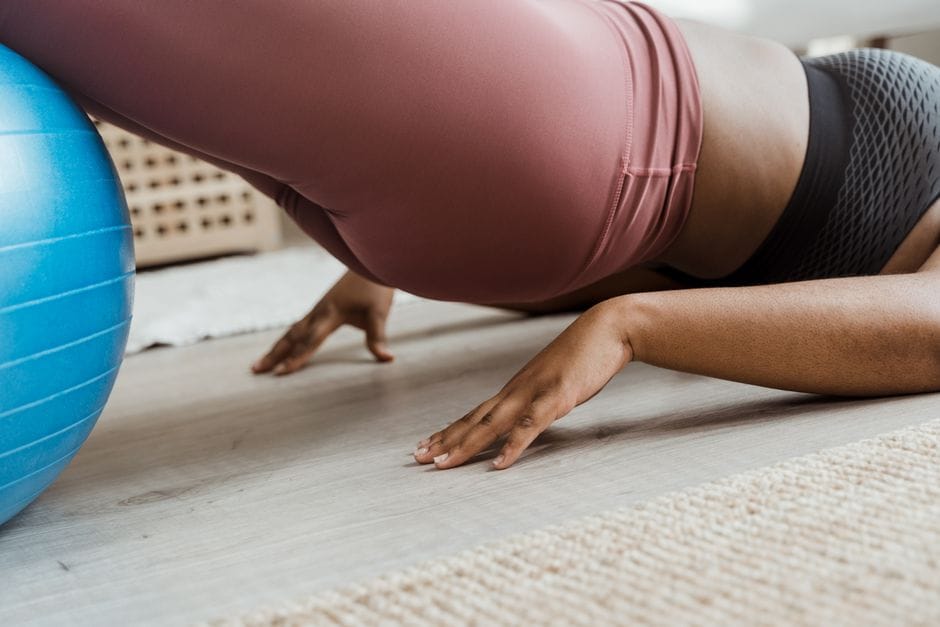
- Overarching the lower back at the top. The line should run through your torso and thighs, not through an exaggerated arch in your spine — that shifts load off the glutes and onto the lower back.
- Cranking the neck back to look up. Keep your chin slightly tucked and your gaze forward or slightly down; looking up strains the neck for no benefit.
- Not going through a full range. Partial reps that stay near the top feel easier but train a smaller slice of the movement — lower all the way until your hips nearly touch the floor each rep.
- Feet too far forward or too close. Both push the work toward your quads or make the bottom position uncomfortable; a slight experiment with foot placement usually finds the spot where you feel it most in your glutes.
- Skipping the pause at the top. Rushing through the top squeeze cuts out the moment where the glutes are under the most tension.
Barbell vs. bodyweight vs. single-leg
You don't need a barbell to get real value from this movement. Bodyweight hip thrusts (or glute bridges done on the floor without a bench) are a solid starting point for learning the pattern and building initial strength. A dumbbell or kettlebell across the hips is the natural next step once bodyweight feels easy. Once you're comfortable loading the movement, a barbell with a padded bar lets you progress weight in small, controlled increments — which matters because the hip thrust tends to allow surprisingly heavy loads once your form is dialed in. Single-leg hip thrusts (one foot on the ground, one leg extended) are a useful variation for addressing side-to-side strength imbalances.
How to program it
For most goals, 3-4 sets of 8-12 reps works well, leaving a rep or two in reserve on most sets rather than grinding every set to failure. If your primary goal is glute size and strength, placing hip thrusts early in a lower-body session (before you're fatigued from squats or deadlifts) lets you use more weight with better form. If it's more of an accessory move for you, doing it after your main lifts is fine too — the key variable is form quality, not exactly where it sits in your session.
Sample progression for beginners
- Weeks 1-2: Bodyweight glute bridges and hip thrusts, focusing entirely on the top squeeze and full range of motion.
- Weeks 3-4: Add a light dumbbell or kettlebell across the hips, same rep ranges.
- Weeks 5+: Move to a barbell with a pad once the dumbbell version feels comfortable and controlled through the full range, adding small amounts of weight session to session.
The takeaway
The hip thrust is a genuinely effective, low-injury-risk way to build glute strength — but only when the setup and range of motion are right. Keep the bench height correct, avoid overarching your back at the top, pause for a real squeeze, and lower all the way down each rep. Start light, nail the pattern, and the weight will come naturally as your glutes adapt.
Frequently asked questions
Do I need a barbell to do hip thrusts effectively?
No. Bodyweight and dumbbell or kettlebell versions build real strength, especially early on. A barbell just lets you keep progressing weight once those feel easy.
Why do my hip flexors cramp during hip thrusts instead of my glutes working?
This usually means your feet are positioned too far from your body or your setup isn't letting your hips fully extend — try walking your feet in slightly and focus on consciously squeezing your glutes rather than just pushing up.
Is the hip thrust safe for people with lower back issues?
It can actually be lower-impact on the spine than squats or deadlifts since the torso stays supported, but anyone with an existing back issue should get clearance from a doctor or physical therapist before adding a new loaded exercise.
How is a hip thrust different from a glute bridge?
A glute bridge is done flat on the floor with a shorter range of motion, while a hip thrust uses a bench to support the upper back, allowing your hips to travel through a fuller range and typically letting you use more resistance.
Read next

Further reading & trusted sources
Worth knowing before you start
Bench height is the detail that decides whether a hip thrust actually works, since a bench too high or too low prevents the torso from reaching parallel at the top no matter how much weight or effort goes into the lift. Most people rush the bottom of each rep because it feels like the ‘easy’ part, but that’s exactly the portion of the range where the glute stretch under load happens — bouncing off the bottom quietly cuts the exercise’s real benefit in half.
Maya’s editorial obsession is the gap between fitness hype and what the evidence actually shows — she’d rather hand you one boring habit that works than ten exciting ones that don’t. She builds FitNourish’s guides from mainstream, well-established sources (the CDC, the NHS, Mayo Clinic, and peer-reviewed research) and has a human review every one for accuracy before it publishes. She and the team are dedicated fitness enthusiasts and researchers, not doctors, so everything here is general information rather than medical advice. AI tools help with the research and drafting; the fact-checking and judgement are human.