 By Maya Reed, Editor
Reviewed & updated September 2026 · Researched, AI-assisted & human-reviewed
Educational information only — not medical advice. Learn more
The front squat loads the bar across your shoulders instead of your upper back, which shifts the demand forward onto your quads and core and forces a more upright torso than a back squat allows. It's a staple in Olympic weightlifting for good reason, but it also has a real place in a general strength program once you've got the mobility to hold the position.
This article covers general fitness education, not medical or personal training advice — check with a doctor or qualified coach before adding a new barbell movement to your routine, especially if you have wrist, shoulder, or lower back issues.
 On this pageCurated by Maya · 10 min read
- What is a front squat, and how is it different from a back squat?
- The two rack positions: clean grip vs. cross-arm grip
- Step-by-step: how to do a front squat
- Common form mistakes
- Mobility prerequisites
- How to program front squats
- Who should — and shouldn’t — front squat
- The takeaway
- Further reading & trusted sources
What is a front squat, and how is it different from a back squat?
In a front squat, the barbell rests across the front of your shoulders — supported by your fingertips and upper chest rather than gripped tightly like a back squat. That front-loaded position changes the mechanics in a few important ways. It forces your torso to stay much more vertical throughout the movement, because leaning forward even slightly lets the bar roll off your shoulders. That upright torso also shortens the lever arm on your lower back, which is why many lifters find front squats feel easier on the spine than back squats at the same weight, even though the quads work harder.
The tradeoff is that front squats demand more from your wrists, elbows, and upper back mobility to hold the rack position, and most people can't load a front squat as heavy as a back squat — that's normal, not a sign anything is wrong. It's not a "better" or "worse" version of the back squat, just a different tool that emphasizes the quads more directly and teaches an upright squatting posture that carries over well to other lifts.
The two rack positions: clean grip vs. cross-arm grip
There are two common ways to hold the bar in a front squat, and either is valid depending on your mobility.
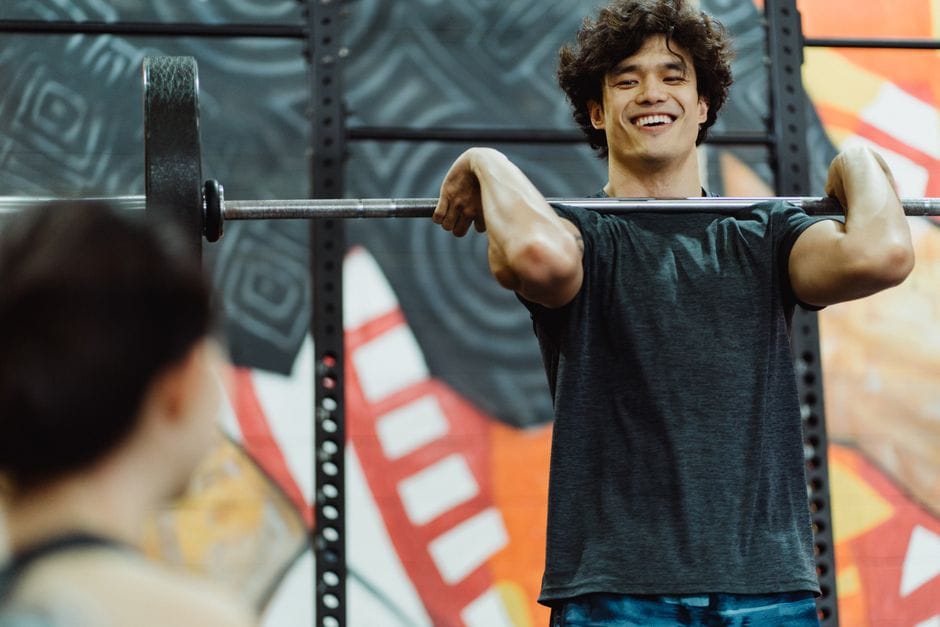
- Clean grip (Olympic style): Hands are just outside shoulder width, fingers hooked under the bar, elbows driven up high so your upper arms are close to parallel with the floor. This requires good wrist extension and shoulder mobility, but it's the most secure position once you have it, since the bar sits in a shelf created by your collarbones and front delts with your fingers just steadying it.
- Cross-arm grip: Arms crossed in front of the bar, each hand gripping the opposite shoulder or the bar itself, elbows lifted to create a shelf. This is far more accessible for lifters with tight wrists or shoulders, and it's a completely legitimate long-term option — plenty of experienced lifters use it by preference, not just as a beginner workaround.
Whichever grip you use, the actual weight-bearing job belongs to your elbows being high and your upper back staying tight — your hands and fingers are mostly there for balance, not to muscle the bar in place.
Step-by-step: how to do a front squat
- Set the bar in a rack at roughly mid-chest height so you don't have to squat it out of the rack or hoist it up from too low.
- Get into your rack position (clean grip or cross-arm) before you unrack the bar, with elbows lifted high.
- Unrack and step back with two controlled steps, feet at roughly shoulder width, toes turned out slightly.
- Brace your core with a full breath into your belly, and keep your elbows up throughout the entire set — this is the cue that matters most in a front squat.
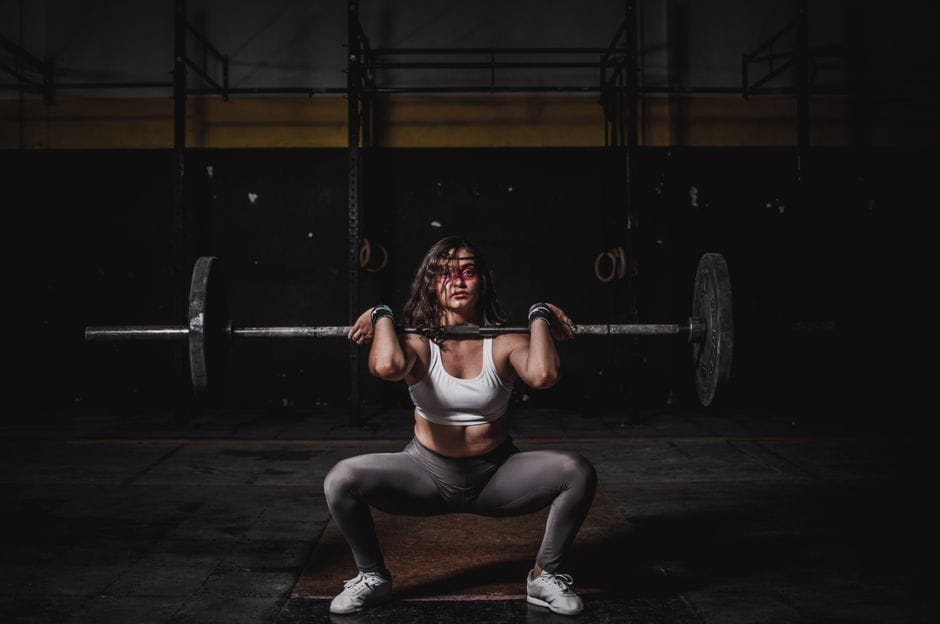
- Sit down and back, bending your knees and hips together while keeping your torso as vertical as you can. Your chest should stay tall, not lean forward toward the bar.
- Descend until your hip crease drops at or below knee level, if your mobility allows it without your lower back rounding or your elbows dropping.
- Drive back up by pushing your feet into the floor and keeping your elbows high the entire way, so the bar stays stacked over the middle of your foot.
- Reset your breath at the top and repeat for your working reps.
Common form mistakes
- Elbows dropping. This is the single most common front squat breakdown. As elbows drop, the bar's angle changes and it starts to roll forward off the shoulders, which usually forces the torso to lean forward to compensate — a downward spiral that often ends with the bar being dumped. Actively think "elbows up" on every single rep, especially as you get closer to your last few reps of a set.
- Excessive forward lean. Even a small forward lean in a front squat is a much bigger problem than in a back squat, because it directly threatens the bar's position on your shoulders. If you notice yourself leaning forward out of the hole, it's often a sign the weight is too heavy for your current mobility or strength in that position, not just a cue reminder.
- Heels rising off the floor. This usually points to limited ankle mobility, which forces the body to shift weight onto the toes to keep balance as you descend. It also tends to pull the torso forward, compounding the lean issue above.
- Losing upper back tightness. A soft, rounded upper back makes it much harder to keep the elbows up and the chest tall. Actively pull your shoulder blades together and keep your upper back tense before you even unrack the bar.
- Too-narrow or too-wide elbow position. Elbows that are too far forward can feel unstable; elbows angled out to the sides lose the shelf entirely. Aim for elbows pointed forward and up, roughly in line with the bar.
Mobility prerequisites
Front squats have real mobility demands, and skipping this step is the most common reason people struggle with the lift, not lack of strength.
- Wrist extension is needed for the clean grip specifically. If your wrists feel jammed or painful holding the bar, either work on wrist mobility drills over time or use the cross-arm grip instead — there's no rule that says you have to use the clean grip.
- Ankle dorsiflexion lets your shin travel forward enough to reach depth without your heels lifting or your torso collapsing forward. Ankle mobility work (weighted ankle stretches, calf stretches with the knee driving over the toe) pays off directly here.
- Thoracic (upper back) extension is what lets you keep your chest tall and elbows high without your upper back rounding under load. Foam rolling the upper back and thoracic extension drills before squatting can noticeably improve your rack position.
If any of these feel severely limited, it's worth spending a few weeks on targeted mobility work and lighter-weight practice reps before loading the bar heavily — the position has to be earned before it can be loaded.
How to program front squats
Front squats work well as:
- A primary lower-body lift, 3-5 sets of 3-6 reps, once or twice a week, if quad development and an upright squat pattern are training priorities
- A secondary lift after a heavier back squat or deadlift, 3-4 sets of 6-10 reps, as an accessory that still builds the pattern without maxing out
- A technique-focused warm-up movement with just the empty bar or light weight, to groove the rack position and upright torso before other lower-body work
Because front squats are demanding on the upper back and core in addition to the legs, most lifters find they fatigue faster per set than back squats at a comparable relative intensity — factor that into how you plan the rest of your session.
Who should — and shouldn't — front squat
Front squats are a strong fit for lifters chasing more quad-dominant leg development, anyone training for Olympic weightlifting movements (since the front squat is the receiving position for a clean), and people whose lower back doesn't tolerate heavier back squat loading well.
They're a poorer fit, at least for now, for anyone with wrist pain that doesn't resolve with the cross-arm grip, significant shoulder impingement that makes the rack position painful, or very limited ankle mobility that hasn't been addressed — in these cases, a goblet squat or back squat may be a more comfortable starting point while mobility work continues in the background.
The takeaway
The front squat is a genuinely useful lift once you have the mobility to hold the rack position, rewarding lifters with a more upright torso, strong quad development, and often less lower back stress than an equivalent back squat. Elbows up and chest tall are the two cues that matter most — if either one breaks down, the rest of the lift tends to fall apart with it. Start light, prioritize the wrist, ankle, and thoracic mobility work that makes the position sustainable, and let the loading progress only as fast as your form holds.
Frequently asked questions
Is a front squat harder than a back squat?
It's harder in different ways rather than simply "more difficult." Most people can't load a front squat as heavy as a back squat, largely because of the mobility and core demands of holding the rack position, but the movement itself doesn't require more overall strength — it just distributes the challenge differently, with more emphasis on the quads and upright posture.
Do I need to be flexible to front squat?
You need reasonable wrist, ankle, and upper back mobility to hold a comfortable rack position, but this can be built over time with consistent mobility work. Many lifters who couldn't hold the position at all when they started are able to front squat comfortably within a few weeks of targeted stretching and light practice reps.
Can beginners do front squats?
Yes, though it's often easier to build the front squat pattern gradually — starting with goblet squats to learn the general squat mechanics, then progressing to an empty barbell front squat to practice the rack position, before adding weight. Rushing straight to a loaded front squat without that groundwork is a common reason beginners struggle with the lift.
Why does the bar keep rolling off my shoulders?
This almost always traces back to the elbows dropping, whether from fatigue, weak upper back positioning, or limited mobility that makes holding elbows-up uncomfortable. Before adding more weight, spend time on empty-bar reps focused purely on keeping the elbows high through the whole set — the loading only becomes usable once that position is reliable.
Read next
Further reading & trusted sources
What to actually expect
Elbows dropping even a couple inches is usually what actually ends a front squat set, not leg fatigue — the bar starts rolling forward off the shoulders the moment the elbows sag, and by the time it’s visibly rolling it’s often too late to save the rep. Most people blame a missed front squat on weak legs when the real limiter is upper back and wrist mobility not holding the rack position long enough for the legs to finish the job.
Maya’s editorial obsession is the gap between fitness hype and what the evidence actually shows — she’d rather hand you one boring habit that works than ten exciting ones that don’t. She builds FitNourish’s guides from mainstream, well-established sources (the CDC, the NHS, Mayo Clinic, and peer-reviewed research) and has a human review every one for accuracy before it publishes. She and the team are dedicated fitness enthusiasts and researchers, not doctors, so everything here is general information rather than medical advice. AI tools help with the research and drafting; the fact-checking and judgement are human.