 By Maya Reed, Editor
Reviewed & updated September 2026 · Researched, AI-assisted & human-reviewed
Educational information only — not medical advice. Learn more
Some days the gym isn't happening — no time, no equipment, maybe just a hotel room or a living room floor. This 20-minute full-body workout uses nothing but your own bodyweight and still hits your legs, chest, back, shoulders, and core in one session.
This article is for general fitness information only and is not a substitute for medical advice. If you have any health conditions or injuries, consult a qualified healthcare professional before starting a new exercise program.
 In this guideCurated by Maya · 6 min read
Why Bodyweight Training Actually Works
It's tempting to assume that without weights, you can't build real strength. That's not true, especially for beginners and intermediates. Bodyweight exercises can generate plenty of mechanical tension when you control tempo, range of motion, and rest — the same variables that make a barbell effective.
The other advantage is joint-friendliness. Movements like push-ups, lunges, and planks train stabilizer muscles that heavy machines often bypass. That carries over directly into everyday movement and injury resistance, not just how a muscle looks.
The Workout: 20 Minutes, 6 Exercises
This routine uses a circuit format — one exercise flows into the next with minimal rest, then you repeat the full circuit 3 times. Rest 60–90 seconds between full rounds.
Circuit (45 seconds work / 15 seconds transition):
- Bodyweight squats — chest tall, knees tracking over toes, sit back like reaching for a chair
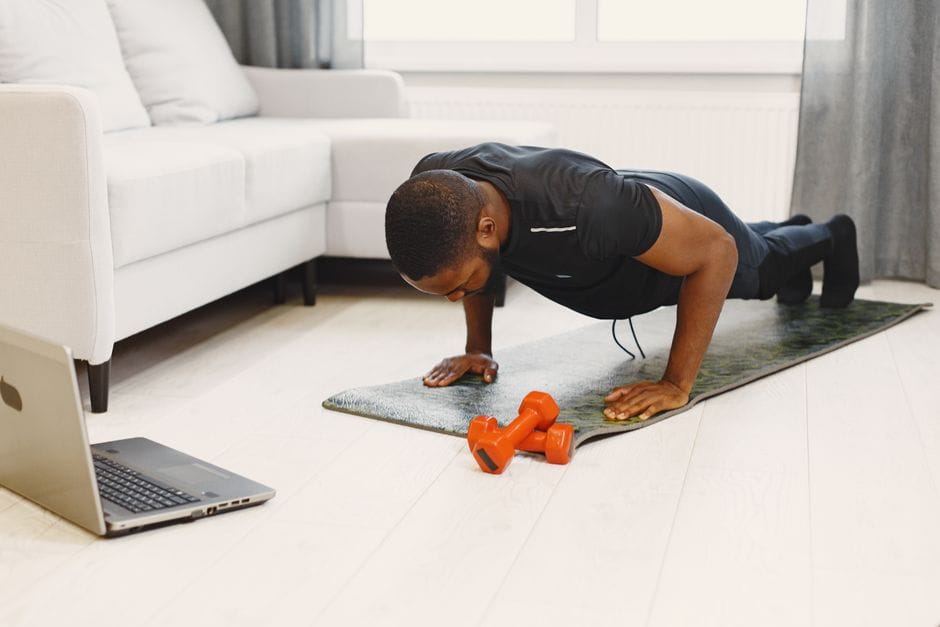
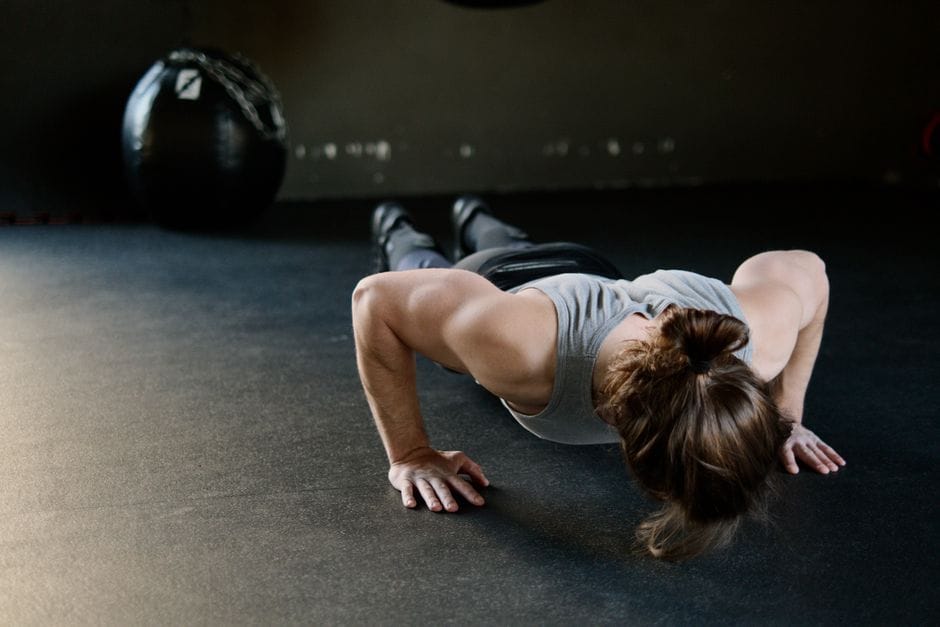
- Push-ups (knee push-ups if needed) — full range, chest close to the floor
- Reverse lunges — alternate legs, control the descent rather than dropping into it
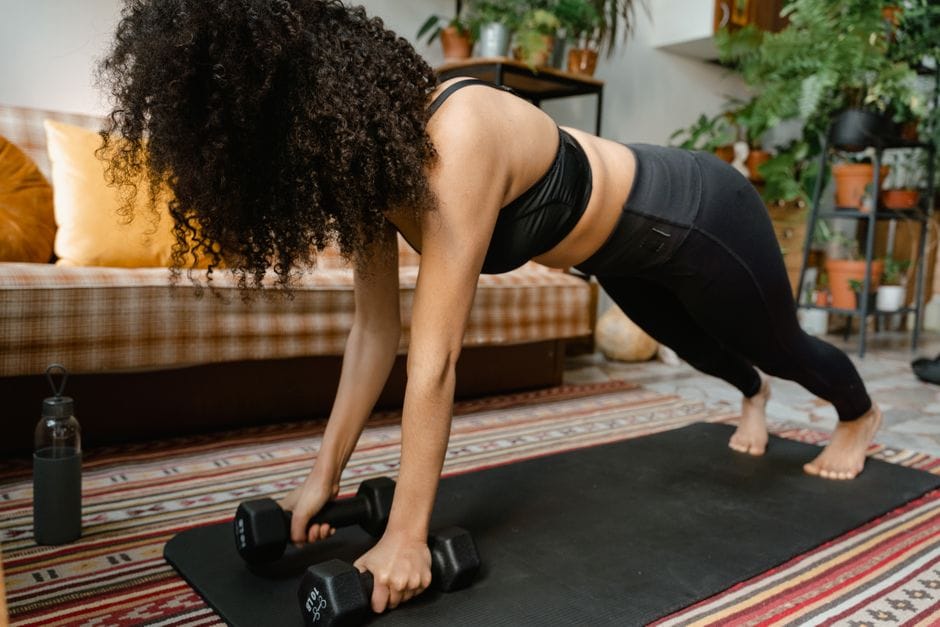
- Plank shoulder taps — hips stay level, no rotating side to side
- Glute bridges — squeeze at the top for a full second before lowering
- Mountain climbers — moderate pace, focus on driving the knee to the chest, not just fast feet
Timing: 3 rounds × 6 exercises × 45s work / 15s transition ≈ 18 minutes, plus a 2-minute warm-up.
Warm-Up First (2 Minutes)
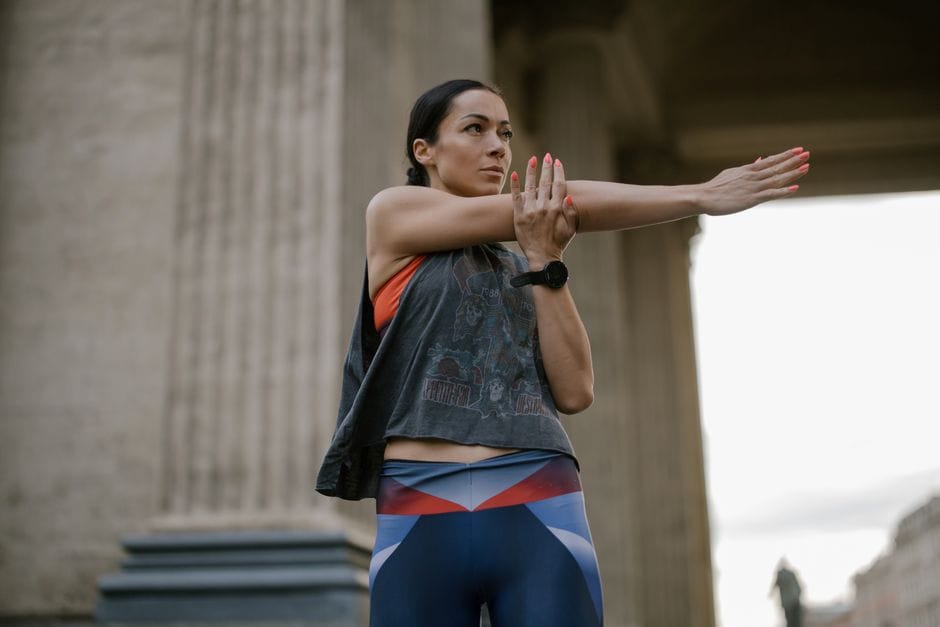
Skipping the warm-up is the single most common way people hurt themselves in a bodyweight routine, precisely because it "feels" low-risk. Spend two minutes on arm circles, hip circles, bodyweight squats at half speed, and a few walking lunges to get blood into the muscles you're about to load.
How to Scale the Intensity
To make it easier: do standard push-ups from the knees, reduce lunge depth, or extend the rest between rounds to 90 seconds.
To make it harder: add a fourth round, slow the eccentric (lowering) portion of each rep to a 3-second count, or switch to jump squats and plyometric push-ups.
The routine works at nearly any fitness level because the format — not the specific exercise variation — is what drives the results. Someone brand new to exercise and someone who's been training for years can run the same circuit; they just adjust reps, tempo, and rest to match their level.
Common Mistakes to Avoid
Rushing through reps. Speed without control shortens the range of motion and reduces the actual training effect. A controlled squat to full depth beats ten shallow, rushed ones.
Letting the core go slack. In planks and mountain climbers especially, a sagging lower back does more harm than good. If you can't keep a neutral spine, the exercise is too hard as written — regress it rather than powering through bad form.
Treating it as "not a real workout." Bodyweight training is frequently underestimated because there's no external load to track. But three honest rounds of this circuit will leave most people legitimately fatigued, which is the actual measure that matters.
Doing it every single day. Even without weights, this circuit creates real muscular fatigue. 3–4 sessions a week with rest days between allows the muscle to actually adapt rather than just accumulating fatigue.
Building This Into a Weekly Routine
A realistic weekly split for someone using only bodyweight training might look like:
- 3 days: this full-body circuit
- 1–2 days: walking, easy cardio, or mobility work
- 1–2 rest days
As the circuit starts to feel too easy, that's the signal to progress — more rounds, harder variations, or slower tempo — rather than adding more days per week, which raises injury risk faster than it raises results.
The Takeaway
A full-body workout doesn't require a gym membership or a rack of dumbbells — it requires a plan that actually challenges the muscles you're training, and this six-exercise circuit does exactly that in about 20 minutes. Progress by adjusting tempo, rounds, and exercise difficulty, not by piling on extra days. Consistency with a scalable routine beats an occasional trip to a gym you can't get to regularly.
Frequently Asked Questions
Can I really build muscle with no equipment at all?
Yes, particularly for beginners and intermediates. Slowing tempo, adding rounds, and progressing to harder variations (like one-legged glute bridges or decline push-ups) can keep bodyweight training challenging well past the beginner stage.
How often should I do this workout?
3–4 times a week with at least one rest day between sessions is a solid starting point. Listen to recovery — persistent soreness or fatigue is a sign to add an extra rest day.
What if I can't do a full push-up yet?
Start with knee push-ups or an incline push-up against a wall or counter, and full range of motion at an easier angle beats a partial-range full push-up. Progress the angle down gradually as strength builds.
Do I need to warm up for a bodyweight workout?
Yes. The intensity may feel lower than lifting heavy weights, but the joints and connective tissue still need blood flow and mobility before working hard, especially in exercises with a jumping or explosive component.
Read next
Further reading & trusted sources
Worth knowing before you start
The exercises in a bodyweight circuit matter less than most people assume — it’s tempo and rest that separate a workout that builds strength from one that just raises your heart rate. Slowing the lowering phase to a 3-second count turns an ‘easy’ bodyweight squat into a genuinely challenging one without changing a single movement.
Maya’s editorial obsession is the gap between fitness hype and what the evidence actually shows — she’d rather hand you one boring habit that works than ten exciting ones that don’t. She builds FitNourish’s guides from mainstream, well-established sources (the CDC, the NHS, Mayo Clinic, and peer-reviewed research) and has a human review every one for accuracy before it publishes. She and the team are dedicated fitness enthusiasts and researchers, not doctors, so everything here is general information rather than medical advice. AI tools help with the research and drafting; the fact-checking and judgement are human.