 By Maya Reed, Editor
Reviewed & updated September 2026 · Researched, AI-assisted & human-reviewed
Educational information only — not medical advice. Learn more
The plank looks like the simplest exercise in the gym — just hold a straight line and wait. In practice, most people's plank quietly falls apart within the first thirty seconds: hips sag, shoulders creep forward, and the exercise stops training the muscles it's supposed to. Get the form right and a plank becomes one of the most efficient core exercises you can do with zero equipment.
This article shares general fitness information, not medical advice. Talk to a healthcare professional before starting a new exercise routine.
 Skip ahead toCurated by Maya · 10 min read
Proper plank form, step by step
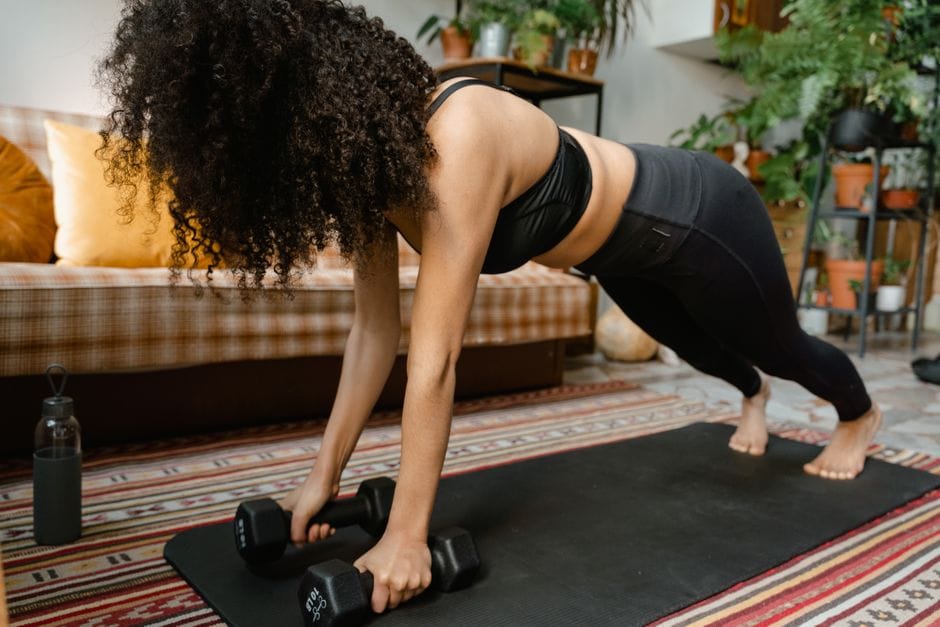
Start face-down on a mat, then prop yourself up on your forearms, elbows stacked directly under your shoulders. Your forearms should be parallel to each other, or hands clasped, whichever feels more stable. Extend your legs behind you and rise onto your toes so your body forms one straight line from head to heels.
From there, the details matter more than the position itself:
- Brace your core like you're about to be poked in the stomach. Pull your belly button gently toward your spine and keep breathing — don't hold your breath.
- Squeeze your glutes. This one change fixes hip sag for most people almost instantly, because it tilts the pelvis into a neutral position instead of letting it droop.
- Keep your neck neutral. Look at a spot on the floor a few inches in front of your hands rather than straight ahead or down at your feet — this keeps your spine in a straight line from head to tailbone.
- Push the floor away. Actively press your forearms and toes into the ground, which engages your shoulders and upper back instead of letting you sink into a passive slump.
- Check your hips. They shouldn't pike up toward the ceiling or sag toward the floor — a straight line, not a tent or a hammock.
Hold that position, breathing steadily, for your target time, then release with control rather than collapsing.
Common plank mistakes
Sagging hips. This is the most common fault, and it happens when the lower back takes over for a core that's fatigued or under-braced. It puts unnecessary strain on the lumbar spine instead of working the abs. If you feel this happening, drop out of the plank rather than fighting through with bad form.
Piked hips. The opposite mistake — raising the hips to make the position easier — takes tension off the core entirely and just turns the plank into a stretch. It usually happens unconsciously as fatigue sets in, so it's worth checking your position in a mirror or filming yourself once to see what your plank actually looks like versus what it feels like.
Holding your breath. Bracing the core doesn't mean freezing your breathing. Locking your breath spikes blood pressure and makes the hold feel harder than it needs to. Breathe in a controlled way throughout — you can maintain a solid brace while still breathing normally.
Elbows in the wrong spot. If your elbows are too far forward of your shoulders, you shift load onto your shoulder joint awkwardly. Stack them directly underneath.
Chasing time over quality. A wobbling, sagging two-minute plank teaches worse movement patterns than a crisp, controlled thirty-second one. Form should always come before duration.
Craning the neck up. Looking forward or up to "check the clock" pulls the neck out of alignment with the rest of the spine and can leave it feeling strained afterward.
Plank variations to try
Once the standard forearm plank feels solid, variations let you keep progressing without just adding more time.
- Forearm plank — the standard version described above, and the best starting point for most people.
- High plank (straight-arm plank) — same position, but supported on your hands with arms extended, wrists under shoulders. It shifts more work onto the shoulders and triceps and is a natural entry point into push-up training.
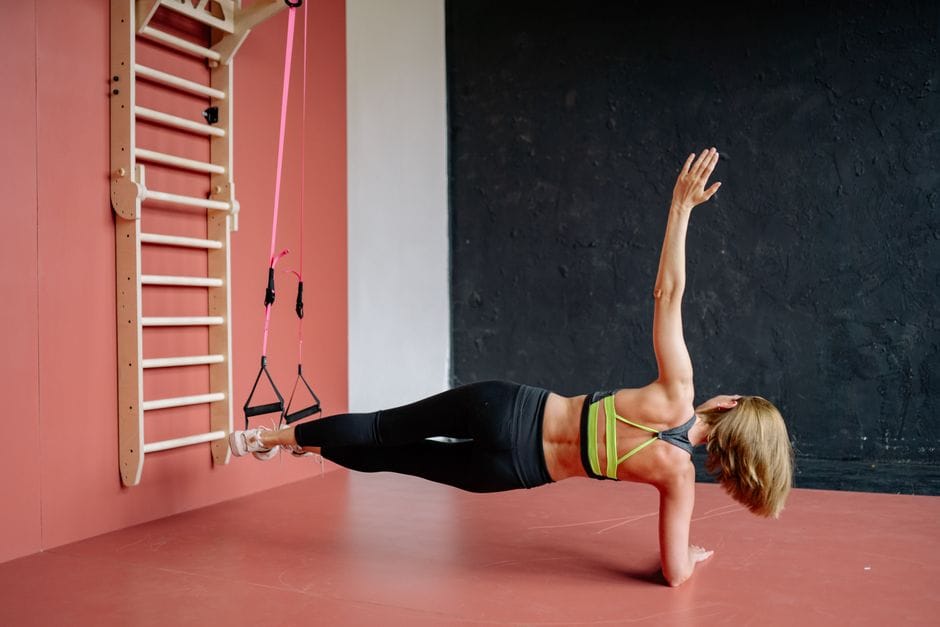
- Side plank — lying on one side, propped on one forearm with feet stacked, body in a straight line. This shifts the focus onto the obliques and the muscles that stabilize the hips laterally, which a front plank doesn't train directly.
- RKC plank — a shorter, more intense hold where you actively pull your elbows toward your toes and squeeze everything as hard as possible for 10-20 seconds. It trades duration for maximum tension and is a good option once long holds stop feeling challenging.
- Plank with shoulder taps — from a high plank, alternately tap the opposite shoulder with each hand without letting your hips rotate. This adds an anti-rotation challenge on top of the basic hold.
- Plank with leg lift — from a forearm plank, lift one foot a few inches off the ground and hold, keeping hips level. This narrows your base of support and demands more from the glutes and deep core stabilizers.
- Weighted plank — adding a light plate across the upper back once bodyweight holds no longer feel demanding, which is a more useful progression than simply chasing longer times.
How long to hold a plank (and how to progress)
There's no single "correct" plank time, and chasing an arbitrary number like a five-minute hold isn't a meaningful goal for most people — form breaks down long before most bodies could sustain that kind of static hold safely. A more useful benchmark: if you can't hold clean form, the set is over, regardless of the clock.
A reasonable progression looks like this:
- Beginner: 3-5 sets of 15-30 seconds, resting 30-45 seconds between sets, focusing entirely on the checklist above.
- Intermediate: 3-4 sets of 30-60 seconds once form is consistently solid at the beginner range.
- Beyond that: instead of extending time further, switch to a harder variation (side plank, shoulder taps, weighted plank) rather than turning the forearm plank into an endurance test. A well-executed 45-second plank with shoulder taps trains more than a wobbly two-minute static hold.
Add difficulty roughly every one to two weeks, once your current level feels controlled rather than like a struggle to finish.
What muscles the plank works
The plank is often filed under "ab exercise," but it trains a broader system of stabilizing muscles:
- Rectus abdominis — the "six-pack" muscle running down the front of the abdomen, which resists the trunk from bending forward.
- Transverse abdominis — a deeper core muscle that wraps around the torso like a corset and is heavily involved in bracing.
- Obliques — muscles along the sides of the torso, especially engaged in side planks and anti-rotation variations.
- Erector spinae — muscles running along the spine that help maintain the straight-line position.
- Glutes — critical for keeping the hips level and preventing sag; a plank done without glute engagement puts far more strain on the lower back.
- Shoulders and upper back — supporting your body weight through the shoulder girdle builds shoulder stability, especially in the high plank variation.
Because it recruits so many stabilizing muscles at once rather than isolating one, the plank is often described as a "core" exercise rather than strictly an "ab" exercise — it trains the muscles that keep your spine and pelvis stable during almost every other movement you do, from lifting to running.
How to fit planks into your routine
Planks pair well with almost any training split because they're low-fatigue relative to most compound lifts and don't need recovery days the way heavy squats or deadlifts do.
- As a warm-up primer: a short 20-30 second plank before your main workout activates the core before heavier lifting.
- At the end of a workout: 2-3 sets as a finisher, after your main strength or cardio work, is a common and effective placement since core fatigue won't limit your other lifts.
- On dedicated core days: pair planks with other core exercises (dead bugs, bird dogs, side planks) for a focused 10-15 minute session two or three times a week.
- Woven into circuits: planks and their variations work well as one station in a bodyweight or home-gym circuit alongside squats, push-ups, and lunges.
Two to three sessions a week that include planks is plenty for most people — the core recovers relatively quickly, but more isn't automatically better if the extra volume comes at the cost of form.
The takeaway
The plank rewards precision over brute endurance. A short, well-braced hold with a neutral spine, engaged glutes, and steady breathing builds real core stability; a long, sagging hold mostly just builds bad habits and unnecessary strain on the lower back. Start with the forearm plank, nail the checklist above at short durations, and progress by adding harder variations rather than chasing an ever-longer clock. Done consistently a couple of times a week, it's a small, low-equipment habit that pays off in almost every other lift and movement you do.
Frequently asked questions
How long should a beginner hold a plank?
Start with 15-30 seconds for 3-5 sets, prioritizing a straight body line and steady breathing over duration. Once that feels controlled, gradually add time or move to a harder variation.
Why do my hips sag during a plank?
Sagging hips usually mean the core has stopped bracing effectively and the lower back is taking over, often due to fatigue or weak glute engagement. Actively squeezing the glutes and shortening the hold time both help fix it.
Is the plank better than crunches for core strength?
They train the core differently rather than one being strictly "better." Planks emphasize static stability and bracing across multiple muscle groups, while crunches emphasize a repeated flexing motion of the rectus abdominis specifically. Many routines benefit from including both.
Can planks give you visible abs?
Planks strengthen and help stabilize the core muscles, but visible abs come down mainly to having a low enough body fat percentage for the muscle to show, which is primarily a nutrition outcome. Planks alone, without attention to diet, won't reliably reveal a six-pack.
Read next
Further reading & trusted sources
Where beginners usually go wrong
The single fix that corrects most sagging planks is squeezing the glutes, not ‘trying harder’ to brace the abs — glute engagement tilts the pelvis into a neutral position and takes the lower back out of the equation almost immediately. A shaky two-minute plank with sagging hips trains worse movement patterns than a crisp thirty-second one, so cutting the hold short the moment form breaks down is more productive than pushing through it.
Maya’s editorial obsession is the gap between fitness hype and what the evidence actually shows — she’d rather hand you one boring habit that works than ten exciting ones that don’t. She builds FitNourish’s guides from mainstream, well-established sources (the CDC, the NHS, Mayo Clinic, and peer-reviewed research) and has a human review every one for accuracy before it publishes. She and the team are dedicated fitness enthusiasts and researchers, not doctors, so everything here is general information rather than medical advice. AI tools help with the research and drafting; the fact-checking and judgement are human.