 By Maya Reed, Editor
Reviewed & updated September 2026 · Researched, AI-assisted & human-reviewed
Educational information only — not medical advice. Learn more
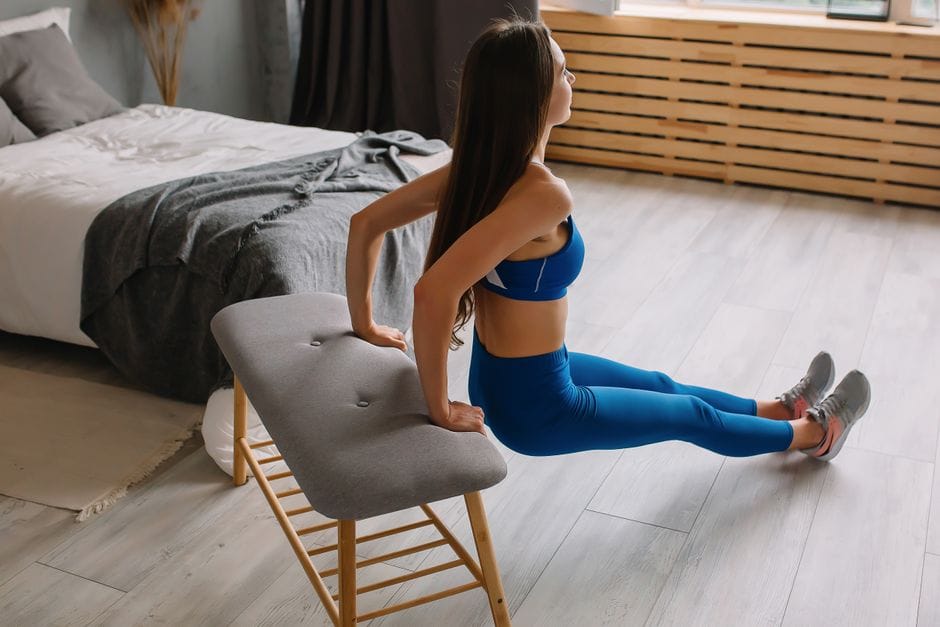
The tricep dip is one of the few upper-body pushing exercises you can do with nothing but a sturdy bench, chair, or the edge of a couch — which makes it a staple for anyone training at home. Done with good form it builds real pressing strength in the triceps, chest, and shoulders. Done with sagging shoulders and elbows flared wide, it turns into one of the more common ways people irritate their shoulder joints.
This article is for general fitness education, not medical advice. If you have shoulder pain or an existing injury, check with a healthcare professional before adding dips to your routine.
 Quick navigationCurated by Maya · 7 min read
What the tricep dip actually trains
Dips are a compound pushing movement. The primary mover is the triceps brachii, with the front deltoids and lower chest fibers assisting depending on your torso angle. The more upright your torso stays, the more the triceps take over; lean forward and the chest gets more involved. For a home-gym audience without a dip station, the bench or chair variation keeps the movement triceps-dominant, which is usually the point — most people reach for dips specifically to build arm size and pressing lockout strength.
Setting up the bench dip
- Sit on the edge of a stable bench, sturdy chair, or step. Test that it won't slide or tip before you load it with bodyweight.
- Place your hands on the edge, fingers pointing forward, slightly narrower than shoulder-width.
- Walk your feet out until your hips clear the bench, knees bent at roughly 90 degrees for the standard version, or legs extended straight for a harder variation.
- Keep your hips close to the bench throughout — not drifting forward, which shifts load onto the wrists and shoulders instead of the triceps.
Step-by-step form
- Start with arms straight, shoulders down and back — not shrugged up toward your ears.
- Bend your elbows and lower your body in a straight vertical line, keeping elbows pointing backward rather than flaring out to the sides.
- Descend until your upper arms are roughly parallel to the floor, or as close as your shoulders comfortably allow. Going deeper than that is where most shoulder strain happens.
- Press back up through your palms, driving through your triceps until your arms are straight again — without locking out so hard that you shrug your shoulders.
- Keep the movement slow and controlled in both directions. Dips done fast with momentum are where form breaks down first.
Common mistakes
- Elbows flaring wide. This shifts stress onto the shoulder joint and front of the shoulder capsule instead of the triceps. Keep elbows tracking backward, close to your torso.
- Dropping too low. Past the point where your upper arms are parallel to the floor, the shoulder joint is doing more of the work than the triceps, and that's the range where impingement-type pain shows up.
- Hips drifting away from the bench. This turns the dip into more of a shoulder press and adds unnecessary wrist strain.
- Shrugging at the top. Locking out hard with shoulders creeping up toward the ears adds tension exactly where you don't want it on a repeated pushing movement.
- Using momentum. Bouncing at the bottom of the rep to "catch" the stretch feels like it makes the set easier, but it also removes the control that keeps the shoulder joint safe.
Making it easier or harder
- Easier: Bend your knees more and keep feet closer to the bench — this reduces the percentage of bodyweight you're pressing. You can also keep the range of motion shallower until you build strength.
- Harder: Straighten your legs and rest your heels on the floor further out, or elevate your feet on a second bench or chair. Adding a weight plate across your lap is the next progression once bodyweight dips feel manageable for 12-15 reps.
- Two-bench version: Hands on one bench, feet on another, hips suspended between them — this is a significant jump in difficulty and worth working toward rather than starting with.
Who should be cautious
Anyone with existing shoulder impingement, a history of shoulder dislocation, or wrist pain should be extra careful with dips, since the bottom position loads the front of the shoulder joint more than most other pressing exercises. If lowering into a dip causes pinching or sharp pain at the front of the shoulder, that's a signal to stop and try a different tricep exercise — like pushdowns or close-grip push-ups — instead of pushing through it.
How to program dips into a workout
Dips pair well as a finisher after a bigger pressing movement like push-ups or an overhead press, since your triceps are already partially fatigued and dips will hit them directly. Two to three sets of 8-15 reps, two or three times a week, is a reasonable starting point for most people building general upper-body strength at home. If you can comfortably do more than 15-20 controlled reps, that's the signal to add difficulty rather than just adding more reps.

The takeaway
The bench tricep dip is a genuinely useful, equipment-light way to build pushing strength at home, but it's also one of the easier bodyweight exercises to do with subtly bad form that adds up over time. Keep your hips close to the bench, elbows tracking back rather than flaring, and stop the descent once your upper arms are parallel to the floor — that combination keeps the exercise triceps-focused and your shoulders out of trouble.
Frequently asked questions
Are tricep dips bad for your shoulders?
Not inherently, but they load the front of the shoulder more than many other exercises, especially if you descend too deep or let your elbows flare. With controlled form and a moderate range of motion, most people tolerate them well. If you already have shoulder issues, they're worth approaching cautiously or substituting.
How deep should you go on a dip?
Lower until your upper arms are roughly parallel to the floor. Going further increases shoulder strain without adding much extra triceps benefit for most lifters.
Can I do dips every day?
It's better to give the triceps and shoulders 48 hours between dip sessions, similar to any other resistance exercise, so the muscle and connective tissue can recover.
What's a good alternative if dips bother my shoulders?
Close-grip push-ups and cable or band tricep pushdowns train similar muscles with less shoulder-joint stress, since they don't involve the same deep behind-the-body arm position.
Read next



Further reading & trusted sources
A common mistake to skip
Hips creeping away from the bench is the failure mode most people never notice happening, because it shifts load onto the wrists and shoulders so gradually that the rep still feels fine even as it turns from a tricep exercise into a shoulder-press substitute. The depth cutoff at ‘upper arms parallel to the floor’ isn’t an arbitrary rule of thumb either — that’s roughly the point where the front of the shoulder joint starts absorbing more stress than the triceps do, which is why the same dip that felt fine at a shallow range can start causing pinching once someone chases a deeper stretch.
Maya’s editorial obsession is the gap between fitness hype and what the evidence actually shows — she’d rather hand you one boring habit that works than ten exciting ones that don’t. She builds FitNourish’s guides from mainstream, well-established sources (the CDC, the NHS, Mayo Clinic, and peer-reviewed research) and has a human review every one for accuracy before it publishes. She and the team are dedicated fitness enthusiasts and researchers, not doctors, so everything here is general information rather than medical advice. AI tools help with the research and drafting; the fact-checking and judgement are human.