 By Maya Reed, Editor
Reviewed & updated September 2026 · Researched, AI-assisted & human-reviewed
Educational information only — not medical advice. Learn more
The kettlebell swing looks simple from across the gym — pick up a weight, swing it, repeat — which is exactly why so many people get it wrong. Done correctly it's a hip-hinge movement that builds explosive power through the glutes and hamstrings while spiking your heart rate. Done as a squat-and-lift with the arms, it turns into a lower-back injury waiting to happen.
This article is for general fitness education, not medical advice. If you have lower-back pain or an existing injury, check with a healthcare professional before adding kettlebell swings to your routine.
 What this guide coversCurated by Maya · 7 min read
What the kettlebell swing actually trains
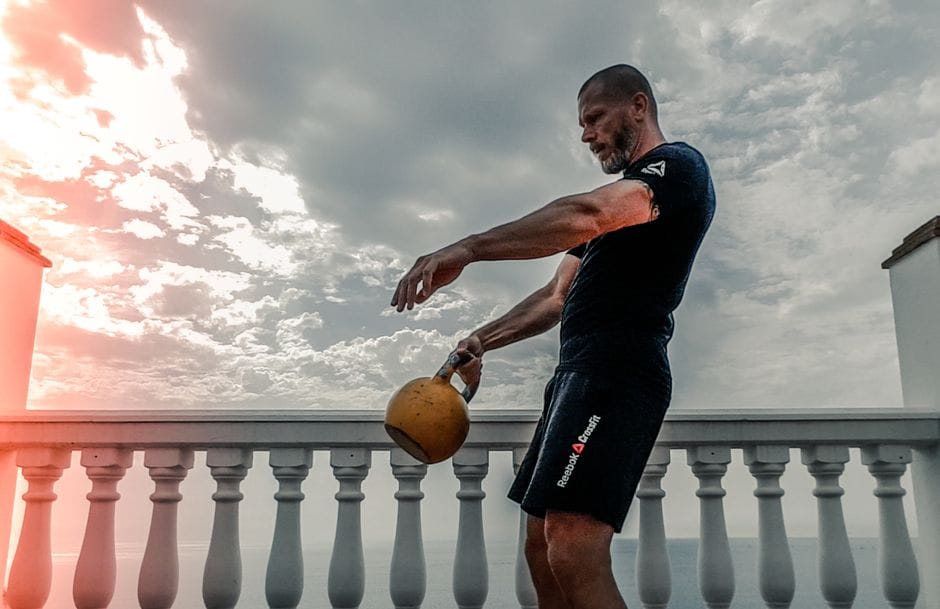
The swing is a hip-hinge power movement, not a squat and not an arm exercise. The glutes and hamstrings generate the force that projects the kettlebell forward and up; the arms do almost nothing beyond holding on and guiding the bell's path. That distinction matters because the most common swing mistake — squatting down and muscling the weight up with the shoulders — completely changes what the exercise trains and where the strain lands. Done right, swings build hip-hinge power, grip endurance, and a genuinely brutal cardio effect in a short amount of time.
Setting up the swing
- Stand with feet slightly wider than shoulder-width, kettlebell on the floor a few inches in front of you.
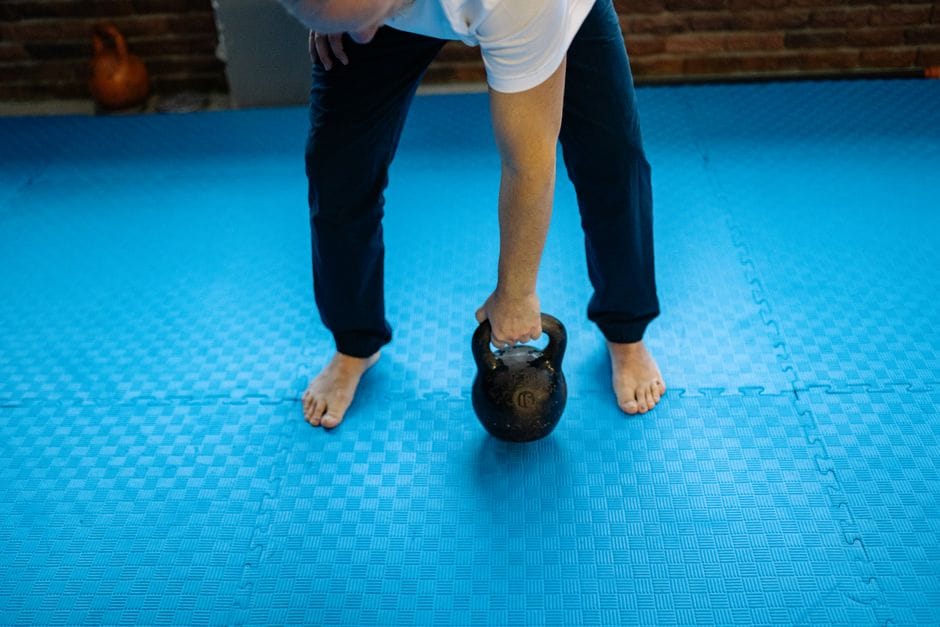
- Hinge at the hips — not the knees — to grip the handle with both hands, keeping your back flat and shoulders pulled back.
- Before the first rep, rock the kettlebell back between your legs like a golf swing backswing to build momentum, then drive forward.
- Keep your gaze forward, not down at the kettlebell, to help keep your spine in a neutral position throughout.
Step-by-step form
- Hike the kettlebell back between your legs, letting your hips bend and your torso lean forward slightly — this is the "loading" phase.
- Explosively drive your hips forward, squeezing your glutes hard at the top. This hip snap, not an arm pull, is what sends the kettlebell forward.
- Let the kettlebell float up to roughly chest height as your hips finish extending. Your arms stay relatively straight and relaxed — they're guiding the bell, not lifting it.
- Let the kettlebell fall back naturally between your legs as your hips hinge back to absorb the momentum, then immediately reverse into the next rep.
- Keep your core braced throughout, as if you were about to take a punch to the stomach — this protects your lower back during the rapid load transfer.
Common mistakes
- Squatting instead of hinging. Bending the knees and dropping into a squat turns the swing into an odd, inefficient front raise with a weight. Keep the knees only slightly bent and let the hips do the folding.
- Lifting with the arms. If your shoulders are doing noticeable work to raise the kettlebell, the hip drive isn't generating enough power. The arms should feel almost passive at the top.
- Rounding the lower back. A rounded spine during the hinge is the single biggest injury risk in this exercise. If you can't keep your back flat through the movement, reduce the weight or the range of motion.
- Swinging too high. Letting the kettlebell rise above shoulder height, especially with momentum from the arms rather than the hips, is a sign of an American-style swing being attempted without the shoulder mobility or control to do it safely yet.
- Standing too upright at the top. Failing to fully extend the hips and glutes at the top of the swing leaves power on the table and often means the movement is being muscled through the arms instead.
Making it easier or harder
- Easier: Start with a lighter kettlebell than you think you need — swing technique is far easier to learn without excess weight fighting your form. A goblet squat can help you feel the hip-hinge pattern before adding the ballistic element.
- Harder: Increase the kettlebell weight once your form is consistent for 15-20 reps, or extend set duration for a conditioning-focused workout. Single-arm swings add a rotational core-stability demand that two-handed swings don't.
- American swing: Once two-handed form is solid, some lifters progress to swinging the kettlebell overhead — this needs additional shoulder mobility and control and isn't necessary for most home-gym goals.
Who should be cautious
Anyone with a history of lower-back injury, disc issues, or current back pain should approach kettlebell swings carefully, since the hip-hinge pattern places real demand on the lower back and posterior chain under speed. If you feel any pinching or sharp pain in your lower back during a swing, stop and reassess your hinge pattern with a lighter weight or bodyweight hip hinges before returning to the kettlebell.
How to program swings into a workout
Kettlebell swings work well both as a strength-power movement early in a workout and as a conditioning finisher. Two to three sets of 15-20 reps is a reasonable starting point for building the movement pattern, while longer sets of 30-50 seconds on, 30 seconds off can be used for a cardio-focused conditioning circuit. Because the hip-hinge pattern overlaps with deadlifts, avoid programming heavy swings and heavy deadlifts on the same day until your lower back has built up enough capacity to handle both.
The takeaway
The kettlebell swing is one of the most efficient exercises you can do at home for building hip power and cardio conditioning at the same time, but it's also one of the most commonly misperformed — mostly because it gets confused with a squat-and-lift instead of a hip hinge. Keep the movement driven by your hips and glutes, not your arms or a squatting knee bend, and stop the swing height wherever your hip drive naturally sends it rather than forcing it higher.
Frequently asked questions
Are kettlebell swings bad for your back?
Not inherently, but they place real demand on the lower back through the hip-hinge pattern, especially with a rounded spine or too much weight too soon. With controlled form and a weight that matches your current strength, most people tolerate them well.
Should kettlebell swings feel like a squat?
No. The knees bend only slightly, and the movement is driven by hinging at the hips, not by lowering into a squat. If your quads are more fatigued than your glutes and hamstrings after a set, you're likely squatting the movement instead of hinging it.
How heavy should my first kettlebell be?
Most beginners do better starting lighter than they expect — a 15-25 lb kettlebell for many women and a 25-35 lb kettlebell for many men is a reasonable starting range to learn the pattern before adding weight.
What's a good alternative if I don't have a kettlebell?
A dumbbell held with both hands works for the same hip-hinge pattern, though it's less ergonomic than a kettlebell handle. Romanian deadlifts also train a very similar hip-hinge pattern without the ballistic element.
Read next
Further reading & trusted sources
Worth knowing before you start
The single biggest tell that someone is squatting a swing instead of hinging it is sore quads the next day instead of sore glutes and hamstrings — the muscles doing the work always show up in next-day soreness even when the rep looked fine in the moment. Buying a kettlebell too light is a more common mistake than buying one too heavy, since a swing relies on momentum from hip drive, and an under-loaded bell makes it harder, not easier, to feel the difference between arm-lifting and hip-driving the weight.
Maya’s editorial obsession is the gap between fitness hype and what the evidence actually shows — she’d rather hand you one boring habit that works than ten exciting ones that don’t. She builds FitNourish’s guides from mainstream, well-established sources (the CDC, the NHS, Mayo Clinic, and peer-reviewed research) and has a human review every one for accuracy before it publishes. She and the team are dedicated fitness enthusiasts and researchers, not doctors, so everything here is general information rather than medical advice. AI tools help with the research and drafting; the fact-checking and judgement are human.